
In Robert Altman’s 1972 film Images, Susannah York plays a woman whose life is invaded by a series of ghosts/doubles/hallucinations when she spends time alone at a remote house in Ireland. It starts with a mysterious phone call, where an unknown person implies her husband is having an affair—but the voice on the other end of the phone is her own. A man with whom she’d had an affair years ago suddenly appears, but he died three years ago. Going for a walk and looking back from across a lake, she sees herself entering the house. The filmmakers start playing games: the daughter, Susannah, of her husband’s friend is played by Cathryn Harrison, while Susannah York is playing a woman called Cathryn. In one scene, the two—with their identical long blonde hair—sit together to complete a jigsaw puzzle, Cathryn with her left hand on the left, Susannah with her right hand on the right. It all has echoes of Bergman’s Persona (1966), and more than a touch of Polanski’s Repulsion (1965). But does it all mean something, or are the filmmakers just providing a series of shocks, playing with significances? Well, you won’t find the answer to that question here. I’m going to look at another aspect of the film.
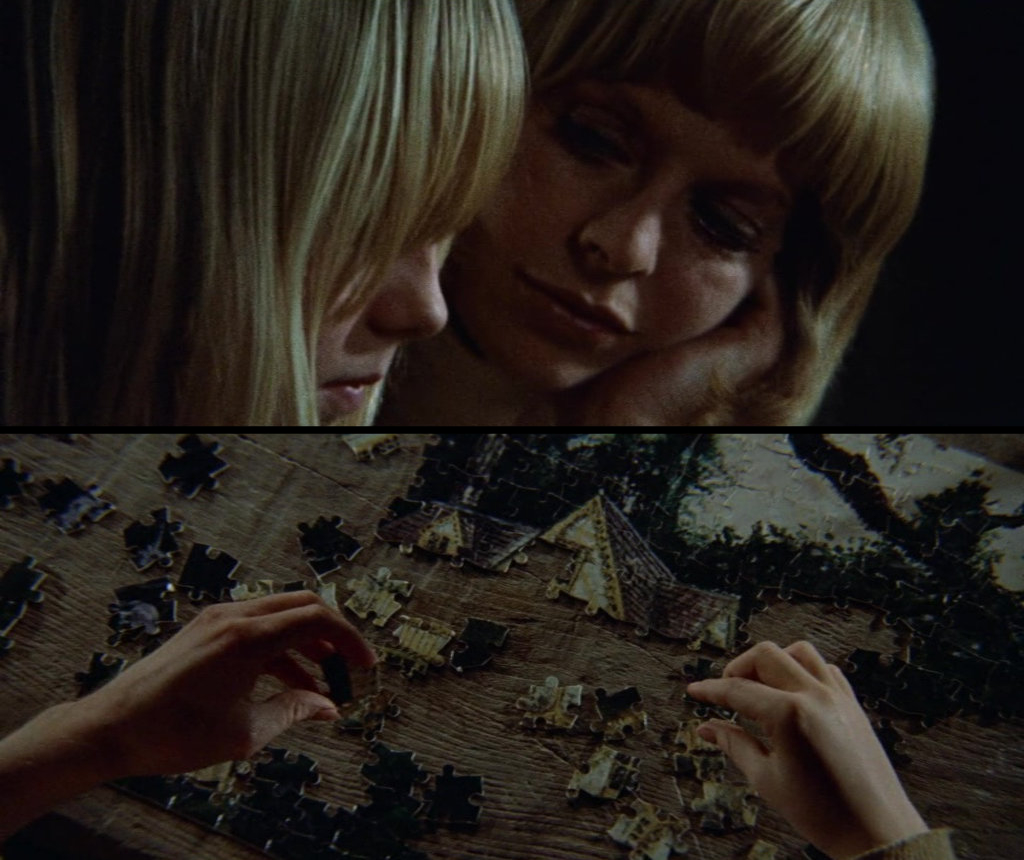
Almost the Persona shot; and Cathryn and Susannah (played by Susannah and Cathryn) do a jigsaw together.
In it, York plays a writer, and we occasionally hear, by way of an inner monologue, passages from the children’s fantasy she’s working on. (Early in the film, we see books in her study open at pages showing works by Edmund Dulac and John Bauer.) The credits say that “In Search of Unicorns” is a book for children by Susannah York, though if you were intrigued by the whimsical, incantatory language of the snippets heard in the film, you wouldn’t have been able to go out and buy it, not immediately anyway. In Search of Unicorns didn’t come out till the following year, and by that point it had changed.
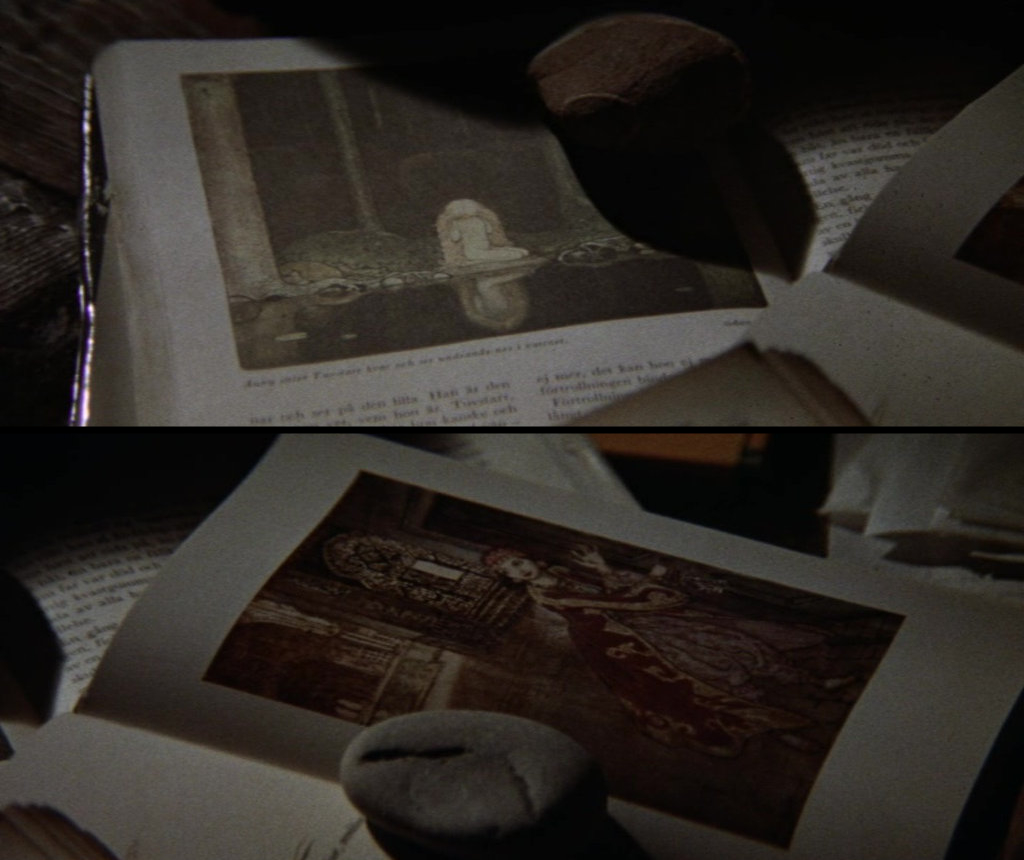
Glimpses of illustrations by John Bauer and Edmund Dulac
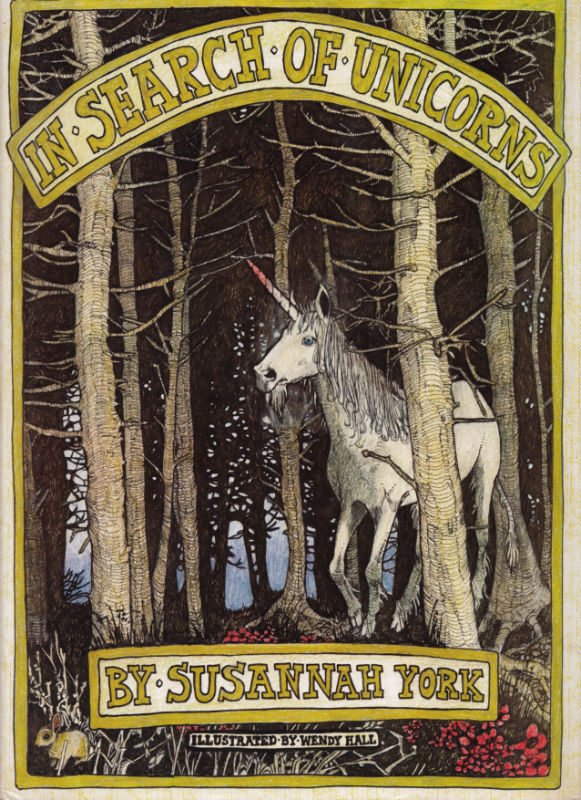
1974 edition, art by Wendy Hall. (Although it looks like it, that’s not blood on the unicorn’s horn.)
In an interview around the time of its publication, York said that Unicorns is “not just aimed at children, but adults too”, but it’s pretty clearly for children. (The book is not long, is large-format, and every page is illustrated in a sometimes naïve style.) The story starts with Hero, the Lord of Umbany (though Umbany’s lords only hold the post for a year at a time), setting out for a walk, intent on avoiding his lordly responsibilities. He meets Una, a “ladychild”, who seems to have just appeared out of nowhere—she doesn’t know where she came from or, at first, her own name. Hero takes her home. A hunter and poet, he’s also a painter, and when Una sees a mural on his wall depicting a unicorn, she’s suddenly struck by a passionate need to see such a creature. Meanwhile Obnokshuss, the Devil of Umbany, has his eye on her—or, more specifically, on her pink new soul. He likes to capture souls, keeping them in cages till they turn from pink to grey to black, whereupon they’re so lost to goodness that he can use them in an army he intends to unleash on the land of Umbany. But there are seven conditions which, if met, will free all his captured souls, and Una’s appearance is one of them. The final one is her finding her much-desired unicorn. He has, then, a double reason to capture her.
The setting is part stone age, part land of fairy tales. A statement near the beginning (“Now Ums, as you probably know, are very small people”) sounds Hobbitish, but in one promotional interview, York says she’d not read Tolkien. (And the rest of the story doesn’t feel anything like The Hobbit, let alone The Lord of the Rings.) In fact, one of the book’s plus points—and what drew me to reading it—is its air of naivety, a fantasy written by someone who seemingly hasn’t read any (but who has, no doubt thanks to acting in Shakespeare, a love of language, and a stock of archaisms to draw on).
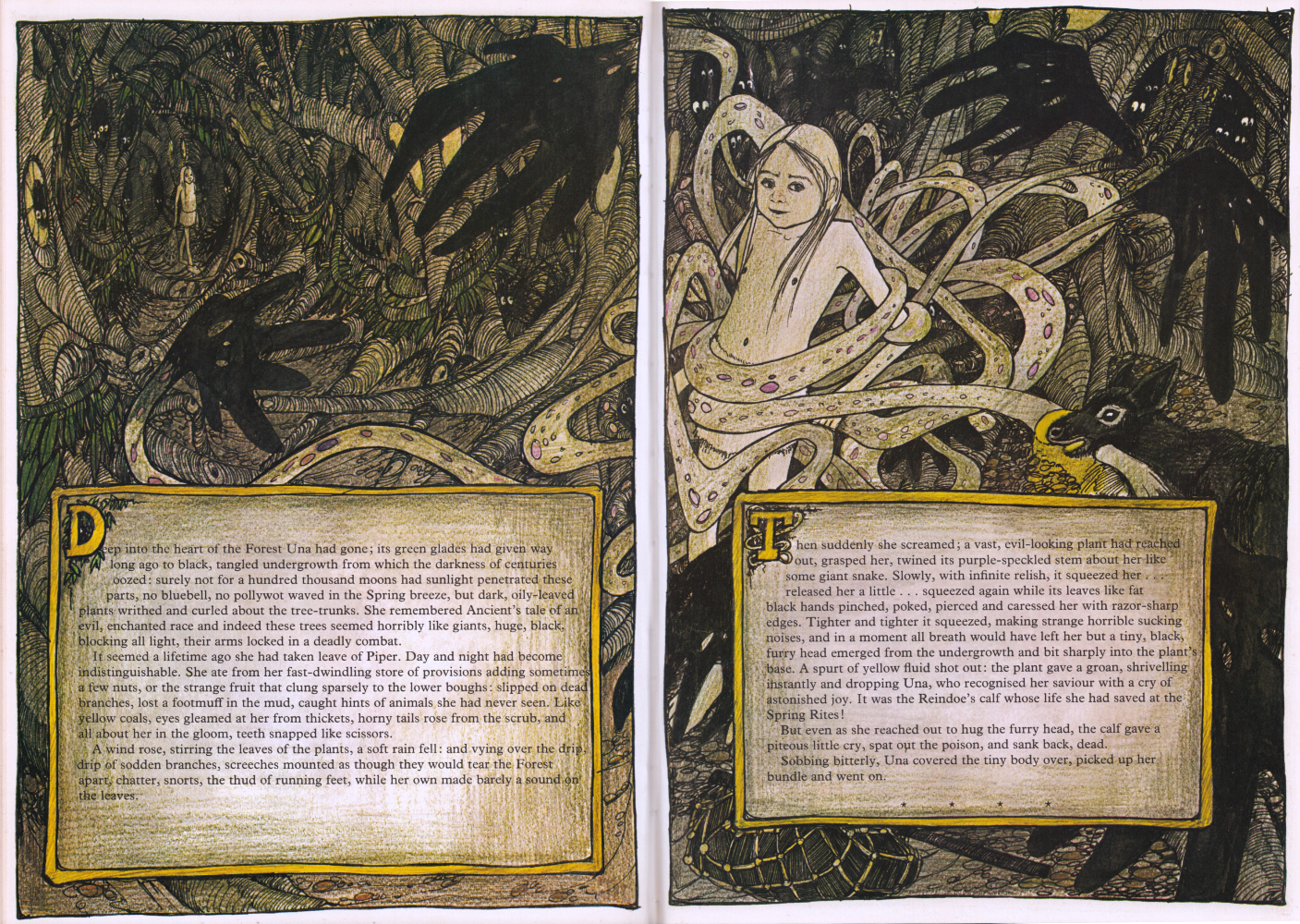
A slightly Hobbitish journey through a dark wood.
It’s a simple tale, its ultimate meaning given by York in an interview:
“I believe all of us are engaged in a search for our own kind of unicorn, big or small, one or more, tangible or intangible… Your unicorn can only be yours when it is given its freedom and it chooses to come back to you.”
(Which can’t help reminding me of The Three Amigos: “In a way, all of us have an El Guapo to face someday. For some, shyness might be their El Guapo. For others, a lack of education might be their El Guapo. For us, El Guapo is a big dangerous guy who wants to kill us.”)
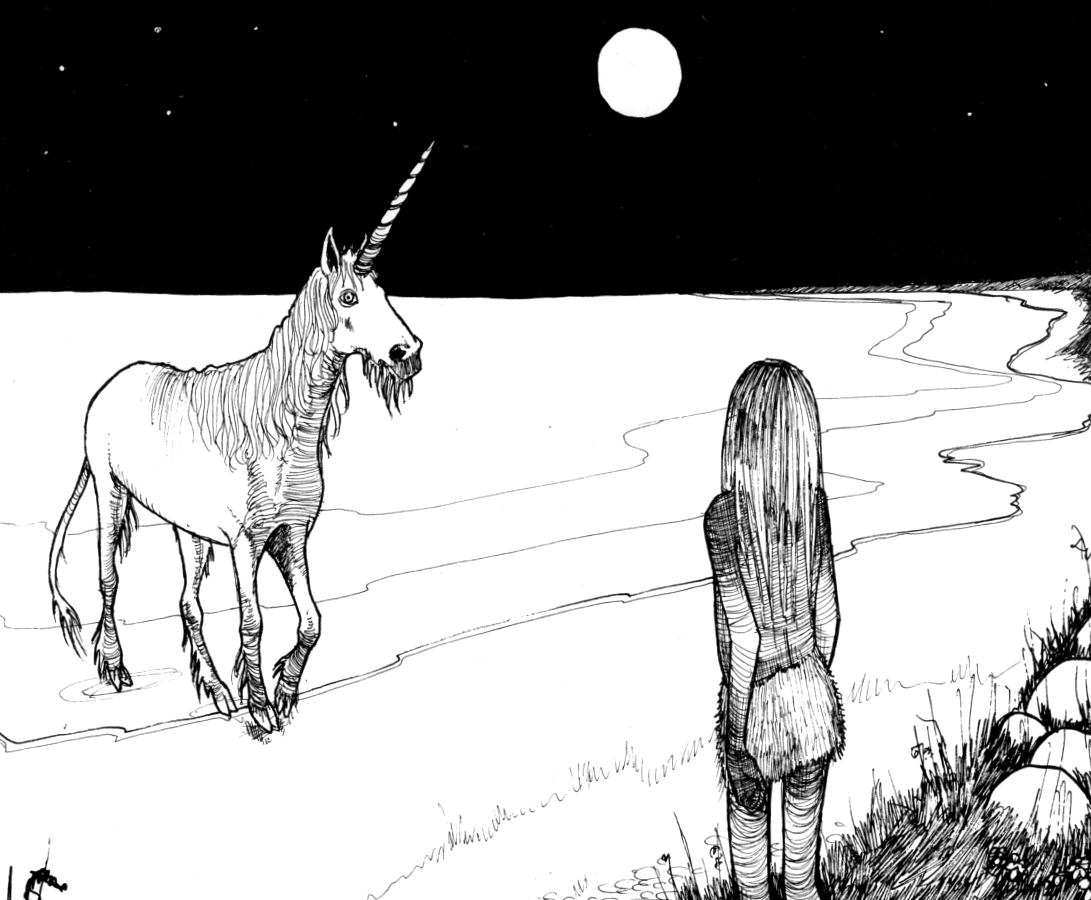
Una, and a unicorn on its fourth coffee. Art by Wendy Hall
The 1974 edition of In Search of Unicorns was illustrated by Wendy Hall (who said York had very clear ideas on how the characters should look, as many of them were based on her friends and family). It was later revised and re-illustrated by Pat Ludlow in 1984, and I suspect one of the reasons (though I haven’t seen it) for the new illustrations would be that Una spends most of the first half of the book entirely naked (perhaps inspired by that John Bauer image), and that might have been changed as the hippie-ness of child nudity became less acceptable. (I also wonder if one of the revisions might have been to get rid of the line: “Hero was rather partial to ladychildren, especially if they looked small and fragile”.)
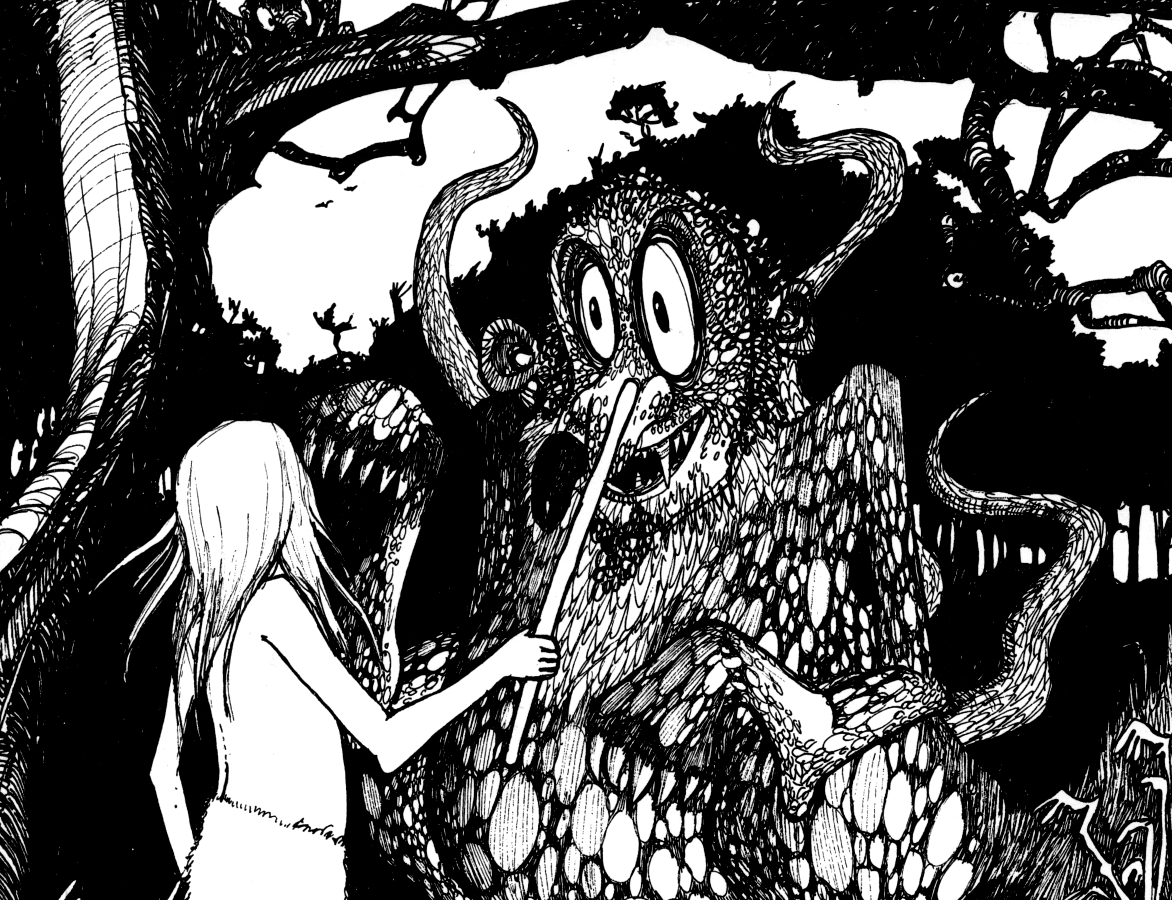
A thing in the woods. Art by Wendy Hall.
The text of even that 1974 edition, though, isn’t the text from the film—which was a bit disappointing, as it was the playfulness of the language that drew me to it, and that seems to have been partially, but not wholly, lost. Here, for instance, is the opening as narrated in Images:
All in a night, spring came, rushing from beyond the ends of the earth and spilling out all over Umberny, its sack full of colours, and buds and birds’ eggs, snails and tadpoles, rainbows and newborn animals. Bees hummed, mammoths gambolled, meadows rang with the plighting of troths, and deep in his ancestral cave Hero Fairbeard Frisky, Lord of all Ums, snored and grunted, stirred and groaned, and got out of bed to look outside. “Fiddle-fuddle, Umb! A thousand spitting curses!”
In the book, though it starts more directly and still has a little of that verbal playfulness, it feels as though it’s lost the far-away, wistful fantasy tone somewhat:
“Fiddle, fuddle, bother; if I haven’t woken in the deepest of Umish Glooms, my name’s not Hero Frisky!” To hear the Lord of Umbany, you’d never have thought it was the first day of spring. Out he had rushed of Frisky Hall at dawn—down through Upper Um, over the bridge, and out to the open road. All about him in the hedgerows snails scuttled, and little blue eggs fell plop! into nests; bluebells and pollywots waved from banks and far away in the Forest (where Hero was heading), baby mammoths gambolled and trumpeted.
Perhaps it’s significant that the narrative has picked up a “you”—a sign it’s being self-consciously adjusted for a child audience. (And surely snails don’t “scuttle”.) One of the things, I can’t help thinking, that added to its effect in the film is that Cathryn is telling this story to herself, in her own head, so it’s not being acted out or told to a child. This gives it a wistful, musing tone, somewhat like Oliver Postgate’s narrations to Bagpuss or The Clangers.
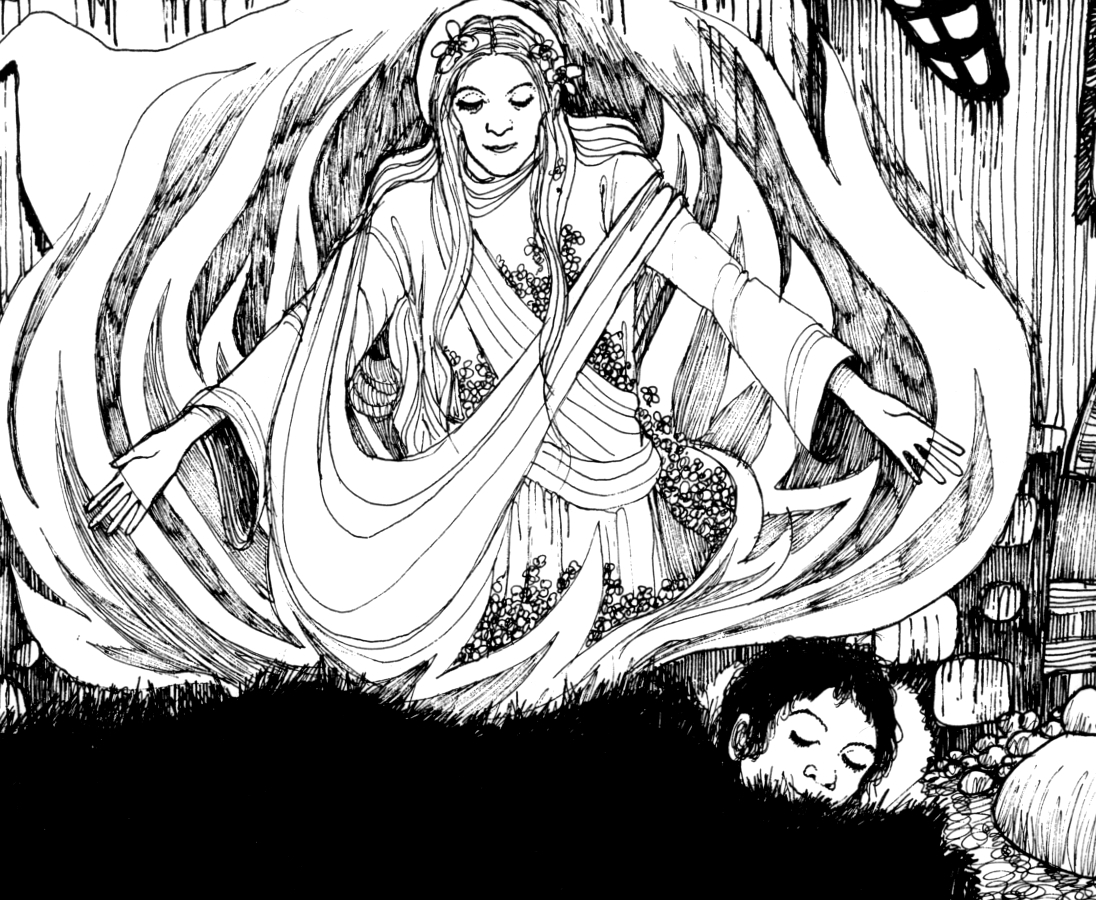
A sleeping Hero is visited by the Spirit of the Universe. Art by Wendy Hall.
As another example, from when Una sees Hero’s mural of a unicorn. The film has:
Una stared at the carved, curving creature, delicate, questing, perfect, with arched neck and a single slender horn.
The book has much of the same language, but sounds like the result of a writer doubting their reader, and losing something in the process of making it all clearer:
A creature—a carved, curving creature, like none of the others—was leaping out of the rock at her, delicate, questing. . . perfect!
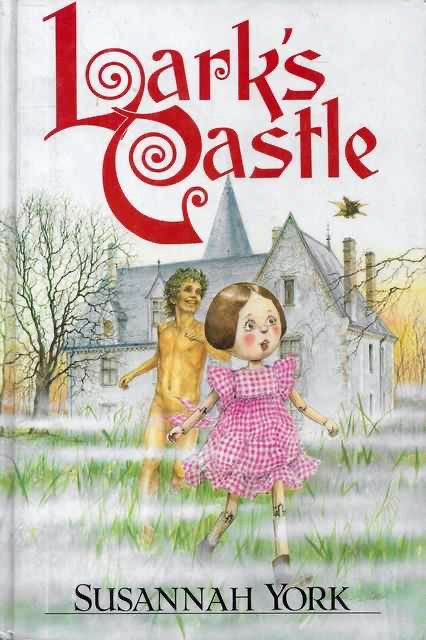
Cover to York’s second book for children, Lark’s Castle
Interviewed at the time of its publication, York said “I worked on it intermittently for three years. In the end I re-wrote it three times.” And: “The main problem was simply getting carried away by the sound of the words, and having to cut severely to get the story moving.” As it’s for children, getting the story moving was probably a wise move, but for me, I’d have loved to read more of what I was hearing in the film, which was clearly driven by “the sound of the words”—something that has worked for children’s fantasy since Lewis Carroll’s Alice books.
York read the book on Jackanory in April 1974, and it was later staged as Searching for Dreams in 1990. She went on to write one more book for children, Lark’s Castle, published in 1976: “A stone with magical properties helps a wooden doll and other captive toys outwit a cantankerous witch.” The first edition seems to have a naked man running after an animated doll on the cover…!
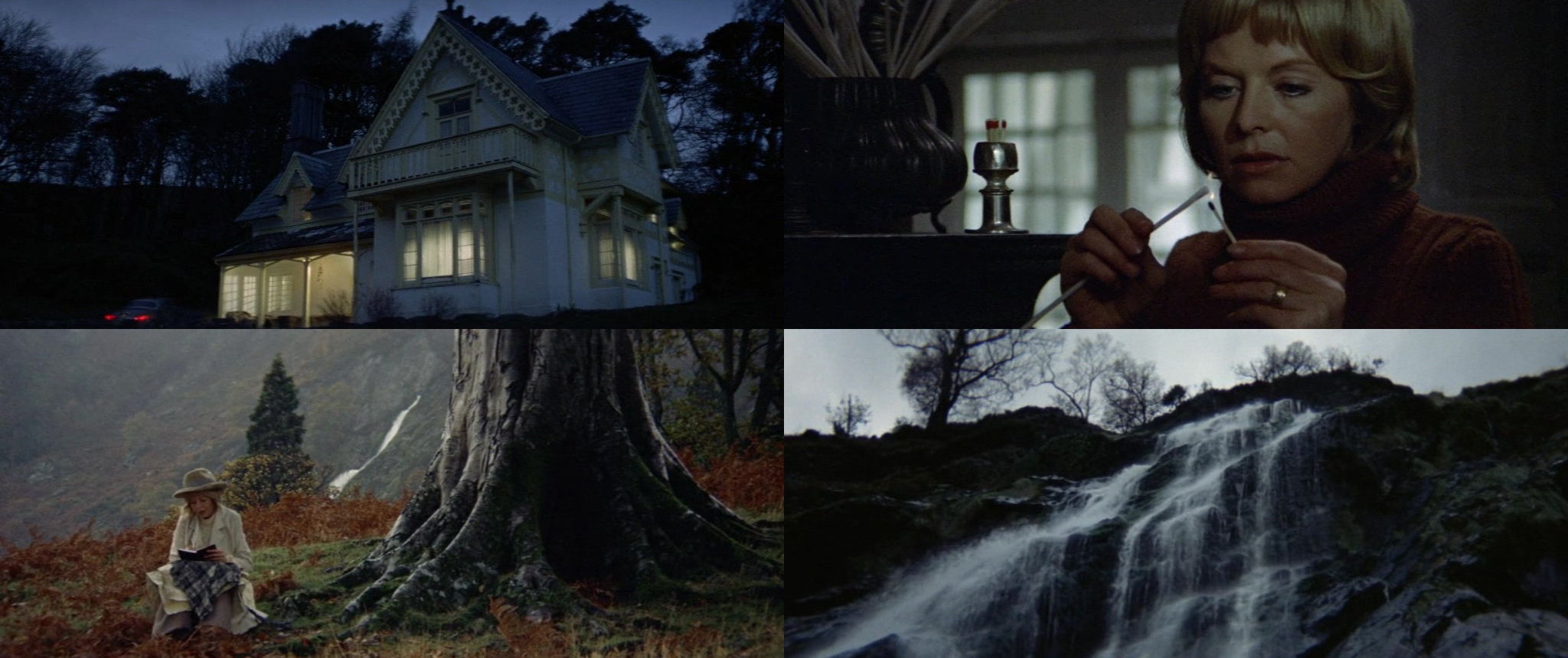
More from Robert Altman’s Images

