This is a bit of a long post, but as it’s my record of WHC2010, I didn’t want to leave anything out. So here goes:
Thursday
 Once I’d booked into my room, I registered and, as well as a name badge (actually, a big hang-round-your-neck name pouch, with two useful little zipped sections), I got a goodie bag. And what a goodie bag! It was almost worth the price of admission alone, with some pretty heavy duty books in there, including a PS Publishing hardback (Harsh Oases by Paul di Filippo), a jumbo Mammoth Book of Zombie Comics, and, right at the bottom, a copy of Fantasy Tales magazine from 1986! (It certainly made up for the size of the room, which might best be described as a single bed + breathing space.)
The first panel I went to was the obligatory introduction to conventions. This, in the tradition of all convention panels, quickly skewed off purpose, and turned into a panel on how to set up and run a con, which I wasn’t really interested in. (Though I did learn that SF/Horror conventions are second only to Labour Party conventions in their need for a well-stocked bar.) The main thing I learnt is that the WHC is not as much a “fan” convention as SF cons are — you won’t find people walking round dressed up as Dracula; also, it’s more specifically a literary convention, so no t-shirts or toys for sale in the dealers’ room.
I finished off Thursday with a run of four panels (which is more than a bit bum-numbing). First off was “From Aickman to Zelazny”. The aim was for a panel of hardened book-collectors to put together an A-Z, one book per letter, “essential horror” collection. It started off with a general discussion on book collecting, which I could have quite happily listened to for the whole hour. There was a general agreement on the highs (bargains and surprise discoveries) and lows (artificial overpricing due to the internet) of collecting in this day and age. The subsequent romp through the alphabet only got as far as S, and was quirky to say the least. For instance, Agatha Christie was decided on as the ‘C’ entry, on the strength of (if I remember rightly) one horror book, which meant no Ramsey Campbell! But I guess four serious book collectors weren’t going to come out with anything too obvious. Anyway, the A-Z format showed its limitations when we got to S, and they had to decide whether to include Mary Shelley, Bram Stoker, or Robert Louis Stephenson — three classics, all of which are required in any truly essential horror collection.
After this came a panel called “Who Cares What You Think?”, about the rise of online reviewing and blogging. “There’s a word for people who do things for free,” said Kim Newman in his opening statement: “scab.” Which I thought was a bit harsh, particularly as reviewing things for free isn’t just an internet phenomena, but has been around as long as fanzines. But the point I most agreed with, also made by Newman, was that more and more he was interested not in reviews as such, but criticism — i.e., the stuff you read after you’ve seen the movie, or read the book.
After that (with me starting to feel a bit sleepy) was “We Are Not Worthy: Recognising the Masters”, about literary influence. This was interesting, because it revealed some different ways writers can be influenced by other writers. Ray Russell, for instance, spoke about how he was, for a long time, dissatisfied with his writing because it didn’t reflect the authors he most admired; but when he wrote some stories under a pseudonym, and so was freed from trying to be the sort of writer he felt he ought to be, he not only found it easier to write, but found the results reflected a quite different set of influences. Talk then turned to pastiche, the most literal form of influence. Barbara Roden, moderating the panel, made the point that excessive pastiche can actually tarnish the pastiched writer’s reputation. Apparently, Arthur Conan Doyle’s niece (I think it was his niece) banned the writing of Sherlock Holmes pastiches after a while because she was so fed up of them all being so bad; she ended up believing that only established writers should be allowed to use other writers’ characters. Mark Samuels, though, made the point that it doesn’t have to be taken so seriously — it can be fun to try writing in another writer’s voice.
Finally, with me way past my bedtime by now, and holding on through sheer will, Ramsey Campbell came in and read not one but two new stories. The first (can’t remember the title) was about a man going to a hotel he’d stayed in as a child. This time, however, he’s there for a funeral. Things quickly enter that Campbellian netherworld on the border between reality, dream, nightmare and psychosis; lots of puns and veiled references to death and dying, plus those inestimable embarrassing social scrapes Campbell handles so neatly. The second story was “The Rounds”, set on the Liverpool underground and involving a curiously persistent item of abandoned luggage. Thematically, the two were, as Campbell said, “companion pieces”, and made an excellent way to round off my first day at the con.
Friday
Friday started with a “warm up” panel about memories of horror movies past. Though it never got down to answering the question of whether horror movies were better back in Them Days, it did make a convincing case on some points. Les Edwards, for instance, said that for him the most terrifying moment from a movie is the unmasking scene from Lon Chaney’s Phantom of the Opera, in which the camera deliberately goes out of focus — but this is something, Kim Newman pointed out, that wouldn’t be allowed today, as you’d have the special effects guy (and, no doubt, the people who paid for the special effects) complaining that people weren’t getting to appreciate the fullness of his artistry (or the extent of his budget).

Next up was the Tanith Lee interview, hosted by Chelsea Quinn Yarboro. I haven’t read much Tanith Lee (apart from the odd short story), so the main interest for me was writing tips. Lee said she lets her characters guide the story; problems with a story almost always turn out to be points where she (as writer) thinks the story should go one way, but the character insists it should go another. In every case, she said, the character’s right.
Third panel of the morning was “Size Matters”, about small publishing. No surprise to learn that the main difficulty with being a small publisher is distribution; the main advantage is producing the sort of books you want to read. Either way, expect it to eat up all your spare time and bring in little by way of financial rewards!
Then a quick bum-denumbing walk along the seafront, with some tasteless chips and actually quite tasty veggie sausages for lunch. Very windy. (That’s the seafront, not me after the sausages.)
After lunch, “From Bad to Verse”, the inevitable punning title to what I thought was one of the most enjoyable panels of the weekend, about genre poetry. I knew I was amongst the right crowd when Jo Fletcher held up a copy of The Faerie Queene and asked how many of the audience had read some of it, and almost everyone put up their hand. I think it was also Jo Fletcher who made the point that genre themes are present in so much of poetry anyway, it’s one of the few areas in the literary world where the fantastic and horrific are not seen as immediately relegating a work to the dungeons of pulpdom. Many people have read “The Rime of the Ancient Mariner”, for instance, without thinking of it as a fantasy or horror poem. Joel Lane made the point that the way a good poem works, and the way a good weird story works, are pretty much the same — you’re carried along by your interest in the language, or your focus on the character and the immediate situation, then when it reaches the end you suddenly realise the implications, and it all comes together as a shiver down the spine.
The next panel I went to was “Digital Cthulhu”, about horror in video games. This turned out to be more from an academic perspective than the sort of pop-culture ramble I was expecting, but it was interesting to hear about the survival horror genre (of which I’ve only played a few examples) from the point of view of people who study it. Apparently the complicated, hard-to-use controls in some of these games can be considered an aspect of the overall horror effect, in the way they make the player feel helpless. Most game-players just find such things annoying, and don’t perhaps fully appreciate the aesthetic effect!
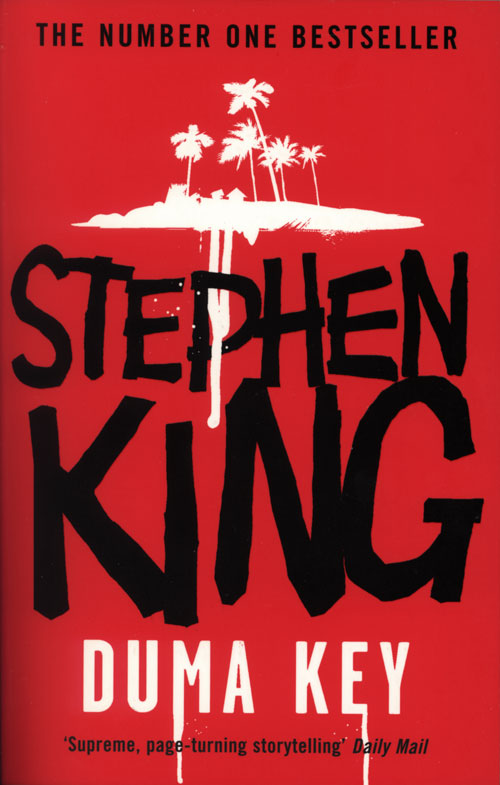
Then, after all that talk about the digital world, I went for a dose of good old analogue, down in the art show. It’s great to see original artwork, complete with thick splotches of paint, or the varying shades of black ink on an illustration. It makes you that much more aware of the skill that goes into creating good artwork. Lovely to see the original to the cover of that first paperback edition of Salem’s Lot that got me reading Stephen King. The artist that most impressed me at the show was Edward Miller, though I couldn’t understand at first why he was mixed up with the Les Edwards paintings, when all the other artists had got their own separate sections. It was only when reading the Souvenir Book, later, that I learned Edward Miller is Les Edwards — it’s just a pseudonym he invented so as to produce paintings in a different style. The Miller style is wonderfully moody and evocative, more painterly than Edwards’ more realistic style, and I’d have loved to have bought a print or two, but sadly none were available. (And the originals, of course, were way out of my price range.)
Saturday
First panel of the day was “Look at Me”, about self-promotion for new authors. The advice basically came down to being personable and not too pushy while at the same time getting out there and using every means to get your name and writing known. So, use the internet, but not just to say, “Buy my books!” Treat each interaction as an interaction with another person, not just a potential sale. (It’s nice to know that, in the world of books, genuineness isn’t just respected, it’s expected; it makes me feel there’s some part of us that will always be proof against mere commercialism and advertising.) Other than that, no real surprises: do signings, go to conventions, and even give things away if no one’s buying.
Following this was something of a mega-panel, as a gathering of eleven (I think it was eleven) authors and artists who had been involved in the Pan Book of Horror spoke about their experiences of being part of that legendary series.

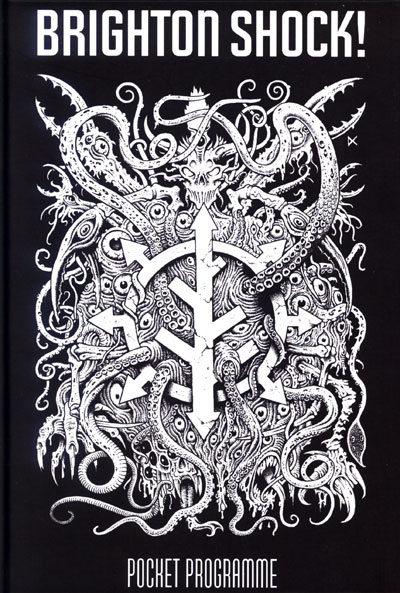
Next up was a bit of a surprise. A hoarse Stephen Jones announced that they had deliberately not put in the programme who was going to interview the convention’s Guest of Honour, James Herbert, because they’d been planning something special. Then in through the door comes Neil Gaiman! (I’d noticed Gaiman was listed in the Pocket Programme as appearing at the Stanza Press launch, but had assumed it was a mistake.) It turned out Gaiman had interviewed Herbert many years ago in his journalistic days, and the two were obviously old friends. Herbert proved to be an excellent interviewee, full of anecdotes and opinions. He provided a few teasers for the novel he’s working on at the moment, Ash, which is a couple of years overdue and still only half-finished, mainly because of the amount of research he’s had to do. Apparently, Ash somehow brings together a lot of mysteries about historical figures who have disappeared, from Jack the Ripper to Lord Lucan, and various shenanigans and mysteries surrounding the Royal Family. (I guess he’s not expecting a knighthood anytime soon.) At one point, Gaiman compared Herbert’s novels favourably to the imitators who appeared immediately afterwards, in whose number he included Guy N Smith “who you only read for laughs” (he said, or something similar); someone then pointed out that Guy N Smith was in the audience, whereupon Gaiman said that he’d nevertheless enjoyed reading Smith, and proved it by quoting a line from Crabs. Herbert seems to have come under a certain amount of flack in the past because many people assume he merely jumped on the Stephen King bandwagon, but he pointed out that he was published (and popular) in this country before King; and he’s not shy of praising his fellow writers, calling King a genius (“though perhaps he writes too much”), and also saying how much he enjoyed reading Ramsey Campbell and Clive Barker (“when he finally gets round to writing something new”).
Next up was the Stanza Press poetry imprint launch. I’d come to the con already intending to buy the three Weird Tales volumes (which reprint the poems Lovecraft, Clark Ashton Smith, and Robert E Howard published in that venerable magazine), but had been convinced by the previous day’s poetry panel to get the other two volumes as well, so I went to the launch and bought all five, then of course got them signed:

Following a quick lunch, I went back to the main lounge to see Ramsey Campbell interviewing David Case, who I have to admit I hadn’t heard of before the convention. In the end, though, enough was said to convince me to buy his new collection, also launched at the con from PS Publishing.
Following this, “Those Were The Days” was a panel of anthology editors, with tales of tracking down obscure Victorian stories and ploughing through slush piles. Mike Ashley revealed that he’d come to think himself cursed after a spate of elderly authors or their relatives dying soon after he wrote to them to get permission for a reprint. Hugh Lamb then told how one prospective author had rung him up and started reading his story submission down the phone!
The next slot was down as the Ingrid Pitt interview, but she wasn’t up to a full hour’s interview, so the second half was a brief Kim Newman/Neil Gaiman slot instead. Ingrid Pitt proved to be full of life though, particularly when talking about the male movie stars she’d known. John Wayne she was less than complimentary about (because he beat her at poker), while Clint Eastward was “the most — the most — the most man of any man!” A statement she backed up by cupping her hands in front of her in a way usually reserved for men describing women. Quite what she was indicating by those cupped hands we never learned!
Then came Neil Gaiman and Kim Newman, who started by recalling that the last time they’d been at a con in Brighton together, they’d had to sleep on the floor of a kitchen in a local clinic. Gaiman said he’d just come in from Russia, where previously poor translations of his work had just been updated. Apparently the previous translator had skipped passages whenever she got bored! He then spoke a bit about his upcoming Doctor Who episode, which it turns out has been put back to the new Doctor’s second season. It needed the character of the Doctor to be well-established, but also required quite a bit of CG effects, which meant it had to be moved onto the next season’s budget.
After this, I went down to the dealers’ room, bought the David Case collection, and S T Joshi’s new Lovecraft-inspired anthology. Oh, I could have spent so much more!
Sunday
Overnight the clocks went forward, so it seemed I suddenly had less time to get out of my room than I’d thought. I wasn’t sure whether to just go for my train or stay for one more panel, but in the end I checked out early and parked myself in the lounge for one final hour of World Horror Con 2010. I’m so glad I did. That final panel was Kim Newman interviewing Dennis Etchison, and it was hilarious. Of course, I can’t remember any of it. There was something about a talking pig… Oh, and an anecdote about Ramsey Campbell, who had been given a brief, end-of-show slot on some US TV programme. After a bog-standard book promotion interview, the presenter realised there was a little bit more time to fill, so she said, “Tell me Ramsey, what’s your scariest story?” He answered. Then the presenter said something like, “Can you do a bit for us?” And apparently, Ramsey did, off the cuff!

WHC2010 went on till Sunday afternoon, but I had a train to catch. I’d like to have stayed to see the Les Edwards presentation (and perhaps to have won a Les Edwards original with my “magic raffle ticket”). Overall, there were only a couple of other panels I wish I’d been able to see — the Dave Carson interview, and a panel about horror film books which I walked in at the end of and realised I’d missed something interesting. More money to spend in the dealers’ room would have been nice, as would be the time to read everything I wanted to buy!
Anyway, that’s what I remember of WHC2010. I took my camera and used it far too little, and far too badly, as always. I have this knack of taking a photo the very moment people duck their heads or hide behind a microphone. I’ve put the few usable ones up as an album on Facebook, which you can find here.

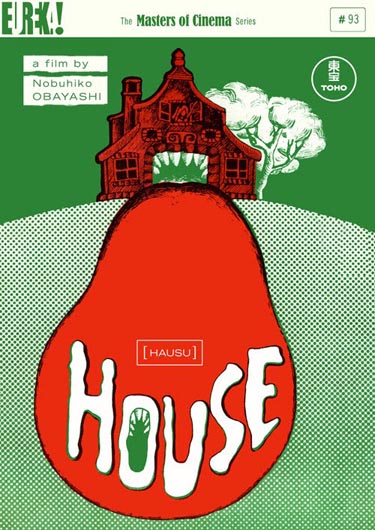 Just as there were seven samurai, in House, the 1977 commercial debut from director Nobuhiko Obayashi, there are seven schoolgirls; and just as there were seven dwarfs named Happy, Sleepy, Dopey, Grumpy, Bashful, Doc and Sneezy, the seven schoolgirls are named Angel (who’s always doing her makeup), Fantasy (who’s always imagining things), Prof (who wears glasses and reads a lot), Kung Fu (who does kung fu), Sweetie (can’t remember why), Melody (who plays the piano) & Mac (which is short for Stomach, because she likes eating).