Flicker by Theodore Roszak

flickerI still haven’t come up with a name for that genre of books/films I like so much, where the main character is researching the life of some obscure, forgotten artist (or writer, or filmmaker), or is tracking down some legendary-but-now-lost film (or book, or artwork), and whose quest leads them into dark, often supernaturally horrific territory — previous examples covered in this blog being John Carpenter’s Cigarette Burns, and Ramsey Campbell’s The Grin of the Dark — but Theodore Roszak’s Flicker was the one that, for me, came first, back sometime in 1992 I think it was, when I found it listed in the Andromeda Bookshop catalogue.

(…Brief pause to reminisce about those Andromeda Bookshop catalogues. It’s another thing the internet has done away with — both the need to browse through catalogues and the pleasure of doing so. But those A5 zine-sized little booklets, packed with listings of new books, classic re-releases, rarities and oddities in the sf, fantasy and horror world, complete with intriguing little plot synopses and recommendations, were such a joy to read, simply because of the surprises and treasures they always had in store. I never kept any of them, which is a pity, as they could well have formed, by themselves, a mini-history of late 20th century fantasy publishing. One book catalogue I haven’t been able to bring myself to throw away, though, is from Mick Lyons’ Kadath Press, at the time one of the few (if not the only) UK distributors of Arkham House, Necronomicon Press, and other US publishers of classic weird fiction reprints and associated marginalia. Looking through that catalogue at times felt like leafing through the Necronomicon itself — full as it was of dark secrets and macabre promises of eldritch enlightenments… Okay, so-called “brief pause” over, and back to the book…)

In Flicker, Roszak’s hero Jonathan Gates becomes fascinated by the films of Max Castle, an initially promising exponent of German Expressionism back in the silent days, who later moved to Hollywood and, after a disastrous attempt at a Biblical epic (The Martyr) that went hugely over budget and was never finished, lapsed into pulpy shockers with titles like The Ripper Strikes, The Ripper Returns, Revenge of the Zombie and Kiss of the Vampire. But Castle’s films turn out to have a peculiar dark power that goes beyond their tawdry imagery, something Gates soon learns is all down to “the Flicker” — a way of manipulating the very fundamentals of film itself to hide a second, secret film within the shadows and lights of the first. But Castle didn’t just use these visual tricks to add a little frisson to his films’ chills — for he was born into a secretive religious order known as the Orphans of the Storm, and once Jonathan Gates discovers them, we start to enter Da Vinci Code territory (though, as the novel was written well before Dan Brown’s, perhaps I should say Holy Blood and the Holy Grail territory); we’re soon in the all-too familiar company of Templars, Cathars, a secret order of Catholics (“Oculus Dei”), and the Gnostic gospels of the worshippers of the god Abraxas. H P Lovecraft even gets a mention.

The great thing about this sort of plot is the way it tangles its inventions up with the real history of the culture it’s dealing with — Max Castle, like a dark Zelig or Forrest Gump, pops up behind the scenes of a few key classics, such as Citizen Kane and The Maltese Falcon, as well giving Louise Brooks her first, uncredited, silver screen appearance. Just as Lovecraft would drop the odd real book title into his lists of forbidden tomes (Margaret Murray’s The Witch Cult in Western Europe, for instance), this all adds to the authenticity of the invented films. Flicker was pretty much responsible for starting my interest in going back and watching the film world’s great classics, as well as convincing me to read Joseph Conrad’s Heart of Darkness (in a neat, filmic twist, a book I never really understood till I saw it adapted in Apocalypse Now).

And it seems Flicker is going to be made into a film itself in 2008.

^TOP

Heroes and Shaggy Dogs

It’s no surprise that there’s talk, yet again, of a Watchmen film, when you consider the success of the US TV show Heroes. It’s true that there’s been quite a run of successful films based on superheroes of late, but Heroes is the one thing that could truly pave the way for a Watchmen film simply because it owes so much to Alan Moore and Dave Gibbons’s milestone comic — and not just in the way it presents a more realistic take on what it would mean to live in a world where people have superhuman powers. Nor is it just in the hint of upcoming metropolitan Armageddon, it’s in the very moment-by-moment style of the show — for instance in the way that a newspaper headline glimpsed in a scene belonging to one character’s story makes reference to an ongoing story about another character. Moore has several times spoken of how the density of information he and Gibbons presented in each panel of Watchmen was an attempt to do something in comics that couldn’t be done in film, so it’s interesting to see TV trying to do the same thing. It’ll never manage to equal the sheer weight of world-building information Moore and Gibbons provided in Watchmen, but this is a step closer.

heroes

The main difference between Heroes (I’ve only seen the first two episodes, on BBC2) andWatchmen is that Heroes starts at the point where its characters are just coming to realise they have superpowers, whereas Watchmen, in a very dark, 80s way, presented us with the same sort of characters past their point of decline, decadence, and downfall: in Watchmen, it’s all after the main event, when the sheen of heroism has long worn off and the rust and tarnish is all too evident; Heroes starts at the beginning of the road to that fairy-tale moment of self-discovery.

Having watched the first two episodes, I’m not quite sure whether I’m going to watch the rest. On the one hand, I really like these sorts of stories where people discover they have special powers — the first X-Men film, for instance, and the first Harry Potter book both got to me for just that reason — but on the other hand, there’s the whole beast of long TV drama series we’re seeing at the moment. The thing about commercial TV is that, because you don’t pay for it, it’s basically all about getting you to sit down in front of the box so you can watch adverts. So it’s in the programme-makers’ interest to, rather than provide a well-paced, well-told tale, string it out like a shaggy dog story for as long as possible, to keep you coming back each week. Lost was a prime example of this. I kept watching it while it was on terrestrial TV because I wanted to know the answer to its various mysteries, all the time knowing I was never going to actually get the answer to those mysteries, or if I was it was only going to be a half-answer followed by a whole new mystery, all the more intriguing than the last. It was how they kept you watching, but it began, more and more, to feel like the cynical trick it was, and I basically felt relieved when the show moved to Sky (or wherever it is now), so I didn’t feel the need to keep watching it. Heroes has a bit of the same feel to it. The first two episodes were full of hints about forthcoming plot-lines which sound intriguing — but are they ever going to be told, or are we just going to be strung along till the show starts to lose ratings and gets cancelled?

Story is one of the most powerful forces to act on (and come from) the human imagination. We live in a world full of stories — films, books, TV shows, news, anecdotes, jokes — but we’re still hungry for them. And why is that? Because real stories, told with style and at the right pace, with genuine skill and integrity, are still so rare. One of the reasons they’re rare is that, as soon as something with real value raises its head, the forces of commercialism jump on it and strangle it in an attempt to make as much money as they possibly can from it.

Money grabbing bastards! Leave those stories alone!

^TOP

Catching the Big Fish by David Lynch

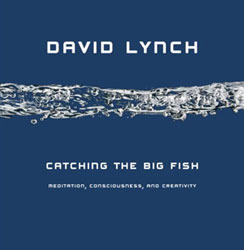
Creators whose work you admire, and who talk about the process of creation in an articulate, helpful, and inspiring way are quite rare. This is, I suppose, partly because creative people are not always prepared to turn round and face the mechanics of what they’re doing, particularly if it ain’t broke. (Alan Moore has that excellent comparison between himself and someone whose livelihood depends on the vehicle they drive: they would naturally want to understand how things work under the bonnet, so why shouldn’t he?) This makes those that can do this all the more valuable. I suppose it’s only natural that the most articulate creators should be those who are used to doing collaborative work where they have to explain their creative vision so that other people can understand it. So this would include comic creators such as the already-mentioned Alan Moore (the recent DVD of The Mindscape of Alan Moore being a prime example), and film directors such as Ridley Scott (whose DVD commentaries are always excellent) and Guillermo del Toro (ditto). I wouldn’t have ever expected David Lynch to fall into this category. In interviews about his films, he notoriously declines to analyse, comment or interpret his work, which always made me think he had a basically instinctive, rather than analytical, approach. (He says: “A film should stand on its own. It’s absurd if a filmmaker needs to say what a film means in words.”) So it was with great surprise that I discovered he’d written a book about the creative process, Catching the Big Fish, which was published in 2006.

lynch_fish

It’s made up of a lot of short chapters. (Some chapters consist of a single sentence. Having just discussed the origins of Mulholland Drive, for instance, there’s a chapter called “The Box and the Key” — which are important elements in that film — which reads, simply, “I don’t have a clue what those are.”) Lynch writes in short, simple sentences which get straight to the point and leave out embellishment. He covers ideas and the creative process, film-making, anecdotes from his own life, but also there’s a lot about consciousness and meditation (the subtitle of the book is “Meditation, Consciousness, and Creativity”). There’s rather more about consciousness and meditation than about creativity, but as Lynch sees the three as inextricably linked, that’s understandable.

David Lynch practices Transcendental Meditation. He sees this “diving deep down into the Self” as key to not just successful creativity, but a happy life. He doesn’t proselytise, but he also doesn’t really explain the process of TM (as they charge for courses, I suppose he can’t), which is a bit frustrating for the reader. You can’t try it out for yourself without an outlay (of about $2,500, according to Wikipedia), but I’m inclined to think that any form of “diving deep down into the Self” should do just as well, so Zen meditation, which is free to learn (simply sit there and think of nothing — a remarkably difficult thing to achieve), is probably just as good.

Lynch’s remarks about creativity are incisive. There’s nothing especially new, but hearing these things simply stated, and coming from a creator I admire, is inspiring in itself. Or perhaps this is just because Lynch’s simple prose makes everything he says seem so commonsensical. (“If you want to get one hour of good painting in, you have to have four hours of uninterrupted time” — something he was told by Bushnell Keeler, the artist father of a childhood friend. Also: “It’s crucial to have a setup, so that, at any given moment, when you get an idea, you have the place and the tools to make it happen.”) Lynch’s basic metaphor is that ideas are like fish, and, as he says, “If you want to catch little fish, you can stay in the shallow water. But if you want to catch big fish, you’ve got to go deeper.” In one sentence he expresses a truth about creative ideas which I’ve long thought myself but have never managed to put so succinctly: an idea is “a thought that holds more than you think it does when you receive it.” This thought, this idea, for Lynch, is his touchstone throughout the rest of the creative process. He believes in being absolutely true to it, in always comparing what you’re doing to that initial thought or feeling, and correcting what you do if it strays too far. “If you stay true to the idea,” he says, “it tells you everything you need to know.” This can mean hard work, particularly in a commercial environment which, of all the arts, film is to the greatest extent. “Stay true to yourself,” he says. “Let your voice ring out, and don’t let anybody fiddle with it.” And if you do this? “You’ll glow in this peaceful way. Your friends will be very, very happy with you. Everyone will want to sit next to you. And people will give you money!”

Here’s to that last. Oh, and the others, I suppose. But can I have the last one sooner rather than later?

^TOP