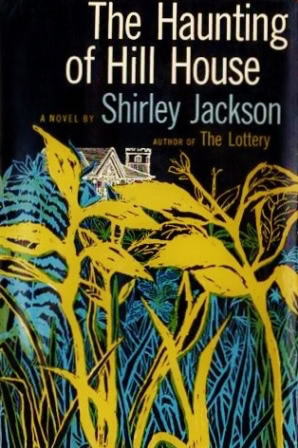
 The opening paragraph of Shirley Jackson’s haunted house novel is so good, everyone who writes about the book is statutorily obliged to quote it:
“No live organism can continue for long to exist sanely under conditions of absolute reality; even larks and katydids are supposed, by some, to dream. Hill House, not sane, stood by itself against its hills, holding darkness within; it had stood so for eighty years and might stand for eighty more. Within, walls continued upright, bricks met neatly, floors were firm, and doors were sensibly shut; silence lay steadily against the wood and stone of Hill House, and whatever walked there, walked alone.”
It’s that “not sane” that, for me, delivers the killer blow. Hill House isn’t insane. Insane is a technical term, a doctor’s diagnosis — a dismissal, and a pretence at understanding. “Not sane”, though, sounds like it has found a whole new way of being. It sounds like something we don’t know, and never can.
This is one of the great strengths of Shirley Jackson’s novel. After the pioneering days of the 1890s greats which found new ways to talk about the darkness that lurks in the human psyche — Dr Jekyll & Mr Hyde, Dorian Gray, The Turn of the Screw, Dracula — the ghost story was effectively neutered by Freud and other psychoanalysts, who taxonomised and rubber-stamped all those areas of inner darkness. They were “understood”. What Shirley Jackson does in The Haunting of Hill House is write a ghost story that, far from being disempowered by the ideas of Freud and co., gains new power because of them, then goes on to transcend them. “No,” it seems to say, “you don’t understand.”
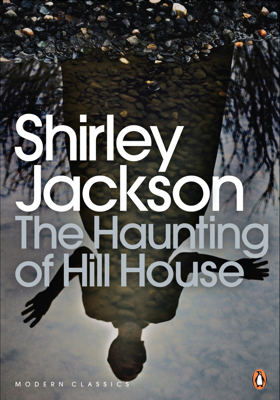 Hill House begins with Dr John Montague, inspired by “the intrepid nineteenth-century ghost hunters”, deciding to carry out a proper scientific investigation of a genuinely haunted house. Having selected Hill House as his subject, he invites as many people with even the slightest hint of psychic ability as he can find to join him in a three-month stay. Two turn up — timid Eleanor Vance and sophisticated Theodora (so individualistic she only needs a first name) — and, together with Luke Sanderson, a representative from the owning family (who don’t live at the house), the quartet take up residence towards the end of June 1956.
Eleanor is only recently free of 11 years caring for her mother, a period of “small guilts and small reproaches, constant weariness and unending despair.” Reduced, now, to sleeping in a cot in the baby’s room at her married sister’s — who, along with her husband, talk about Eleanor in front of her as though she wasn’t there, and make decisions for her as though she were a child — when she receives Dr Montague’s invitation, she accepts because, at that point, she “would have gone anywhere”. She’s 32 years old and “Nothing of the least importance has ever belonged to me”. On the drive to Hill House, she fantasises about how this is the first day of the sort of life everybody else has been enjoying all this time and which she, at last, is now going to have too. “Journeys end in lovers meeting,” she keeps telling herself. And then she sees the house where she is to stay:
“The house was vile. She shivered and thought, the words coming freely into her mind, Hill House is vile, it is diseased; get away from here at once.”
But she doesn’t get away. She has no other chance at life but this.
 The genius of Jackson’s novel comes from how the hauntings, when they begin, fit so perfectly with Eleanor’s fragile psyche. As an adolescent, shortly after the disappearance of her father, Eleanor seems to have produced a brief bout of poltergeist activity, hence her invitation to Dr Montague’s ghost-hunting party. So, when the increasingly insistent phenomena of Hill House begin to present themselves, it’s possible to see them as coming from Eleanor’s own pent-up frustrations, unconscious needs and self-persecutions. The night-time knocking at doors could be a reminder of Eleanor’s mother’s death (she later admits she heard her mother knocking on her bedroom wall, but refused to go to her); the chalk message that appears on a wall — “HELP ELEANOR COME HOME” — could be Eleanor’s need to make herself the long-denied centre of attention in this new circle of friends; the next message (in blood, on Theodora’s door) and the attack on Theodora’s clothes could be Eleanor’s unconscious aggression towards Theodora for suggesting Eleanor wrote that first message herself, as well as being a ploy to make Theo move into her own room, to own this new friend all the more.
Equally, these phenomena could be read as the intensely malignant, abominably wise Hill House manipulating Eleanor in the subtlest of ways. By naming Eleanor in that first message, it isolates her from the others, and starts to make her realise that the only true friend she has is the house itself. By attacking Theodora’s room and forcing Theo to wear Eleanor’s clothes, the house could be playing with Eleanor’s fragile sense of identity, making her seem less and less needed as she sees how Theo continues to shine, even in Nell’s drab clothes. Eleanor begins increasingly to haunt the others, listening unseen to their conversations, hungry to hear herself mentioned (which she never is). She’s halfway to being a ghost already.
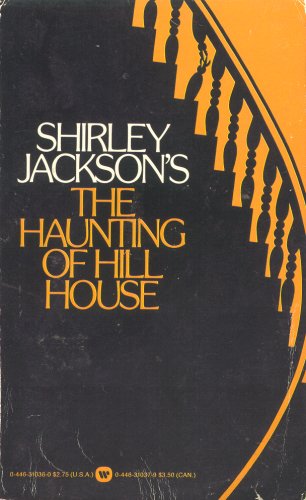 That initial message — “HELP ELEANOR COME HOME” — is itself wonderfully ambiguous. Is this a cry from Eleanor’s dead mother’s spirit, warning her away from Hill House, or is it a cry from the house itself, inviting Eleanor to become a fuller part of it? What does “COMING HOME” mean? Leaving Hill House, or being part of it forever?
Jackson’s characters — and Jackson herself — are part of a generation that would have grown up with the ideas of Freud, have become cynically used to questioning their own motives and reading their unconscious slips as the symptoms of a Freudian psyche, chock full of childhood anxieties, veiled narcissisms, hostilities and frustrations. The nonsensical, self-conscious fantasising of the main trio’s banter sounds simultaneously like an attempt to not admit how scared they are, while also acting as the perfect word-association-style carrier for letting out unconscious fantasies and frustrations, for fencing with one another and judging one another without having to admit that’s what they’re doing. In the end, it’s nothing but nonsensical babbling compared to the vast unknowability of un-sane Hill House.
At the book’s conclusion, two details from that superlative first paragraph magnify the horror, despite the ambiguity over whether it’s Eleanor’s troubled psyche playing out its most dangerous impulses, or Hill House as a real and active supernatural force.
The first is the idea that what drove Hill House “not sane” are “conditions of absolute reality”. What’s going on here is not contact with a removed and abstract netherworld, but something far more real than our everyday lives, too real to be faced. At one point, Dr Montague says: “I think we are only afraid of ourselves,” to which Luke says, “No… of seeing ourselves clearly and without disguise.” Is this, then, what happens to Eleanor? Hill House’s “masterpiece of architectural misdirection” so perfectly mirrors her own disordered psyche that it brings it out for her to see, in all its nasty, infantile purity? And, faced with this horrific but unavoidable self-judgement, she has only one course open to her.
 Then there’s that phrase: “whatever walked there, walked alone.” It’s repeated at the end of the novel, and it seems to add a further twist to Eleanor’s inevitable fate. Because we know, by then, that Eleanor has come to feel that joining with Hill House might be joining with “HOME”, might be a kind of belonging, even if it is of a twisted kind. But that final phrase — “whatever walked there, walked alone” — implies that she never achieves any sort of belonging. Perhaps she dies completely, victim of a Hill House that continues to exist alone in its isolated malignancy; perhaps she finds herself a ghost in Hill House, but just as isolated as before; worse, perhaps even in the afterlife Hill House continues to play its psychological games with her, keeping her unbalanced, isolated, afraid; or perhaps it absorbs Eleanor into itself, overpowering what little precious individuality she once had.
Jackson’s novel — like Aickman’s “Strange Stories”, which belong to the same era — escaped the fate of early 20th century ghost stories by confronting and transcending the new psychoanalytical thinking about the darkness that lurks within. By doing so, Jackson regained, for the supernatural tale, the power to depict that inner darkness with so much more force than any mere technical jargon ever could. Freudian terminology, overused and “understood”, quickly ceases to capture the very powerful, and highly dramatic reality of what lurks within the depths of the human psyche. In The Haunting of Hill House, Jackson restores the ghost story’s power to terrify, overwhelm and overpower; she restores its ambiguity and deceptiveness, the way it can play with us and prove that, far from us “knowing” it, it in fact knows us — and all our weaknesses — which it can then proceed to prey on mercilessly.