UK HB, art by Ronald Himler
Having recently read Lawrence’s 1978 YA novel Star Lord, how could I resist following it up with 1981’s The Earth Witch, sounding as it does so much like a companion piece? And there are a few similarities between the two. Both, for instance, are set in rural Welsh valleys, and in both the teen characters find themselves dealing with the archetypal/mythic entity of their book’s title, both of which sound like one of the major arcana from an alternative Tarot deck laid down by the post-60s imagination.
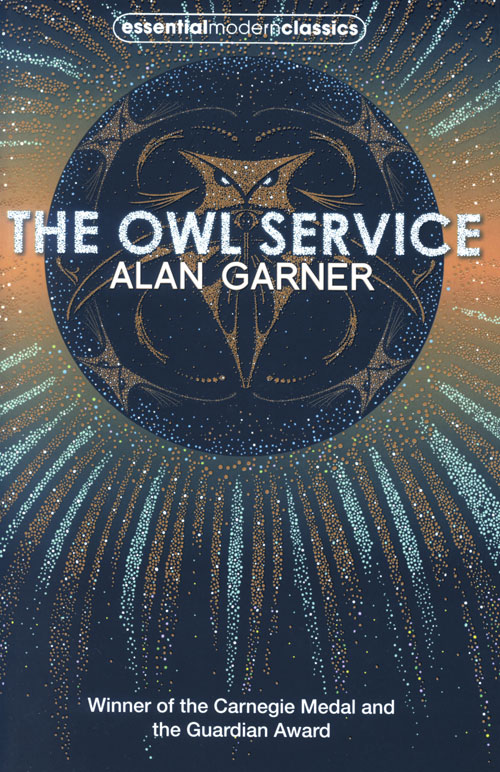
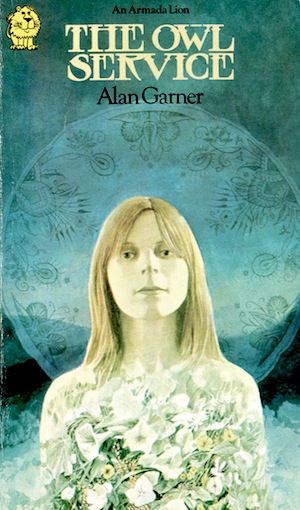
In The Earth Witch, the main characters are a trio that recalls Alan Garner’s The Owl Service: we have an English brother and sister, John and Kate Henderson, whose parents have recently bought Tregarron Farm in Wales, and Owen Jones, Welsh working class to the English pair’s middle class, adopted son of Ifor and Gladys, who have worked on the farm and lived in its tenant cottage all their lives. Owen is Ifor and Gladys’s nephew, abandoned by his mother when she had him out of wedlock — “born on the wrong side of the sheets”, as Aunty Glad puts it — after which she left for America, where she’s now married and has all but forgotten her son. Though his aunt and uncle look after him like a mother and father, there’s nevertheless a mother-shaped hole in his life, just from the knowledge that she’s out there but not in his life.

Lions UK HB, art by Jeff Cummins
The book opens in February, as the first signs that winter may be on the way out bring a new sense of life to the valley. The three teens learn that a new tenant has moved into the dilapidated cottage of Mynydd Blaena, formerly the home of the eccentric (perhaps outright mad) Megan Davis, who was somehow involved in the death of a local man a little while back, and was then found dead herself in her isolated home. The new woman, Bronwen, claims to be a relative of hers. In fact, to Owen, she claims to be something more:
“I am her… I am her blood. The white roots woke me and I rose from the grave of her bones and her dust. I know all that she knew.”
Owen is the only person to offer Bronwen help with the cottage, though she seems more to resent than welcome it, while at the same time feeling it’s exactly what she’s due. She has her distinctly witchy aspects: control of a crow and a sometimes-vicious black dog, as well as a thorough knowledge of the magical uses of plants. And as winter turns to spring, her personality thaws. She starts to act like the mother Owen never had. She becomes a teacher in the local school, and her relationship with Owen shifts from the motherly to that of a lover. In the fullness of spring, she’s the May Queen at the village celebrations, though some locals still mutter darkly about what happened with Megan Davis and the ill-fated Gareth Llewellyn, and how they expect it all to happen again.

Ace PB, art by Winslow Pinney Pels
To Owen, Bronwen speaks openly about what she believes herself to be: not just the valley’s May Queen but a Goddess, at once Rhiannon of the Underworld, Blodeuwedd of the Owls, Angharad of the Lake, Cerridwen the Shape Changer, and the embodiment of Nature itself, who “gives life and destroys it, like the earth, like the seasons”. (In many ways, she’s a human version of the unforgiving Mawrrhyn mountain in Star Lord, a force that encapsulates all that nature gives in bounteous spring and summer, and the harsh price it demands in winter.)
She has moments of bitterness directed against the male-dominated modern world:
“Goddess I was once but they are despising me. They are setting up the male God in their own image and casting me down… You [men] are all one to me. All answerable for the crimes you have committed.”
She seems to come round when Owen reminds her she has “no right… to blame a single person for the sins of all”, but the cycle is started and just as she — and nature in the valley — gives of her great bounty in the year’s harvest, so she’ll demand her price. One life for all that she has given. And whose life but the boy she lavishes her greatest attention on?
Kate is the other character to feel something of Bronwen’s archetypal nature:
“Kate could feel her. She was cold in the river voices, hard in the heart of stones and black as hell. She was cruel as the peak of Pen-y-Craig and the look in the crow’s beady eyes. She was bats and moths and crane flies, everything Kate hated and feared…”
Yet:
“She seemed to embody the spring within herself; the song of the river over its stones, the wind through the sedge and the drift of willow leaves. She was the essence of flowers, the soul of the sunlit land, old as the maypole dance and eternally young…”
But in her case it’s what the sight of this powerful woman awakens in her own depths:
“Below the surface of herself Kate could feel something so hideous she could not bear to think of it… an instinct of blood sacrifices and fertility rites, ancient rituals of birth and death…”
“She doesn’t want love,” she tells Jonathan. “She wants worship.”
 There’s so much in this novel that ties in with the strand of living-myth-meets-kitchen-sink-drama I love in 1970s YA (here lasting into the 80s). There’s rural Wales as a place on the border between myth and gritty reality, where folk beliefs sit unexamined alongside a fading Christianity, while both are being replaced by a scientific rationality that denies they exist — which simply means that those who encounter these mythic forces must do so without help. Modern and traditional ways rub together to produce a weird, magical, and often tragic friction. Like so many of these books, it’s about that 1970s balance point where the modern, technological, and rational meet the ancient, imaginative, and sacred: something that’s fading away, or perhaps only temporarily sleeping, and prone to rise up in all its dangerous, harsh, timeless and often inhuman power. As Kate says — talking simultaneously about Bronwen, the Goddess, and Nature all at once:
“The earth… That land out there… We’ve forgotten what she means. We’re not connected anymore. We just live on the surface and nothing touches us. We don’t think deeply of the soil and the stones and the hearts of the hills. We’re not part of the land… [We] just use her.”
The theme is just as relevant today, but I can’t imagine it being put in similar terms, framed as a sacred thing. Now, the landscape is a thing to manage, to care for, like a sick patient, not the wounded Goddess she may in fact be. The difference being that a sick patient may die, but a wounded Goddess is likely to hit back…
 Although it’s quite a short novel, it builds its power gradually, leaving it right to the end to resolve — something I loved in Elidor, and which worked only a little bit less effectively here. The sense of the tragedies of the past — both the ancient, mythical past, and that of the previous generation — weighing in on the innocents of the present, at the very moment they lose their innocence, and the horror of their inability to see just how they’re being twisted into playing parts in an ancient tragedy, creates a tight drama using only a few characters that nevertheless feels as though it’s reaching epic depths.