
Living Alone by Stella Benson

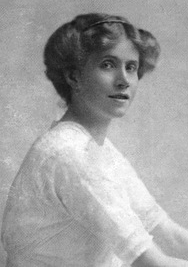
Stella BensonLike David Lindsay’s A Voyage to Arcturus, Stella Benson’s Living Alone (1919) was published in the aftermath of the First World War. Both books set out to attack the conventional world, but if their attack was kicked off by a disgust with the horrors of war, the anti-conventional impulse was deep within these writers already. The main difference between the books is in their method of attack: Lindsay’s approach is to tear the conventional world to shreds to prove there’s nothing worth saving, while Benson satirises, using her ‘magic people’ — her witches and wizards — as exemplars of unconventionality, to show the world what it has lost. The odd thing is that, though a comedy, Benson’s book contains almost as much of a tragic note as Lindsay’s.

Living Alone starts with a woman bursting in on a charity committee. She’s just stolen a bun and needs to hide from the police. The committee, whose job is to sort the worthy from the unworthy, immediately starts trying to find excuses not to help her. But she doesn’t want help. The woman is a witch. She has packets of magic in her pockets.

‘Now witches and wizards, as you perhaps know, are people who are born for the first time. I suppose we have all passed through this fair experience, we must all have had our chance of making magic. But to most of us it came in the boring beginning of time, and we wasted our best spells on plesiosauri, and protoplasms, and angels with flaming swords, all of whom knew magic too, and were not impressed.’

One of the committee members, a woman called Sarah Brown, goes to the witch’s home, a shop-and-boarding house at ‘Number 100 Beautiful Way, Mitten Island, London’. This house is called Living Alone:

‘It is meant to provide for the needs of those who dislike hotels, clubs, settlements, hostels, boarding-houses, and lodgings only less than their own homes; who detest landladies, waiters, husbands and wives, charwomen, and all forms of lookers after. This house is a monastery and a convent for monks and nuns dedicated to unknown gods. Men and women who are tired of being laboriously kind to their bodies, who like to be a little uncomfortable and quite uncared for, who love to live from week to week without speaking, except to confide their destinations to ’bus-conductors, who are weary of woolly decorations, aspidistras, and the eternal two generations of roses which riot among blue ribbons on hireling wall-papers, who are ignorant of the science of tipping and thanking, who do not know how to cook yet hate to be cooked for, will here find the thing they have desired, and something else as well.’

There are three types of alone-ness in Benson’s novel. The first is the natural lack of need for company — a self-sufficiency born from a rather childlike self-absorption and self-centredness — exemplified by the witch. In comparison to the conventional-minded — as typified by those who sit on committees (‘and a committee, of course, exists for the purpose of damping enthusiasms’) — these are the un-fallen innocents of the world, who ‘are not blinded by having a Point of View. They just look, and are very much surprised and interested.’ But, as much as they’re childlike and innocent, they’re also not fully formed as human beings:

‘A heart is a sort of degree conferred by Providence on those who have passed a certain examination. Magic people are only freshmen in our college, and it is useless for us—secure in the possession of many learned letters after our names—to despise them. They will become sophisticated in due course.’

Being ‘sophisticated’ is the second type of alone-ness — not separation from other people, but from one’s deeper self. Those who are ‘sophisticated’ are the sort to sit on judgemental charitable committees, and are isolated from others not by childlike innocence, but by the assumption of an inauthentic, self-blinding maturity:

‘Mr. Darnby Frere was the editor of an advanced religious paper called I Wonder, but he never wondered really. He knew almost everything, and therefore, while despising the public for knowing so little, he encouraged it to continue wondering, so that he might continue despising and instructing it.’

This is the social self divorced from the truer, deeper self:

‘Religion which has forgotten ecstasy…. Law which has forgotten justice…. Charity which has forgotten love….’

Stella-Benson2The tragedy of Benson’s novel lies in the third type of alone-ness. This belongs to one character only, Sarah Brown. Sarah Brown (who’s always given both names, as if in an attempt to make her a distanced, comic everywoman figure, though it seems to me she’s the closest to an authorial self-portrait in the book) is not so mired in the conventional world that she refuses to acknowledge the existence of magic (unlike the increasingly red-faced policeman, who insists on interpreting everything in mundane terms, even while wanting to arrest the witch for ‘being in possession of an armed flying machine’ — her broom), while also knowing she herself isn’t magical. Sarah Brown, then, can see both the innocent paradise of the magical and the cynical worldliness of the conventional, but can fit into neither. She knows, for instance, she’s not the ‘True Love’ of the dashingly unconventional wizard Richard; she also knows that, even as she leaves London for New York, it will no more be her true home (‘America, you know, would be entirely magic, if it weren’t for the Americans’) than London was. Sarah Brown has something within her that makes her unfit both for civilised company and her own solitude:

‘She could not bear touch. She had no pleasure in seeing or feeling the skin and homespun that encloses men and women. She hated to watch people feeding themselves, or to see her own thin body in the mirror. She ought really to have been born a poplar tree; a human body was a gift wasted on her.’

And, having set foot in the house — having admitted her alone-ness — it’s as though she can never leave it, and can never be anything but alone:

‘How can you ever be far from home, you, a dweller in the greatest home of all. Did you think you had destroyed the House of Living Alone? Did you think you could escape from it?’

But for most of it, the book is lightly magical and nonsensical, not so much a story as a series of skits. Some of the chapters could be extracted as short stories, such as chapter VI, ‘An Air Raid Seen From Above’, where the witch of the House of Living Alone, flying over London, gets into a fight with a German counterpart, who, though magical, has somehow been co-opted into the cynical world’s endeavours:

“We are Crusaders,” said the German. “Crusaders at War with Evil.”

“Why, how funny—so are we,” said our witch. “But then how very peculiar that two Crusaders should apparently be fighting each other. Where then is the Evil? In No Man’s Land?”

Despite being set in wartime, Benson’s book is a self-declared ‘book of fine weather’, ostensibly written for frivolity and fun. Magic and the war are entangled, but not in the way you’d expect:

“I suppose the War was made by black magic,” suggested Sarah Brown, trying to talk intelligently and to be faithful to her own thoughts at the same time.

“Good Lord, no,” replied Richard. “The worst of this war is that it has nothing whatever to do with magic of any sort. It was made and is supported by men who had forgotten magic…”

To me, Living Alone meanders over the fine line between being satirically funny and wilfully twee, though there were enough little gems to keep me going. For instance:

‘Fairies are never ill. They have immortal bodies, but no souls. If they see you in pain, they simply think you are flaunting your superiority and your immortal soul in their faces.’

Or, the moment when Sarah Brown and the Witch set eyes on America:

“Here we are,” said the witch to Sarah Brown. “At least, I suppose this City on its Tiptoes is New York. Do you think I ought to call the attention of the Captain to that largish lady on our left, who seems to be marooned upon a rock, and signalling to us for help?”

Or:

“I could of course cure you of the nerve-storms you speak of. Or rather I could help you to have nerve-storms all the time, without any stagnant grown-upness in between. Then you wouldn’t notice the nerve-storms.”

At times, I found myself thinking that Living Alone could never be published today, it is so wilfully eccentric, but at other times I couldn’t help feeling it might fit easily into the world of the Harry Potter books.

^TOP

The Other Wind by Ursula Le Guin

The Other WindAlder, a sorcerer whose talent is fixing broken things, arrives on Gont to seek help from the former (and still unreplaced) Archmage, Ged. Every night in dreams, Alder finds himself standing by the wall that borders the land of the dead, whose occupants gather before him, clamouring for release. His own dead wife begs to be set free, but when Alder uses her true name, it has no effect. Meanwhile in Havnor, King Lebannen hears of dragons harrying the lands of men, attacking villages and burning forests, where previously they had been content to keep to their own lands far to the west.

As I said in my review of Tehanu, Le Guin seems to have progressed through the Earthsea series by answering, in each new book, a question implied by her previous work. Tehanu finished with (and “Dragonfly” in Tales from Earthsea underlined) a question about the relationship between humans and dragons, how some humans can, somehow, also be dragons. And, though Earthsea’s version of the land of the dead was present in the first book, it was The Farthest Shore that brought that limbo-like land into full, desperate detail. Surely a place like that is wrong, in a world like Earthsea? In The Other Wind, Le Guin embodies these two issues in two characters: Alder, who, thanks to his dreams, carries around with him the problem of the land of the dead being such a place of ‘suffering where suffering is past’, and Tehanu, now 15 years older than in the book named after her, who literally embodies the question of people-as-dragons.

ModernScholarOf the two, I hadn’t expected the question about the land of the dead to need answering, though I said in my review of The Farthest Shore that that book’s vision of a dull and unpleasant afterlife seemed out of keeping with the series’s general affirmation of the natural course of things. In his lecture series The Modern Scholar: Rings, Swords and Monsters, Professor Michael D C Drout says that one of the things Le Guin does as the Earthsea series progresses is to correct what he calls the ‘buried Christianity’ it began with (the assumptions taken on wholesale from Western Christian culture — or ‘the heroic fantasy tradition’ as Le Guin put it — which don’t fit her own Taoist/Buddhistic beliefs). Drout says The Other Wind performs the final fix, correcting the hellish afterlife of trapped, tormented souls into one in which the souls of the dead are free to rejoin the world, either through reincarnation, or by being reabsorbed into the life of the whole.

(Another way of looking at it is that, while the first two books dealt with the coming-into-selfhood of young people — Ged in A Wizard of Earthsea, Tenar in The Tombs of Atuan — later books deal with the necessary letting go of self that comes with a preparation for death. Cob, in The Farthest Shore, refuses to die and thereby unbalances the world. Ged defeats him by relinquishing his own power, then has to learn to deal with his new powerlessness in Tehanu. In The Other Wind, we find him fully reconciled and at peace.)

As I say, I wasn’t expecting the problem of the land of the dead to be dealt with in this last book of Earthsea. What I was expecting were two questions raised by both Tehanu and Tales from Earthsea: ‘Why can’t women study at Roke?’ and ‘Who will be the new Archmage?’ The first question isn’t dealt with explicitly, but its answer may perhaps be found in Alder’s marriage to Mevre, a witch with a similar talent to his. Their relationship was one of equals, both emotionally and in terms of magical ability:

‘So rather than his teaching her, they put their skills together and taught each other more than either had ever known.’

Here, then, Le Guin seems to be saying that, whatever the rule of Roke is, women and men are equals in magic-use, and their talents can only be improved by their joining together.

OtherWindThe other question, about what will happen at Roke now Ged is no longer Archmage, isn’t answered. In its place, The Other Wind seems to raise a whole host of other questions to do with the future of magic. The Earthsea mode of wizardry — using the true names of things to control or change them — is, in The Other Wind, linked with the wrongness represented by the land of the dead. It’s implied that what to me is the founding notion of the whole Earthsea series — that people have a true name as well as a use-name, and that it gives access to both the power and the vulnerability that derives from selfhood — is part of the imbalance and wrongness of the world. The Other Wind fixes the problem of the land of the dead, but what does this do to Earthsea wizardry, and to Roke? Is magic itself finished?

It’s obvious Le Guin likes those of her wizards who seek knowledge and understanding, or who work directly with the Balance — the Master Doorkeeper, the Master Patterner, the Master Namer — but has grown to distrust those who use magic as an active, wilful power — the Master Summoner in particular, whose speciality is conjuring the spirits of the dead. Ged, her ultimate wizard, has found his own ultimate in the renunciation of power, and the destiny of Earthsea — and its story — has passed into the hands of Lebannen, a king and a non-wizard. (Who, here, has the makings of a screwball romance with a Kargish princess. If only Le Guin could do screwball romance! David Eddings did the whole awkward arranged marriage thing a lot better in The Belgariad, but The Other Wind doesn’t really have room for that degree of humour.) As in Tolkien, whose Elves in The Lord of the Rings are departing from Middle Earth to leave it un-magical and in the hands of men, here Le Guin’s dragons are also departing — are her wizards going to lose power, too? It’s a question I felt was raised but never answered.

The Farthest Shore, cover by David Smee

The Farthest Shore, cover by David Smee

My reaction to The Other Wind is similar to my reaction to The Farthest Shore. In both books, the central character is Earthsea itself, and as a result I found myself intellectually drawn by the themes of these novels, but not emotionally drawn, as I would have been by a more character-centred story. Fantasy, I think, works best when it interweaves the personal and the epic as one — Frodo’s journey to Mount Doom is a small-scale personal story that leads to an epic-scale result — and the books I love most in the Earthsea series (A Wizard of Earthsea, The Tombs of Atuan, Tehanu) are those which are primarily character stories, only tangentially touching wider events.

I’m glad, though, that I finally got round to reading the whole series. I’ll certainly come back and re-read the first two books. I don’t think I ever needed the world presented in A Wizard of Earthsea and The Tombs of Atuan to be expanded, but I’m certainly glad Le Guin wrote Tehanu (though it took me a few years to come back to it and fully appreciate it). Maybe the same is true of the series as a whole? The books I’ve liked most are those I’ve re-read, rather than read for the first time. Maybe I’ll come to a fuller appreciation if I ever go through the whole sequence again. But, that’s not something I’ll be doing for a few years yet!

^TOP

Tales from Earthsea by Ursula Le Guin

Tales from EarthseaTales from Earthsea collects five stories written between Tehanu and the final Earthsea novel, The Other Wind. Three of them are short: “Darkrose and Diamond” is a love story and a fable about finding your true calling; “The Bones of the Earth” relates an incident mentioned briefly in A Wizard of Earthsea, the mage Ogion’s laying of an earthquake on Gont; and “On the High Marsh” is, as Le Guin puts it in her preface, a minor event from ‘the brief but eventful six years that Ged was Archmage’. (I like that ‘brief but eventful’ — it sounds like a writer reserving the right to find more stories to tell.) In terms of the series as a whole, though, the two longer stories that cap and tail the collection are where the real weight lies.

“The Finder”, set three centuries before A Wizard of Earthsea, is about the founding of the School for Wizards on Roke. A young shipwright’s son, Otter, has a magical talent for finding things, but this isn’t a world that nurtures talent. This is a world ruled by a bunch of robber barons, pirate lords and self-proclaimed kings, all tussling for power. It’s a world in which those born with magical abilities are best off hiding the fact, lest the local bigwig decides they’re a threat (and kills them) or useful (and enslaves them). Only the most powerful sorcerers have any sort of autonomy, and Otter is given into the hands of one such man, the alchemist Gelluk, who is more than half insane in his pursuit of knowledge and power, and utterly indifferent to the suffering of others. Otter escapes thanks to a strange bond he develops with a woman, one of Gelluk’s slaves in his ‘roaster tower’, where he purifies ‘the watermetal’, mercury, in a horrible and life-costly process. Afterwards, Otter comes into contact with an organisation known as the Hand, ‘a loose-knit league or community concerned principally with the understanding and the ethical use and teaching of magic’ (as Le Guin puts it in her notes on the history of Earthsea at the end of this book), and this ultimately leads him to a handful of magically gifted teachers hiding out on Roke. Significantly (in terms of the themes raised in this book) at this time, ‘All the teachers of the art magic on Roke were women. There were no men of power, few men at all, on the island.’

LeGuin-TalesEarthseaThe final story, “Dragonfly”, takes place a few years after the events in Tehanu. Like “The Finder”, it is about its protagonist’s journey to Roke, but this, in Earthsea terms, is a very different sort of protagonist: Irian is a ‘big, strong, awkward, ignorant, innocent, angry woman’. When she meets a student from Roke, Irian asks what it’s like to study there, and he offers to disguise her as a man and get her enrolled. Anyone who remembers the Master Doorkeeper from A Wizard of Earthsea will guess this isn’t going to work. But things are changing in Earthsea, and this is one of those moments of change.

Tales from Earthsea finds Le Guin worrying at a problem, one that’s been implicit in the series from the start: Why can’t women study wizardry at Roke? As she says in her essay, “The Young Adult in YA”, the ‘supremacy and celibacy of wizards’, along with their maleness, was something she ‘just bought wholesale from the heroic fantasy tradition’. And so the students at the School of Roke, like monks in a monastery, were exclusively male, and celibate. After A Wizard of Earthsea, the next two books in the series almost seem designed not to have to deal with the question of women-as-wizards: The Tombs of Atuan is set in the Kargish Empire where there are no wizards, and The Farthest Shore has no major female characters. Tehanu, though it asks the question, does so rhetorically, as a statement about the world rather than a mystery to be solved. But in Tales from Earthsea’s five stories, four include relationships between women and wizards, and in three of these the women also have magical power. It’s as if Le Guin keeps finding herself picking up these two character types — woman of power, man of power — and pushing them together, trying to work out what’s drawing them together and what’s keeping them apart, like someone who’s just discovered magnets.

But there aren’t any answers here. In “The Finder”, where we see the founding of the school on Roke, the teachers are, at first, all women. Three hundred years later, in “Dragonfly”, the mere presence of a woman in the school brings it to the brink of civil war. What happened? In “A Description of Earthsea” there’s a when and a how, but no why:

‘When in 730 the first Archmage of Roke, Halkel of Way, excluded women from the school, among his Nine Masters only the Patterner and the Doorkeeper protested; they were overruled.’

Didn’t the women — powerful women, long established on Roke — object, resist, protest, or form their own school?

Perhaps there is no answer to this question, because it’s one that can be asked of our own history, too. But if there is, perhaps it’s to be found in the series’ attitude to power. Power in Earthsea, unless handled with great care and attention to the Balance, dehumanises and isolates. ‘There’s no way to use power for good,’ someone says in “The Finder”. Set against power is trust. As one of the characters says in “The Finder”:

‘I think there’s an evil in us, in humankind. Trust denies it. Leaps across it. Leaps the chasm.’

Atuan_HBIn The Tombs of Atuan, trust is what brings people together and saves them from darkness. That book’s message (‘Alone, no one wins freedom’) is repeated almost verbatim in “The Finder”: ‘Nobody can be free alone.’ And in Tehanu, trust between two human beings is seen as the only way to heal the abuse of power. Perhaps this also explains the Roke rule of celibacy. Wizards are all perfect little self-realised individuals, inviolate but isolated. To open up to another — to trust — is to risk sharing that power.

Meanwhile, “Dragonfly” returns to another two questions raised at the end of Tehanu: who will be the new Archmage at Roke, and what is the link between people and dragons? Those, at least, I’m hoping, will be answered by the last book of Earthsea, The Other Wind.

^TOP
