It starts with a trip down a rabbit hole — a weird, angular, metallic rabbit hole that keeps changing the shape of its iridescent walls as you fall. Meanwhile, there’s a distant alarm going off — either that, or someone’s trying to shoot you with a ray gun. From the echoing bass rattle you can hear, you might be surrounded by miles of distant, faulty plumbing. If so, someone’s emptied a boxful of pins into the system, because you keep hearing these wooshing washes of tinkliness pass by. Then up from the darkness looms an enormous face. Tom Baker, eyes agoggle. There for a moment, then he’s gone, dissolved into many colours like a prismatic ghost. And still you keep falling.
Doctor Who is weird.
The first episode of Doctor Who I saw was from Tom Baker’s introductory adventure, Robot. As that was broadcast between the end of December 1974 and mid-January 1975, I must have been three and half years old at the time, which means that seeing the programme is one of my earliest memories. (Sitting in a bath watching my chicken pox peel off comes a close, but not so fondly-remembered, second).
I pretty soon wanted to be the Doctor. (I don’t mean I wanted to act the part. I mean I wanted to be the Doctor.) But it was the monsters that most fascinated me. The two are, of course, inseparable. The Doctor is the corrective called for by the imbalancing evil of the monsters; the monsters are the shadow cast by the heroic light of the Doctor. It’s why the Doctor always has an intuitive knowledge about the enemy he faces, often before he sets eyes on it/them — as soon as he steps out of the TARDIS he knows, like he can sniff it in the air, something’s afoot. And he often knows the sort of something it is, as well as the sort of foot, sucker, or pseudopod it’s afoot on. The reason for this is that the Doctor and the Monsters are one. They’re part of the same psychological picture.

Looking over the first few seasons of Doctor Who that I saw — seasons presided over by the dream-team of Philip Hinchcliffe as producer and Robert Holmes as script-editor — there’s a lot of blurring the line between men and monsters. In The Ark in Space, the far-future human Noah turns by painful stages into an insectile Wirrn (courtesy of a generous helping of green plastic bubble-wrap). In Genesis of the Daleks, Davros, already half robot himself (the other half a distinctly withered Mr Potato Head), fast-forwards his people’s evolution into slug-like creatures encased in “Mark III Travel Machines” (banality-of-evil-speak for Daleks). There’s the Jekyll & Hyde Professor Sorenson possessed by anti-matter in The Planet of Evil, and Marcus Scarman with his mind taken over by the evil alien Sutekh in Pyramids of Mars. There’s the humanoid androids all set to take over the Earth in The Android Invasion, and a man turning into an alien plant-monster in The Seeds of Doom… Virtually every story has men turning into monsters or monsters masquerading as men. (With some, such as the Cybermen, the process is complete before the story begins.)

The Doctor and the Monsters, like Angels and Demons, are opposing absolutes. The real story takes place in between, in the human realm. Here, there’s the constant threat that you, a human being, might turn into a monster. And not just a green bubble-wrap one. There are far more insidious forms of human monster. That first season of Doctor Who I saw (the twelfth since the show began) was particularly full of fascists, cold intellectual elites, and power-mad scientists — all ways in which people can really become monsters.
To the child I was, unable to understand any of this consciously, having that inner battle between humanity and monstrosity spelled out in such clear, vivid, excitingly fantastic terms was, I think, a vital part of the appeal of watching the programme. It also perhaps explains why I felt so disgusted when Colin Baker began his tenure as the Doctor by attempting to strangle his companion. That was 1984. Dark heroes were very much of the times (Watchmen was only two years away), but I couldn’t see the point in a Doctor indistinguishable from the monsters he was supposed to be fighting. Having watched every episode since Robot with almost religious devotion, I gave up. There are still some Colin Baker stories I haven’t seen, and never will.
But Doctor Who had done its job.

Whenever I read about the formative influences of my favourite writers & artists, there’s usually a point where they discover a cache of story — a collection of myths and legends, a book of fairy tales, a copy of The Arabian Nights. Doctor Who was my story-cache, and that weird, down-a-metallic-rabbit-hole theme tune was its “once upon a time”. (The TARDIS, bigger on the inside than the out, is the through-the-wardrobe portal to the only thing that is truly bigger on the inside, the imagination.) In its gleefully pulpy way, Doctor Who regularly plundered myth, fairy tale, popular entertainment, literature, history and science for ideas and storylines. (The Hinchcliffe-Holmes era had a particular penchant for Gothic Horror, Hammer style.) As such, it was the ultimate all-in-one cultural education for the final quarter of the 20th century.
That and Blue Peter, anyway.


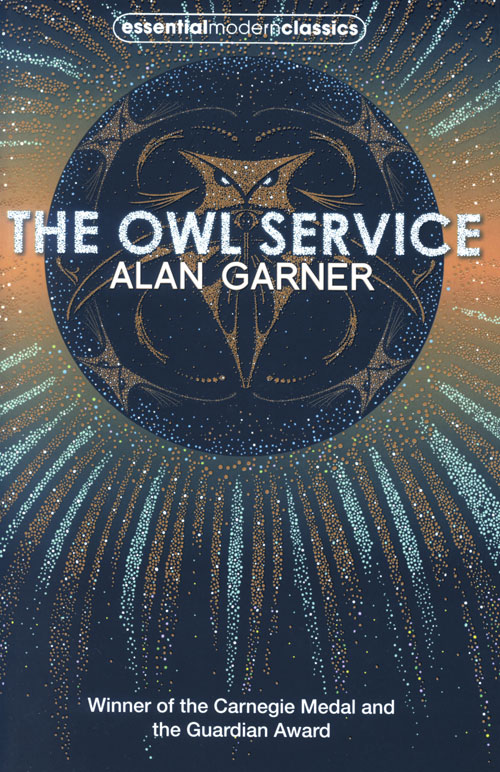
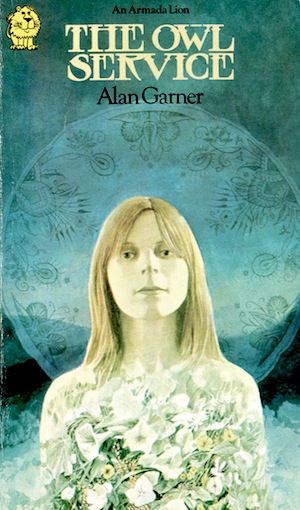
 Although it’s quite a short novel, it builds its power gradually, leaving it right to the end to resolve — something I loved in Elidor, and which worked only a little bit less effectively here. The sense of the tragedies of the past — both the ancient, mythical past, and that of the previous generation — weighing in on the innocents of the present, at the very moment they lose their innocence, and the horror of their inability to see just how they’re being twisted into playing parts in an ancient tragedy, creates a tight drama using only a few characters that nevertheless feels as though it’s reaching epic depths.