Alice at R’lyeh

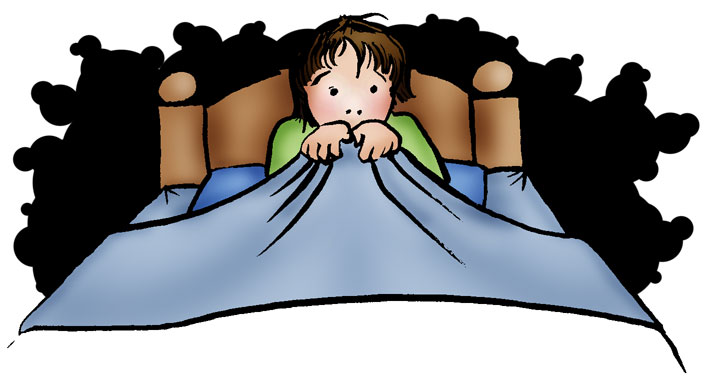
Here’s a little project I’ve been working on for a while and now have finally got finished, including bells and whistles (i.e., a mini-website and an actual printed booklet). Alice at R’lyeh is the story of what happens when Lewis Carroll’s Alice finds herself in H P Lovecraft’s nightmare corpse-city R’lyeh, just in time for dread Cthulhu to start stirring from his sleep… Lovecraft and the Cheshire Cat turn up, too. And, as if the whole thing needs another nail in its coffin, it’s told in verse…

If your sanity can stand it, you can read the poem online, or download it as a PDF, and I have a small printing of booklets for sale, too. All at the Alice at R’lyeh mini-site.

Alice at R'lyeh

^TOP

Why I Like… Alfred Hitchcock

Alfred Hitchcock

Round about the time the centenary of cinema was being celebrated, there was a slew of documentaries about the history of film on TV, making me realise how little I knew about all the great films that have been made. So I read Donald Spoto’s Alfred Hitchcock biography, The Dark Side of Genius, as a way of starting to get to know a little bit more about movies, and duly set about trying to watch all of Hitchcock’s surviving films. That would have been about 1995, and it’s only this year that I managed to tick the last couple off the list — Stage Fright, from 1950, notable for including Hitchcock’s daughter in her movie debut, and Family Plot, from 1976, his last completed movie, notable for a naseau-inducing first-person camera shot as a car careens down a winding road in the LA mountains.

Hitchcock is one of the few directors whose oeuvre comprises its own mini-course in the history of cinema, as his career started in the days of silent films, survived the coming of sound and colour, and even embraced the threat of television. His filmmaking ended just as the blockbuster movie came along (Jaws, Star Wars), which is where my cinema-going started, and the only significant advance since those days, which Hitch never lived to see, is digital effects. (Hitchcock would have loved digital actors. For him, making a movie was all in the planning, and having to actually get real people to perform the shots he’d already constructed in his head was the boring bit.) He even made a 3D film.

Hitchcock survived the changes in cinema because he not only adapted, but worked to make the new technological advances part of his artistic repertoire, which is another reason you can use his films to learn about the history of the medium. In the silent days, he went to Germany to work with the masters of Expressionist cinema. And although his visual style is most evident in his silent films such as The Lodger (1927, the essential Hitchcock silent), he was still using expressionist tricks in his later films, such as Shadow of a Doubt (1943): when the train bringing the villainous Uncle Charlie to small-town Santa Rosa pulls in, it is belching black smoke, but when we next see the train, near the end of the film, it’s just a normal puff of grey.

Uncle Charlie pulls in, Shadow of a Doubt

With sound, the famous scene is in Blackmail (1929), where the guilt-ridden Anny Ondra (who has stabbed and killed a man who assaulted her) blanks out all conversation but an increasingly shrill repetition of the word “knife” (it’s a breakfast scene, and the reference is to a bread-knife), and the audience hears the effect with her. The interesting point here is that Blackmail was made in both sound and silent versions. Hitch knew that each technological advance merely added a new layer to the techniques he already had — so, silent Blackmail could work purely on a visual level, but sound Blackmail could work with added sound-tricks, too. The next advance, colour, was hardly the potential career-breaker sound was, but Hitchcock still thought about how to use it. In Vertigo (1958), for instance, when we first see Kim Novak’s character, it is in Ernie’s, a restaurant with deep red walls and at which all the other diners are wearing drab colours. Novak wears a vivd green, which sets her out as an island of visual restfulness. You can’t help but notice her, which is of course what Hitchcock wants.

Vertigo

Amongst all this, there were various other tricks Hitchcock used as he experimented with the medium. Rope (1948), his first colour film, was filmed in a series of long takes — as long as the film technology of the day would allow — with the necessary cuts being concealed, for instance, by people walking in front of the camera. Then there were long tracking shots, as in Notorious (1946), where the camera starts high up near the ceiling of a large entrance hall and slowly moves down to get a close up of the key Ingrid Bergman is nervously clutching in her hand. (There’s a similar long zoom in the much earlier Young and Innocent (1937), centring in on the twitching eye of a drummer in a band — that twitch being the vital clue that reveals him to be the murderer.) Nowadays, such experimentation often looks a bit clunky and obvious — rather too studied, it often breaks into the storytelling — and aside from an academic interest, that’s not the reason to watch Hitchcock’s films. When you watch a film, you want to watch a story that means something.

Throughout his oeuvre, Hitchcock returned again and again to certain emotional themes, and it’s when he uses the weapons in his artistic arsenal to tell a story, rather than just impress, that he’s most successful. That’s why I’ve never really liked North by Northwest (1959), which is the film that most often gets mentioned in association with his name (aside from Psycho — I can’t believe I almost forgot Psycho), but which is really nothing more than a series of cinematic wow-factor moments strung together by a Maguffin-driven plot. (The term Maguffin is, of course, Hitchcock’s own, for the whatever-it-is thing that everyone’s searching for and which sets a plot in motion. But Hitchcock coining it is no excuse for making a film with no emotional content in it at all.)

The flying head of Jimmy Stewart, from Vertigo

But those emotional themes — they’re really quite strange when you start to isolate them. And once you do, you find them popping up in film after film after film. The most obvious one is the man accused of something he hasn’t done. The further you go into his career, the more you find Hitchcock working at making this factually innocent man nevertheless feel the guilt of what he hasn’t done, to almost extreme levels. The high point is in Vertigo — my second favourite Hitchcock movie — in which Jimmy Stewart, caught in the midst of plot convolutions I won’t even begin to untangle, is all but psychologically destroyed because of the guilt he feels for a murder that he didn’t even commit. (And, interestingly, considering the usual rules of Hollywood morality, a murder for which the murderer escapes entirely scot-free.) But this is also a film in which guilt is tied up inextricably with another Hitchcock theme that has a weird resonance with the man’s own career as a director — the obsessive need to mould, manipulate and coerce a woman (often a blonde one) into doing something against her will, and usually something immoral. In Vertigo, poor Kim Novak’s character is manipulated in this way by not one but two men. One uses her to commit and conceal a murder, the other tries to turn her into the image of a woman he once loved, regardless of her own feelings on the matter. And the weirdest thing about this theme is how much it’s tied up with the men’s love for the woman they’re manhandling. It’s messy, rather Freudian (Hitchcock was an early adopter of psychoanalysis, and in one film employed Salvador Dali as designer on an important dream-sequence), and often quite nasty, when you take a step back and look at just what’s going on in front of you. But there’s nevertheless a lot about it that rings true, in a rather dark, all-too-human kind of way.

Vertigo

Another theme, a sort of flip-side variation on this, is the confrontation (and, potentially, corruption) of innocence (often in the form of a young female) by evil (in the form of a murderous male). This is something I like in David Lynch’s films, too. My favourite Hitchcock film of all time is Shadow of a Doubt (also Hitch’s own favourite), and this is pure innocence-confronts-evil. Shadow of a Doubt‘s setting is like the perfect cure for the dark world of film noir: it’s cosy small-town America (Santa Rosa, CA), where the cops who help you cross the road know your name, and everyone is happily filed away into their family home each night. Into this un-noir world comes a figure straight out of film noir, Uncle Charlie, who makes his living wooing and murdering rich widows. But such activities are temporarily on hold because the police are on his trail, so he beds down for a while with the family of his oblivious sister, whose daughter (also called Charlie), has a weird affinity for her namesake uncle. When she starts to suspect what he’s done, as she inevitably does, her affinity gives her a glimpse into a dark, nasty world unlike anything she’s ever encountered before. The moment when Uncle Charlie lets loose and reveals just what he thinks of the human race is one of the most electric scenes in all of Hitchcock’s films — made effective not so much by its content, but by its contrast with the innocent world surrounding it.

Shadow of a Doubt

Hitchcock had a rather schoolboyish sense of humour, which could extend from silly jokes (such as, purportedly, framing a shot of the gay Ivor Novello so a flower seemed to be sprouting from his head), to rather nastier ones. Among the “rather nastier” is, for instance, his insistence on filming take after take of Kim Novak falling into San Francisco bay for Vertigo, and putting an unprotected Tippi Hedren into a room full of live, panicking birds (for The Birds) for so long that she had a nervous breakdown. This extended to off-screen practical jokes, too. Apparently, he once dared a member of his crew to spend a night in the studio, alone, chained to one of the heavy camera rigs. Just before turning off the lights for the night, Hitch sidled up to the man and gave him a little flask of whiskey or brandy to see him through the night. But this supposedly friendly gesture was just a further turn of the screw — the drink was laced with a powerful laxative. Hitchcock’s sense of humour also involved playing tricks on his audience. I mentioned at the start of this entry the (overlong) scene in Family Plot where a zigzagging car going down a mountain made me feel distinctly nauseous — and this was just on a TV screen, God knows how cinema audiences felt! But a dark sense of humour, I think, is one of the things that keeps his works from seeming dated.

Having watched all those Hitchcock films (a clean run from 1931’s The Skin Game, but excluding the war-propaganda films) I’ve kept five Hitchcock DVDs on my shelves. I’ve already mentioned Shadow of a Doubt and Vertigo, my absolute favourites. I’ve also got Rear Window (1954), which is a bit of a gimmick film, the whole thing being shot in an (invented) courtyard surrounded by flats, but a good thriller all the same. The remaining ones are Hitch’s two major horror films, Psycho (1960) and The Birds (1963). Both are still shocking today. Psycho, with its fool-the-audience trick of killing off what had seemed to be its major character (Janet Leigh) halfway through; and The Birds with its bleak, apocalyptic, non-ending of an ending. Both films perhaps represent the point where Hitchcock’s dark sense of humour threatened to tip over into something really disturbing. The sense of humour in The Birds isn’t obvious at all, as the film is just so bleak, but recently seeing this cartoon, by Charles Addams (who, I think, Hitchcock must have liked — enough to borrow the Addams’ family mansion for Norman Bates’ home, at any rate), made me wonder if it wasn’t the film’s true origin:

Birds cartoon, by Charles Addams

^TOP

Vampires, vampires everywhere…

Somehow I’ve ended up reading a couple of vampire novels recently, something I’d normally avoid like a plague of moaning, groaning, tapping-on-your-window-pane-at-night undead. Vampires, to me, are one of those genre tick-boxes that just don’t tick my box. Particularly when they get caught up in the tired old recombinations game, where you take a slightly tatty genre element and “re-imagine” or “re-invent” it by adding a lame twist. As in, “Yeah, man, it’s vampires, but it’s vampires on the moon…” Or steam-punk vampires, or vampires versus the CIA, or vampires in hoodies, or vampires with sat-navs. I used to get caught up in that sort of game with Doctor Who, thinking up all the monster-related adventures you could squeeze out of those pulpy titles: “We’ve had Destiny of the Daleks, so we’ve got to have Destiny of the Cybermen, and Destiny of the Sontarans, and Destiny of the Ice Warriors, and Destiny of the Wirrn…” But I was eight years old at the time.

Back to vampires. Twilight (I’ve only seen the film, not read the books) seemed to me more X-Men sequel than horror film — more about troubled, “gifted” teenagers whose gift just happens to be called vampirism. I could see how the film would work for teens, but it didn’t quite do it for me. The vampires just weren’t dangerous enough, and it was all a little bit too reassuring. (I never watched Buffy, but I suspect it owes far more to Buffy than Dracula.) Having said that, there are a few vampire novels I like — Richard Matheson’s I am Legend (covered on this blog some while back), Stephen King’s Salem’s Lot (the first horror novel I ever read), Le Fanu’s Carmilla, and the first half of Stoker’s Dracula (the second half just devolves into rather dull action-adventure). Now I’m going to add one of the two I’ve just read to that list. (But don’t strain yourself trying to guess which one. I’m only going to let the right one in.)

the_strain

First up is The Strain, by Guillermo del Toro and Chuck Hogan. I read it because of del Toro, who I admire as a spokesman for the fantastic, and because Pan’s Labyrinth is the only film for many an age I got excited about a full year before it came out (just from seeing the poster, and reading the title), and it more than lived up to my expectations. Del Toro has dealt with vampires before — sensitively in Cronos, sensationally in Blade II — and it was in the hope I’d get something more on the Cronos side that I read The Strain. But it was Blade II I got. I tried to tell myself the book was probably del Toro’s initial idea, which was then filled out by Hogan in standard “adapt me, Hollywood!” thriller style, complete with manly heroes with troubled marriages and technical descriptions of how to bag an infected corpse, but from the interviews that surrounded the book’s release, it seems the whole thing is as much del Toro’s fault as Hogan’s.

The Strain (whose title got me off on the wrong foot by reminding me a little too much of the Bonzo Dog Doo-Dah Band song of the same name, which is about constipation) “updates” the vampire story by (a) taking it to America and (b) providing a scientific explanation of vampirism by having it be the result of a parasitic infection. But both (a) and (b) have been done before, and much better, in I am Legend (which does a lot more with its ideas, besides). The trouble with making vampirism just a plague is you end up with hordes of dumb, blood-hungry vampires roaming the streets, which means you’re really writing about zombies, not vampires. And zombies are, when it comes down to it, a lot less interesting than vampires. Why? Because they’re dumb, and all they do is roam the streets hungering for blood. They’re video game fodder. (I am Legend escapes this dead end because its appeal, for me, is more from it being a Last Man on Earth book, a disaster novel in the Day of the Triffids or War of the Worlds mold, and not what I’d think of as primarily a vampire book.)

What makes vampires interesting, for me, is that as well as being supernatural monsters, they’re human beings. The like us/not like us factor brings out the real power of a monster — monsters only begin to mean something when they’re part human, and it’s monsters with meaning I want. (The exception is when your monster is a pure killing machine, as in the shark from Jaws or the Scott/Giger Alien. It’s this category zombies fall into. (Zombies are dumb, they’ll fall into anything.) But if you’ve got a pure-killing-machine monster, the story has to work on the strength of its human characters. The Strain’s humans have about as much depth as the paper they’re printed on.)

let_the_right_one_in

Let the Right One In, on the other hand, is brilliant. (I haven’t seen the film yet, but I’m dying to.) There’s a brief (and not too successful) attempt in John Ajvide Lindqvist’s novel to give a scientific explanation for vampirism, but fortunately it’s far enough into the book that it doesn’t matter, and Lindqvist doesn’t try to push it to the point of explaining, for instance, why vampires can’t enter a house till they’re invited, which is (and should stay) a purely supernatural element. The result is that the book’s vampires are weird, dark, and genuinely supernatural — properly disquieting monsters, not merely scientific aberrations.

But what makes the book really work for me is that, as well as being genuine monsters, the vampires are also more human than any others I’ve read about. The basic premise of the book could be couched in those “another twist on the genre” terms I so abhor (“what if there was a vampire, but it was a child“), but simply because the author goes to the bother of creating real characters, and not just out of the victims but out of the vampire itself, the whole thing opens up all sorts of deep, dark possibilities. Right to the end, I had no idea where the book was headed. What was more, it meant the book wasn’t just about another twist on a genre, it was about what all good books should be about — what it means to be human. It’s about childhood, about the way people (normal, non-vampire people) treat each other, and the way they get treated by the world, about the difficulty of finding true friendship amidst all this bleakness, and the lengths people will go to hold onto such friendship should it be found. The presence of a vampire just heightens the drama that was already there — gives it that extra spark and spice, which is what good fantasy does best, raising a story about real human beings that little bit beyond where normal fiction can go.

I was glued to Let the Right One In, and it ended too quickly. The Strain, on the other hand — well, let’s just say I skipped bits.

^TOP