
 In the words of Futurama’s dithery Professor Farnsworth, “Good news, everyone!” — apparently, I am incredible. At least, I am according to this rather fatuous report, “Oops — I Read It Again!” (link from Neil Gaiman’s blog).
Why am I incredible? (You read my blog, yet have to ask?!) Because, it seems, I’m part of a rare 13% of the reading population — not just that 77% of it who admit to having “enjoyed a book* so much that they’ve gone back to read it again” (I’m not sure why “book” gets an asterisk — perhaps it’s a term that needs a more precise definition for the sort of people who read a site with a name like booktrade.info), but I’m part of the 17% who “have re-read a favourite tome more than five times” (surely not all of them were tomes, you lazy journalist, you — try scratching your head a few times before reaching for the thesaurus!)
Alright, so maybe reading a book — or several, I’ll not get into specifics yet — five times or more is odd, but surely it’s not “incredible”? But that’s just the word-geek in me getting picky. (To show how picky I can get, I also wonder why the report gives “C. S. Lewis” a full-stop after each initial, “J. K Rowling” only one, and “JRR Tolkien” none.) What makes this all the more distressing is that this is a report, I assume, from some sector of the book trade itself — as if the trade were so assured the wares it sells are so deeply worthless that reading them even once, after buying them, were to take things a bit far. (Certainly true in the case of sleb biographies and their like — maybe that’s the special meaning of book-with-an-asterisk I was looking for.)
Now that my incredible nature is out in the open, I might as well be frank about it. Not only do I habitually re-read books, I tend to regard reading a book for the first time as merely an opportunity to decide whether it’s worth re-reading — the re-reading bit being, for me, where the fun really starts. I tend to only keep books if I plan to re-read them at some time.
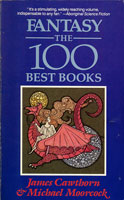 I haven’t always been like this. I used to be un-incredible, at least most of the time. (Except as a kid. All kids demand re-reading of the books they like. They’re not stupid.) I can’t actually pinpoint when my incredible, perhaps even mythical, status kicked in, but aside from re-reading favourite Doctor Who novelisations (which, at one point in my life, were all I read), I tended to read books only once. What happened was something like this: I kept buying new books and finding they were bad. After a while, getting distressed that I hadn’t read anything good for a while, and worried that it was me that had gone wrong rather than the hallowed publishing industry, I decided to revisit a book I had enjoyed, just to make sure. To my relief, I found I enjoyed it even more. And then, perhaps, other new approaches to this whole business of “reading books” (that’s books-without-asterisks) started to suggest themselves. Such as the idea that books which have been around for a long time, and which have continually been published and read for decades, if not centuries, might actually be better than new books. Classics, as they’re sometimes called, even by people without thesauruses. This was when I started reading (and re-reading) books like Moorcock and Cawthorne’s Fantasy: 100 Best Books and Horror: The 100 Best Books edited by Stephen Jones and Kim Newman, and doing bizarre things like frequenting secondhand bookshops.
I know I’m probably still in a minority to re-read at least as much as I first-time read, but I do genuinely find it more pleasurable to re-read a book. Perhaps this is in part because I am, by nature, rather untrusting and over-critical as a reader. I want to know a book is worth investing in before I really go for it 100% in the reading — but if I am untrusting, it’s only because I’ve read so many bad and disappointing books that I’ve ended up that way.
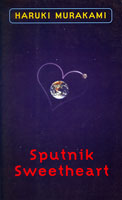 The main objection to re-reading a book is that there’s no point because you know what’s going to happen. But, to me, knowing what’s going to happen not only doesn’t matter, it actually makes it better. Exposed to stories as much as we are, we’ve all developed enough of a “story sense” to second-guess where a story is going anyway, and the real pleasure of a twist-in-the-tale is not so much the twist itself, as how skilfully it’s handled. My two most recent re-reads are both minor books by favourite authors — Sputnik Sweetheart by Haruki Murakami, and The Violet Apple by David Lindsay. The first time I read Sputnik Sweetheart was when I’d just discovered Murakami. At the time, I’d only read his massive (genuinely tome-like) The Wind-Up Bird Chronicle, and in comparison found the slim Sputnik Sweetheart a bit disappointing, though with a strikingly weird bit in the middle (where a young woman gets stuck at the top of a Ferris wheel for the night and has an experience that turns her hair completely white), mainly because I wasn’t sure how to understand the end. Re-reading it, knowing how it ended, everything fell into place and made sense, and I had time to relax and understand other things about the book, like how each of the three main characters faces the same sort of strange crisis, but one evades it, one falls before it, and one — maybe — triumphs. With The Violet Apple, I found that knowing what was going to happen at the end only made the build-up much more poignant and emotionally powerful. (That’s how tragedy always works. Macbeth’s downfall was only a surprise for Macbeth himself.)
Another possible peculiarity of mine comes into play here, and this is to do with re-reading books by certain authors. The more you read of an author’s work, the more you get to understand them, and the more you get out of reading them. The first time I read the David Lindsay book, The Violet Apple, I was still under the spell of his most famous and impressive book, A Voyage to Arcturus, and so I read The Violet Apple with that other book in mind. But The Violet Apple is a very different book. It’s very un-fantastic, whereas A Voyage to Arcturus is almost nothing but fantastic; it’s also very human, whereas A Voyage to Arcturus is starkly inhuman. A Voyage to Arcturus could never contain a sentence such as “She could not bear that awful family loneliness and unsympathy”, but The Violet Apple does and, knowing Lindsay to be capable of writing such a sentence, I will in future re-read A Voyage to Arcturus slightly differently.
You don’t listen to a favourite song only once, do you? Why should books be any different, just because they take more time to re-experience? Human beings are memory-loving creatures. We treasure our experiences and go back over them, in our heads, again and again. Sometimes we do this to understand the experiences better, sometimes it’s just because revisiting them is so enjoyable. The reading of a book is an experience just like any other, and the reasons for doing it can be just the same.
 To end off, a not-necessarily-complete list of books I’ve read four times or more (with no explanations or apologies — though, to intensify my weirdness, I’ll say that at least two in this list are books I’ve re-read straightaway after reading them for the first time): Moving Zen by C W Nicol, The Belgariad by David Eddings, A Voyage to Arcturus by David Lindsay, The Outsider by Colin Wilson, The Tombs of Atuan by Ursula Le Guin, Steppenwolf by Hermann Hesse, The Influence by Ramsey Campbell, The Drowned World by J G Ballard, V for Vendetta by Alan Moore & David Lloyd… Not to mention the countless short stories I’ve re-read many more times than four or five. Short stories are, after all, so much more re-readable. But simply reading short stories nowadays is enough to commit you to a very dark and dingy corner of the asylum reserved for book-readers. Catch you re-reading the things, and they throw away the key. Before you eat it, or do yourself an injury with it or something.
Comment imported from the old version of Mewsings:
Gavin Burrows
Hi Murray, My response here!
http://lucidfrenzy.blogspot.com/2007/12/time-to-stop-consuming.html
 I read Bret Easton Ellis’s American Psycho without being aware of any of the controversy surrounding its release. My reaction to it was similar to how I felt about J G Ballard’s Crash: an incredible writerly achievement, but not a book I was ever likely to re-read, not just because of the extreme subject matter, but because neither book had enough story to justify its length. (I think Ballard happily admits Crash was a short story extended to novel length, as a sort of balance to the novel-squashed-into-a-short-story approach of his “condensed novels” from The Atrocity Exhibition.) Of the two, I enjoyed American Psycho slightly more, as there were brief hints of real human despair in the isolation of its protagonist, despite the fact he was a monstrous serial killer. It also had its funny moments, which can’t exactly be said of Crash.