Carmilla, and other spooky writings, by J S Le Fanu

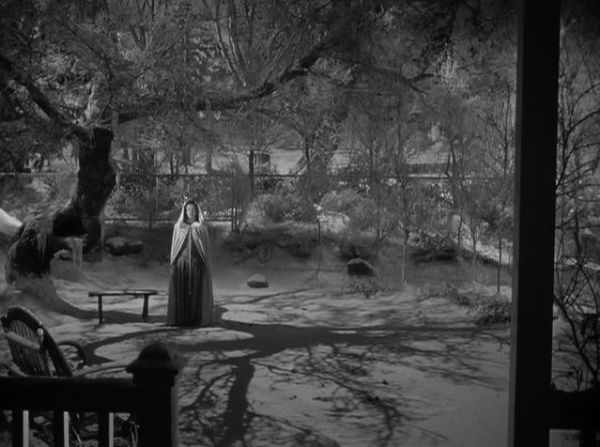
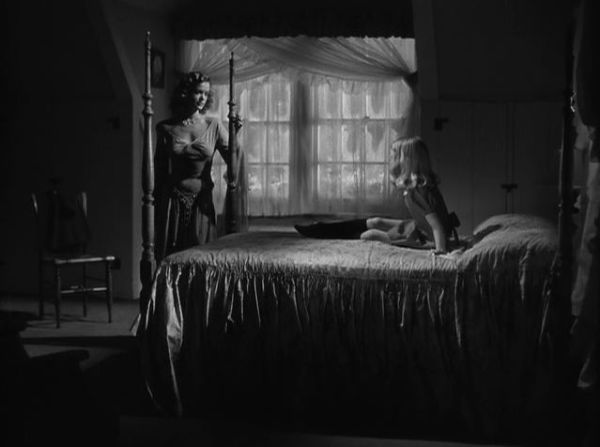
“At the same time a light unexpectedly sprang up, and I saw Carmilla, standing, near the foot of my bed, in her white nightdress, bathed, from her chin to her feet, in one great stain of blood.”

Best Ghost Stories of J S Le FanuThis, from J S Le Fanu’s “Carmilla” (first published in 1872), is the image that launched a thousand horror films. It’s a characteristic moment for Le Fanu, whose scenes of supernatural horror often burst into view with the force of a jump-cut or a lightning flash, defying reason and rationality — as when, for instance, Justice Harbottle (in the 1872 tale of the same name) looks out from his coach window to see the sudden vision of a gigantic three-branched gallows complete with a hangman whose nose, lips and chin “were pendulous and loose”; or when Schalken the Painter (again, from the tale of the same name) is led into a crypt by the ghost of his former love, Rose Velderkaust, and suddenly shown “the livid and demoniac form” of her undead husband.

Although not his weirdest or most inventive, “Carmilla” is probably Le Fanu’s best-written and best-plotted tale, one of many of his in which a person is tied to a supernatural or fantastic double which they fear but cannot escape, and which becomes a baleful influence draining away their life (the leering monkey-thing in “Green Tea” has an almost Kafkaesque purity in this respect).

Ingrid Pitt as Carmilla in Hammer's The Vampire Lovers (1970)

Ingrid Pitt as Carmilla in Hammer’s The Vampire Lovers (1970)

“Carmilla” is a vampire story. Published a quarter of a century before Dracula, its suspense nevertheless relies on its reader understanding the nature of the villain well before the narrator does — knowing, for instance, just what Carmilla’s nighttime absence from her locked-from-the-inside bedroom must mean. But calling Carmilla a villain is wrong. In Le Fanu’s tale, Carmilla is not characterised as evil so much as of a different (and predatory) nature. When the father of her prime victim sits there self-satisfyingly saying that God will protect them from the “plague” of deaths currently affecting the local peasantry, Carmilla (unbeknownst to them the cause of it all) bursts out with:

“Creator! Nature! … And this disease that invades the country is natural. Nature. All things proceed from Nature—don’t they? All things in the heaven, in the earth, and under the earth…”

Later, one character wonders why “Heaven should tolerate so monstrous an indulgence of the lusts and malignity of hell.” But it’s because this is not a good-versus-evil world, and Carmilla is not “malignant” — she’s merely driven by the dictates of her own “nature”, as much prey to her own longings, both emotional and physical, as any human being:

“The vampire is prone to be fascinated with an engrossing vehemence, resembling the passion of love, by particular persons. In pursuit of these it will exercise inexhaustible patience and stratagem, for access to a particular object may be obstructed in a hundred ways. It will never desist until it has satiated its passion, and drained the very life of its coveted victim. But it will, in these cases, husband and protract its murderous enjoyment with the refinement of an epicure, and heighten it by the gradual approaches of an artful courtship. In these cases it seems to yearn for something like sympathy and consent. In ordinary ones it goes direct to its object, overpowers with violence, and strangles and exhausts often at a single feast.”

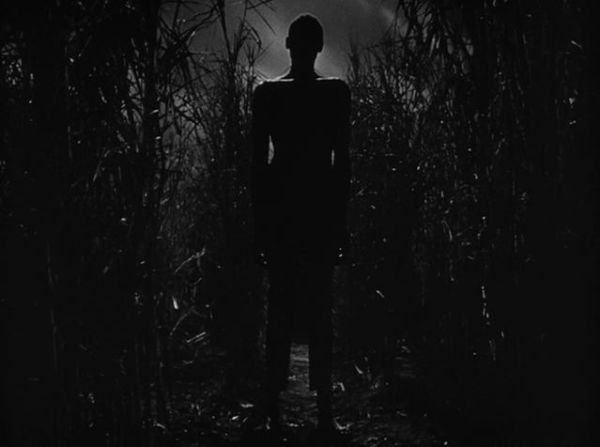
Le Fanu’s best moments are those where the supernatural makes itself suddenly known. He combines this with the casual delivery of strangely specific details, details which are not necessarily explicit or horrific, but which worry you, make you think, make you imagine, and ultimately convince you they must be real. It’s this two-pronged attack of surreal details delivered with a cool detachment that allows his spooky images to creep in through the back door of your mind, often by way of your spine’s tingle nerve. Another scene of Carmilla appearing by her victim’s bedside at night is just as cinematic as the one I quoted at the start, but this one makes me think of a different generation of horror films — the weird collage-like video of Sadako in the Japanese version of Ring:

“I saw a female figure standing at the foot of the bed, a little to the right side. It was in a dark loose dress, and its hair was down and covered its shoulders. A block of stone could not have been more still. There was not the slightest stir of respiration. As I stared at it, the figure appeared to have changed its place, and was now nearer the door; then, close to it, the door opened, and it passed out.”

The effect is weird, and so specific, yet unreasoned, as to command a great deal of confidence that what the author is describing is real, precisely because it seems so odd.

J S Le Fanu, drawn by his son Brinsley Lefanu, 1916

J S Le Fanu, drawn by his son Brinsley Lefanu

The best bit of spooky writing from Le Fanu, though, comes in his “Ghost Stories of the Tiled House” (1861), which mixes utterly believable human behaviour with a sudden flash of tersely-described horror:

“But the worst of all was poor Kitty Halpin, the young woman that died of what she seen. Her mother said it was how she was kept awake all the night with the walking about of someone in the next room, tumbling about boxes and pulling open drawers and talking and sighing to himself, and she, poor thing, wishing to go to sleep and wondering who it could be, when in he comes, a fine man, in a sort of loose silk morning-dress an’ no wig, but a velvet cap on, and to the windy with him quiet and aisy, and she makes a turn in the bed to let him know there was someone there, thinking he’d go away, but instead of that, over he comes to the side of the bed, looking very bad, and says something to her — but his speech was thick and queer, like a dummy’s that id be trying to spake — and she grew very frightened, and says she, ‘I ask your honour’s pardon, sir, but I can’t hear you right,’ and with that he stretches up his neck high out of his cravat, turning his face up towards the ceiling, and — grace between us and harm! — his throat was cut across like another mouth, wide open, laughing at her; she seen no more, but dropped in a dead faint in the bed…”

^TOP

Boy in Darkness by Mervyn Peake

As part of the celebrations for Titus’s 10th birthday in Gormenghast a sort of court masque is put on, featuring four giant puppets — the Lion, the Wolf, the Horse, and the Lamb:

“The Lamb, a little less in height than its companions, for all its towering stature, was a mass of pale golden curls. Its expression was one of unspeakable sanctity. However it moved its head — whatever the angle, whether it scanned the heavens in search of some beatific vision, or lowered its face as though to muse upon its own unspotted breast — there was no escape from its purity. Between its ears, and set upon the golden curls was a silver crown… It carried nothing in its hands for they were clasped upon its heart.”

Sometime, Never - coverThe figure of the Lamb, a somehow menacing mix of purity and unease, obviously stuck in Peake’s mind, because when he was asked to contribute to an anthology of three novellas, published in 1956 as Sometime, Never: Three Tales of Imagination (alongside “Consider Her Ways” by John Wyndham and “Envoy Extraordinary” by William Golding), the figure of the Lamb became the centrepiece in an encounter with one of the most insidious visions of evil in fantasy literature.

The Inner Landscape (cover)The resulting novella, “Boy in Darkness” (which was later included in another three-novella anthology, The Inner Landscape, in 1969, which swapped the Wyndham and Golding stories for “The Voices of Time” by JG Ballard and “Danger, Religion!” by Brian Aldiss) is a mini-masterpiece. Changing the puppet Lamb’s “golden curls” for the purest white, and blinding its eyes with blue-tinted cataracts, Peake does that thing again of creating a character that seems so familiar, so right in its every action and spoken word, I’m wondering where I could have encountered it before.

The first question to ask, though, is whether “Boy in Darkness” is part of Peake’s Titus series at all. From what I can gather, in the initial version, Peake only referred to the protagonist of his tale as “the Boy”, though this Boy is the fourteen-year-old “Lord of a tower’d tract”, and the opening paragraph makes it clear this is Gormenghast in all but name:

“The ceremonies were over for the day. The Boy was tired out. Ritual, like a senseless chariot, had rolled its wheels — and the natural life of the day was bruised and crushed.”

Apparently, after its first publication, Peake changed the manuscript to call the Boy “Titus” (twice, to my count), and it is in this form it’s currently published (in Boy In Darkness and Other Stories). But whether Peake had named him or not, the world he depicts — in its scenery and its concerns — is Gormenghast, and the young Boy is as much Titus as he can be.

Boy In Darkness and Other Stories coverThe plot is simple. Fed up with the castle and all its ritual, the Boy runs away, and finds himself lost in a desert land of industrial ruins. There, he falls into the hands of the Goat and the Hyena, a bickering pair of half-human half-animal creatures whose task it is to find victims for their “White Lord”, the Lamb, who dwells deep in an abandoned mine. With the inescapability of a nightmare (Peake at one point thought of subtitling the novella “A Dream”), the Boy is drawn closer and closer to the Lamb, and we, the readers, learn what the Lamb is planning. This creature, it seems, has the ability to change people, physically. He has done this countless times, but the Goat and the Hyena are the only two surviving examples. And the Lamb has not had a new victim, a new plaything, for a very long time.

The power of the tale resides entirely in Peake’s depiction of the Lamb. It is the very understatement of his bleating speech, the stillness of his body — all except his ever-weaving, self-fondling, whiter than white, softer than soft hands — that makes this apparently so innocent thing so unutterably evil. It is the hands of the Lamb that you will remember:

“There they were, folded one about the other as though they loved one another; neither gripping one another too passionately, for they were made to be bruised, nor touching one another too lightly, for fear of losing the sweet palpation.”

By the end of the novella, the hands are in a frenzy of anticipation:

“…they were moving so fast one about another, circling one another, separating, threading and weaving their ten fantastic fingers in such a delirium of movement…”

Peake’s writing is at its best when he writes of the Lamb, of “the quenchless vitality of his evil”, his “yielding, horrible mollience of endless wool”.

Yorke - My Eyes Mint Gold coverJohn Batchelor, in his 1974 book on Peake, calls the Lamb “the most blasphemous of Peake’s ideas”, saying it is clearly a “Christ in reverse”, but I think its power is simpler than that. The Lamb is a thing that is as evil within as it is seemingly innocent without. Batchelor goes on to say: “The story is too dark and pessimistic to have fitted the imaginative world even of Titus Alone.” And Malcolm Yorke, in his 2000 biography of Peake, My Eyes Mint Gold, says that “elements of fantasy are introduced that would have been intolerable in the world of Gormenghast”. He finds the style “irritating”, but most of all thinks the whole “a puzzling, unbalanced and very disquieting story and one wonders about the mental health of a person who could engender such a bleak world.”

I disagree on every count. I love the writing, and I think it fits in with Peake’s Gormenghast — as a nightmare episode — perfectly.

And the story isn’t puzzling at all. In fact, like the Lamb, it is almost overwhelming in its purity. Fantasy is so often about being careful what you wish for, and Peake’s protagonist, the Boy, starts off wanting to escape, but:

“…to be alone in a land where nothing can be recognised, that is what he feared, and that is what he longed for.”

And sure enough, the Boy, escaping, finds himself in the hands of a creature whose sole intent is to turn him into something he himself will no longer recognise, not just physically, but mentally and spiritually too:

“For it is the Lamb’s exquisite pleasure to debase.”

Yorke’s main criticism of the story is that “the evil is palpable enough, but where is it opposed by virtue?” But the virtue is as simple as the Lamb’s evil. It’s only the threat to the Boy’s individuality, his existence and his ability to be himself that is needed to justify his fighting back against the Lamb, whose evil is so like that of a child abuser, seeking, as it does, to corrupt others in order to both re-enact and in some way justify the corruption it, at some point, must have suffered. Fighting against the Lamb is simply a fight to retain one’s individuality, something that goes to the heart of Peake’s Gormenghast novels.

The story, then, is primal. It is about an encounter with a corrupting evil, but it is done so powerfully that it — particularly in the soft, white, quietness of the Lamb — will linger rather longer than you’d like.

^TOP

Jacob’s Ladder

Jacobs Ladder posterIn a perfect world, I’d never listen to, or read, film reviews. One of the best cinema-going experiences I ever had came as a result of an impulse decision to go and see a film I knew nothing about. It was, I think, 1991, I had a Wednesday afternoon off, and I just happened to overhear one person saying to another “…this film called Jacob’s Ladder…” Right, I thought, I’ll go and see this film called Jacob’s Ladder. Somehow, I even managed to walk into the cinema without seeing the poster, so I really had no idea what sort of film it was going to be.

Jacobs Ladder 01

I sat down (in a mostly empty theatre — a circumstance which added a certain efficacy to some of the film’s early scenes) and at first thought, “Oh dear, it’s about Vietnam.” I’m not a great one for war films, generally. But then it changed from being about Vietnam to Tim Robbins waking up on a subway train thinking he’s missed his stop, getting up and going into the next carriage to ask a starey-eyed woman if he’s missed it (and she just stares at him), and then noticing a drunk lying on a seat by the door. As he gets off the train at the next stop, Tim Robbins notices that the drunk seems to have a tail. I thought, “What the hell’s going on?” But, in a good way. And, partly because Tim Robbins’ character was also obviously thinking, “What the hell’s going on?” (though, for him, in more of a bad way), it soon became obvious that this film, Jacob’s Ladder, was the perfect film for me to go and see without knowing anything about it, because it was a film all about finding out what the film itself was about. And, as it was full of weird, unsettling, spooky, or even horrific moments (faceless men leering from a car that’s almost run you over, a heaving party at which Tim Robbins’ girlfriend seems to be dancing — or more than dancing — with a demon, a nightmare gurney-journey into the nether bowels of a rather unhealthy hospital, Macauley Culkin), it was, as luck would have it, just the sort of thing I liked anyway. Jacob’s Ladder has since become a favourite film, one that works just as well now I know what it’s about, but I always remember, whenever I watch it, how much I enjoyed that initial viewing for never having seen a trailer, or heard a review.

Jacobs Ladder 02

Ever since, although I do listen to and read film reviews (Mark Kermode & Simon Mayo’s podcast is a Saturday afternoon after-work fixture), I initially only pay attention as far as finding out the bare basics of what a new film is about, then, if I decide it’s the sort of thing I’d like to see, I add it to my LoveFilm list and don’t concentrate much on the details, unless it sounds like a real stinker. (And Mark Kermode tends to let you know if it’s a real stinker. Vociferously.)

Pan's Labyrinth posterA case in point is Pan’s Labyrinth. I remember seeing the mere mention of the title of this film in Empire magazine about a year before it came out, and instantly knew I was going to have to see it. After that, I avoided, as much as possible, any mention of what it was going to be about, and was deeply rewarded. Pan’s Labyrinth was, amazingly, so much more than I could have ever hoped it would be.

But with Jacob’s Ladder and Pan’s Labyrinth I was lucky. Because I also thought, from a brief summary, that Sucker Punch might be a film I’d like. After all, it seemed to mix the escape-into-fantasy-worlds and psychodrama strands of Jacob’s Ladder and Pan’s Labyrinth, so how could it fail? Well, by being a loose anthology of sub-adolescent pop video fight-outs with no plot, sensibility, emotion or meaning, is how. I should have listened to Dr Kermode. He hated it from the start. I didn’t watch this film, I endured it.

In a perfect world, some benevolent, perhaps web-based, vendor of books, films and music would somehow, perhaps through analysing my copious purchase history, get to know exactly what books, films and music I like, and issue increasingly spot-on recommendations, so I could repeat that Jacob’s Ladder/Pan’s Labyrinth experience on a daily basis. But though I’ve been dutifully rating my purchases from Amazon, and plugging my reading habits into Goodreads for some time now, still, whenever I look at the sort of thing they recommend I find myself thinking, “On what planet is this what I might like..?” I mean, they haven’t even worked out the basics, yet. (For instance, that though I buy Doctor Who DVDs, I don’t buy the new series. Guh! And my buying a Woody Allen box-set may mean I’m interested in the man’s films, but that doesn’t mean I like them so much I’d want to buy them again individually. And why, oh why, can’t LoveFilm let me forget last year’s foray into Carry On films? It’s practically all they’ve been recommending since!)

Perhaps it’s that, if even I can’t define the thing I’m looking for in films, books, and music, in each of my many moods & wants — the best way I can think of describing it is “humanity, and magic” — how can I expect a computer (devoid of humanity and magic as it is) to understand?

Or perhaps it’s that adjective, benevolent, I got wrong?

^TOP