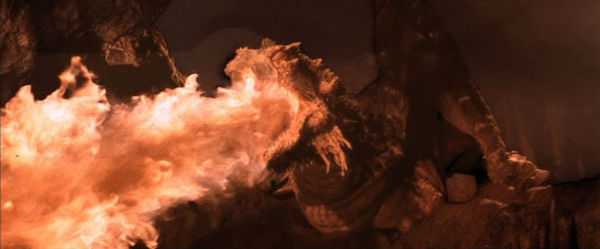
I’ve just been reading Aspects of Alice, a compendium of essays and extracts about the two Alice books and their author, dating from soon after Alice in Wonderland‘s publication (including a near-contemporary reviewer suggesting Carroll was plagiarising Tom Hood’s From Nowhere to the North Pole, which Aspects‘ editor Robert Phillips points out was published some years after the first Alice book) up to the late 1960s (with a short article called “Lewis Carroll — The First Acidhead”, written in such a hippie-ish idiom, it’s quite quaint).
The essays I enjoyed were of two types: those which were about Dodgson the man, full of the sort of facts you’d like to think you could remember well enough to drop into conversations (“Did you know Charles Dodgson invented a machine for noting down ideas in the night?”) but never can; and those which praise the books, usually in a suitably playful or poetic style (Walter de La Mare or W H Auden’s contributions, for instance), without insisting on an interpretation. The essays I didn’t enjoy were by critics who had a theory, and who were seeking to prove their theory by applying it to the Alice books. Or perhaps I should say, were seeking to disprove (disenchant) the Alice books by applying their theory. These critics were what I think of as reductionists.
Fantasy is easy prey to reductionists. I think this is because good fantasy (i.e., not allegory) has a free-floating symbolical quality to it, meaning it can be applied to anything you happen to be concerned about, and still seem relevant. The Lord of the Rings can be read as being about the Second World War, or the Atom Bomb, or political power, or personal greed, or the victory of the small against the powerful. It can even be just a compelling story, free of any sort of interpretation whatsoever. Reductionists say, “Yes, but really, it’s all about X.” And there’s no arguing with them because yes, it is about X; it’s also about all these other things, as well as being about nothing at all, but to this the reductionists just smile knowingly and say “Yes, but really, it’s all about X.”
The most obvious example are the Freudians, who get a whole section of Aspects. Freud didn’t write about the Alice books, as far as I know, and the essays herein are by lesser hands, which is perhaps why they’re so risible — these are lesser thinkers, working with another man’s theory. They go through the Alice books saying, “Ah yes, here of course we have a phallic symbol. And oh look, there’s another.” — counting off the phallic symbols as though the number of them might prove something. The height of ridiculousness comes on p. 361, where there’s a large-type heading, “The Symbolic Equation: Girl=Phallus”, which made me giggle. (I’d say it made me titter, only you know those Freudians…) One thing Freudianism — or any reductionism — can’t stand is laughter, which is perhaps a good test to hold up to any critic-with-a-theory. “Can you still believe it while laughing?”
It reminds me of my last encounter with a stuck-in-the-mud Freudian, Maureen Duffy’s The Erotic World of Fairy (I wrote a review of it on Amazon), where she proclaimed Peter Pan to be a “free-flying phallus”, as though that actually meant something, in fact was a damning indictment. Instead it conjured an image… that again led to giggling.
The Freudians aren’t the only reductionists in Aspects of Alice. That hippie writer is another. His reductionism is that all imagination is evidence of drug use. (Aspects also contains a version of Grace Slick’s lyrics to “White Rabbit”, which are a far better evocation of Alice-as-psychedelia. Slick’s lyrics aren’t reductionist, because they’re using the Alice books as a springboard to create something new, and end up adding to the books’ richness, not attempting to reduce it.) Another was “Alice’s Journey to the End of Night” by Donald Rackin, whose form of reductionism is to assert the Alice books are “a comic horror-vision of the chaotic land beneath the man-made groundwork of western thought and convention”. The counter-argument, that most people’s reaction to the Alice books is to enjoy them rather than get depressed, seems to have escaped him.
As well as laughter, another thing reductionism can’t handle is wonder. Fantasy works best, for those who like it, when it conveys a sense of wonder. Wonder might be defined as a moment of freedom from mere understanding, a sense of something greater than anything that can be put into words. You can only accept wonder for what it is, not reduce it, explain it, define it.
And at the end of it all, it’s the wonder that remains. I’ve forgotten all the reductionists’ attempts to convince me Alice is a phallus, or the tormented soul of modern man, or an acidhead in nursery dress. Instead, I want to read the Alice books again, if only to wash all that (oh so serious) nonsense out of my head and put a little of the genuine stuff in its place — the pure, fantastic, wonder-making nonsense, which is much more what the Alice books are about.
My own particular form of reductionism as far as the Alice books are concerned (I can’t help having one), is they’re about how ridiculous the adult world can seem to a child. The adult world is a world of reductionists — people who’ve lost their sense of wonder, or replaced it with well-reasoned blinkers against what they fear — which could be why the Alice books attract such a train of critics so blind to their own place in them:
“When I use a word,” Humpty Dumpty said in rather a scornful tone, “it means just what I choose it to mean — neither more nor less.”
…
Alice waited a minute to see if he would speak again, but as he never opened his eyes or took any further notice of her, she said “Good-bye!” once more, and, getting no answer to this, she quietly walked away: but she couldn’t help saying to herself as she went, “Of all the unsatisfactory —” (she repeated this aloud, as it was a great comfort have such a long word to say) “of all the unsatisfactory people I ever met —”

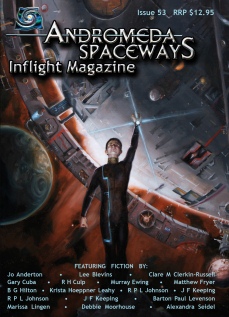 A couple of bits of news. First off, my story “The Realm of Lost Things” has just been published in Andromeda Spaceways Inflight Magazine issue 53! I haven’t seen the magazine yet, though I’m sure it’s winging (or perhaps floating) its way to me from Australia right now. I’m thrilled for this story to be published, and in such a long-running zine, too. It can be ordered in print, as a PDF, as a Kindle-compatible MOBI, or an EPUB, all from this page. I’m doubly thrilled because this is the first story I’ve been paid for!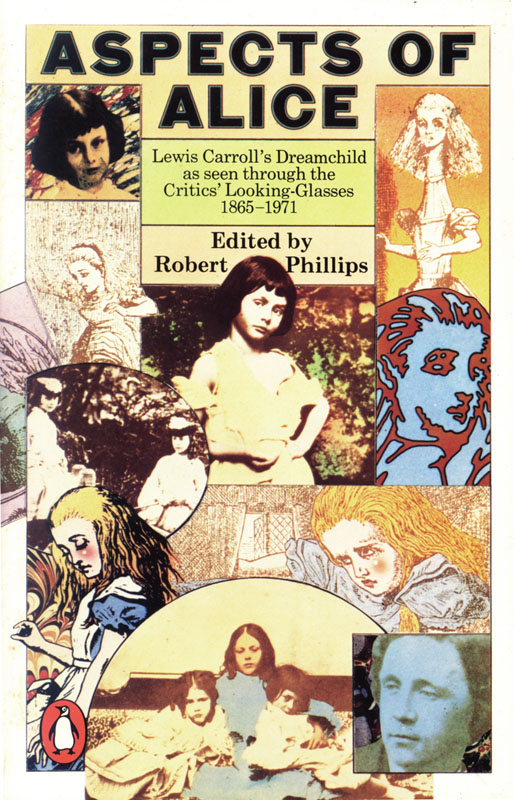
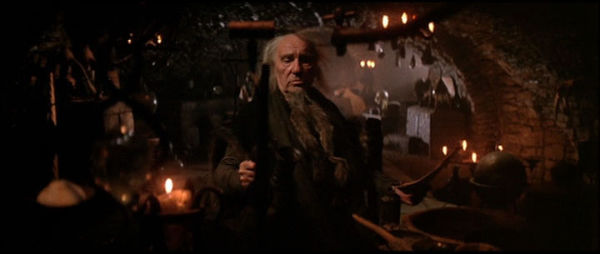
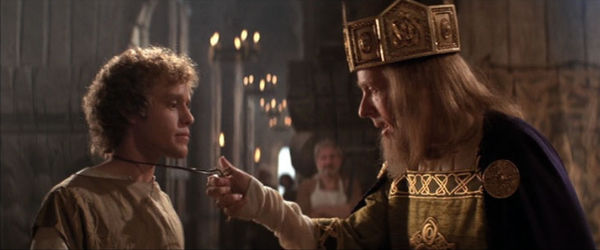
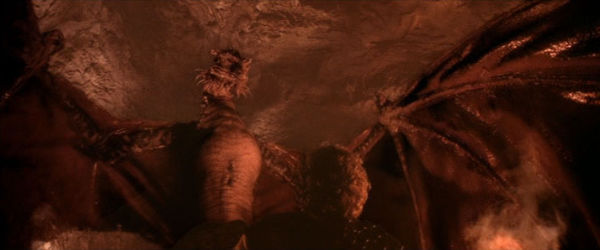
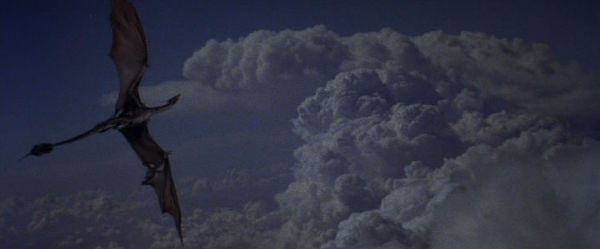
 — something which always makes me feel a favourite’s going underappreciated — or perhaps it’s because it got a mixed critical reaction on its release, or that, being released in 1981, it lost out to Raiders of the Lost Ark for both a visual effects Oscar and a Hugo. To my mind, though, it’s as good a film as Raiders, it’s just that the way it tempers the straight-ahead heroism of its George-and-the-Dragon storyline with less purely archetypal, more humanly-believable characters — the very thing I like it for — may have weakened it in the public’s eye, particular when compared to the very obvious heroism of Indiana Jones.