They’re not typos, they’s scanspellos — errors that come not from someone mistyping something and failing to check it, but from someone scanning something in, running a quick OCR and spellcheck, then thinking that’s enough work on that one and publishing the damn thing. And I’m not talking about people putting stuff up on the web, I’m talking about supposedly professionally produced books available through Amazon. And this plague of scanspellos is set to get a lot worse as ebooks gain in popularity.
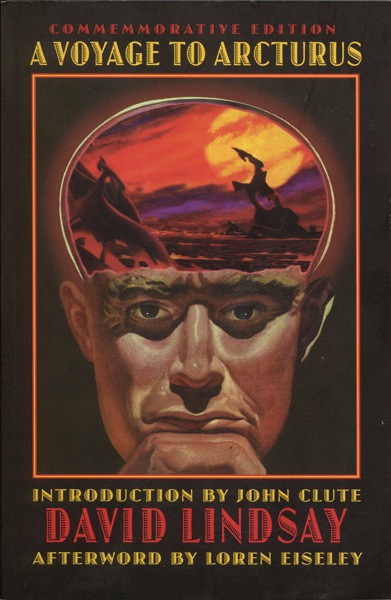 It’s not an issue limited to ebooks. The old Ballantine Adult Fantasy paperbacks had their fair share of typos, for instance — enough to make me want to replace them with a higher quality edition if I ever wanted to re-read them, but never so many that it made me give up reading them to start with. I first read A Voyage to Arcturus in its Ballantine edition, and although the typos were mildly annoying, they never got in the way of my understanding — and in fact being bowled over by — the book. It was always obvious they were typos. The trouble with scanspellos (a horrible word for a horrible phenomenon) is, because they involve a careless run through a spellchecker, they’re that much less obvious. The first book that really got my readerly goat as far as scanspellos are concerned was, in fact, another edition of A Voyage to Arcturus, in this case one produced by a university press — Bison Press, who are associated with the University of Nebraska. In a supposedly “commemmorative” edition (that’s one “m” too many, they even managed to introduce an error on the cover), the text was so garbled I actually fired an email off to the publisher (and never got a reply of course). Although it was full of silly little obvious errors, including number 1’s for letter l’s (hardly an important error, but irritating enough to act as a constant distraction from pure reading), some of the words, and therefore the meaning, had actually been changed. At one point, for instance, the text said, “The short stranger turned and comforted the party”. Any reader new to Arcturus would read that and take it at face value, but I, having read the novel a fair few times and knowing that the very essence of the “short stranger”, Krag, is discomfort — he is a supernatural being who has another name in our world, and it is Pain — checked that sentence in another edition and found it was supposed to read “The short stranger turned and confronted the party” — an entirely different meaning.
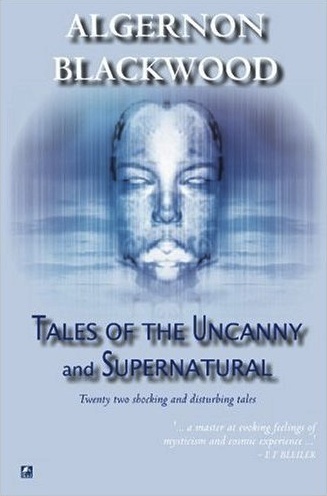 I’ve recently been reading Tales of the Uncanny and Supernatural, a bumper volume of Algernon Blackwood stories. This is from House of Stratus, a publisher who has issued a lot of Blackwood in affordable paperback form. A while ago I bought their edition of his novel, The Human Chord, and it was a well-produced paperback. I thought Tales would be up to the same standard. In fact it was scanspelloed to the hilt. “Her” constantly replaced “for”, “ox” replaced “or”, “axe” replaced “are”, “lie” replaced “he”, among many, many others. Worst of all was its constant replacement of long dashes with hyphens. This might sound like a minor annoyance on a par with number 1’s for letter l’s, but it was actually the thing that most interrupted my reading. There’s a constantly disruptive effect in reading a sentence like:
“The Club-it crossed his tortured mind for a second-was impossible.”
The worst thing was, once I’d been reading the book for a while, I found myself looking at hyphenated words I came across elsewhere, wondering if they were supposed to have a dash or a hyphen between them, and tentatively re-reading them each way before continuing.
Neither of these examples are of ebooks. I recently read Treasure Island on my Kindle, in the free edition offered by Amazon. That actually had very few scanspellos, but had plenty of examples of the other fault that irritates me about ebooks — poor design. I hate books that use html-style paragraphing (a double line-space between paragraphs rather than a single line break and an indent). The free edition of Treasure Island didn’t do that, fortunately, but quite frequently had line breaks within paragraphs, though aside from that — and the poor formatting of chapter headings — it was generally readable. But bad enough to persuade me to pay for a book I want to read in future.
None of this is because of the rise of ebooks, or of print-on-demand technology (the House of Stratus book was POD, the Bison Press wasn’t), but it is an effect of the ease with which old, often out-of-print, books can be brought into production nowadays. On the one hand, I applaud publishers for bringing hard-to-find works back into print once more — particularly the Algernon Blackwood novels and stories. But the very thing that makes it viable for them to do so is that they can put so little effort into it — just scan them, OCR & spellcheck them, and release them to the public without a proper (human) proofread. And the trouble is that once these cheap editions are out there, it makes it so much less likely that a proper publisher — one who will actually check what they publish — will bring out a better edition to replace it, one which will necessarily be more expensive, and so sell less.
In the meantime, I’ve discovered a better way of reading out-of-print books. I download them as PDFs from archive.org. Kindles are generally pretty bad for reading PDFs because they either shrink them too small to read in order to fit on the screen, or you have to constantly pan right and left to read them; but books of a certain age are just the right size to fit on a Kindle screen and remain readable. And they’ve got a good selection of Algernon Blackwoods at archive.org.
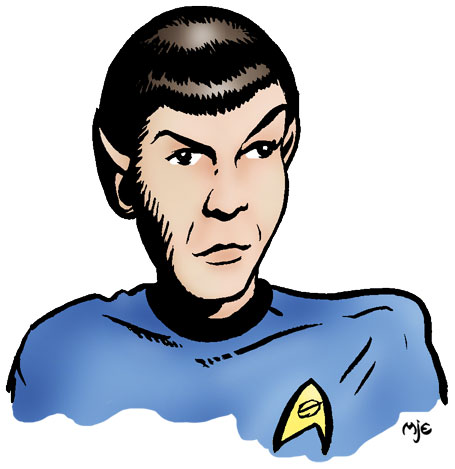
 , and have started watching it. (I never got into the spinoffs. They seemed a bit too self-conscious of the weight of the tradition they were following; they lacked the sheer wackiness and innocence of the original series. Perhaps TV SF will never be as free again, simply because it’s become successful.)