
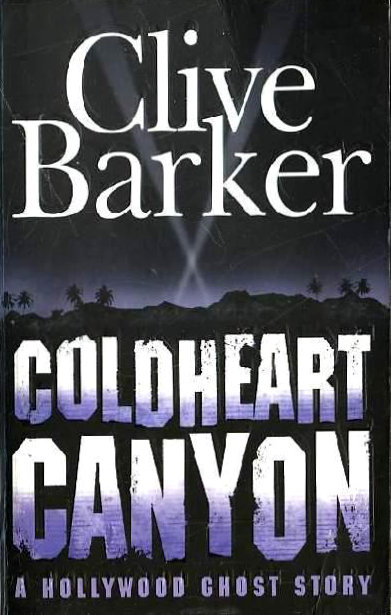
 Around the turn of the millennium, Barker was working on a massive series of paintings for his YA fantasy The Abarat Quartet. As a side project, he began writing what he intended to be “a short, satiric stab at Hollywood”—a town and industry he had, by this time, come to know quite well. (In The Dark Fantastic, Douglas E Winter quotes Barker as saying he poured all the “hard, nasty, cynical feelings I have about this town” into the book.) The intended short novel grew into another Barkerian doorstop (750 pages in the paperback copy I read), called Coldheart Canyon. It was published in 2001.
It opens in the days of Hollywood’s Golden Age, with actress Katya Lupi (real name Lupescu) visiting the Romanian village where she was born (and ran away from at the age of thirteen, after several years of being prostituted by her mother). With her is her agent/would-be lover Willem Zeffer, who likes to buy unique gifts for the object of his desire, and finds, in a former citadel that’s now home to an order of monks, a fantastically-tiled cellar, whose walls depict in amazing detail a Garden of Earthly Delights-type scene of the medieval Duke Goga hunting through the lands of the Devil’s own country. Everywhere you look in this room, you see fantastic beasts and perverse goings-on. Zeffer buys the room, has the tiles expertly removed and shipped over to Hollywood, there to be reconstructed in the basement of a dream palace he’s building Katya in the hills above Los Angeles, which will come to be called Coldheart Canyon.
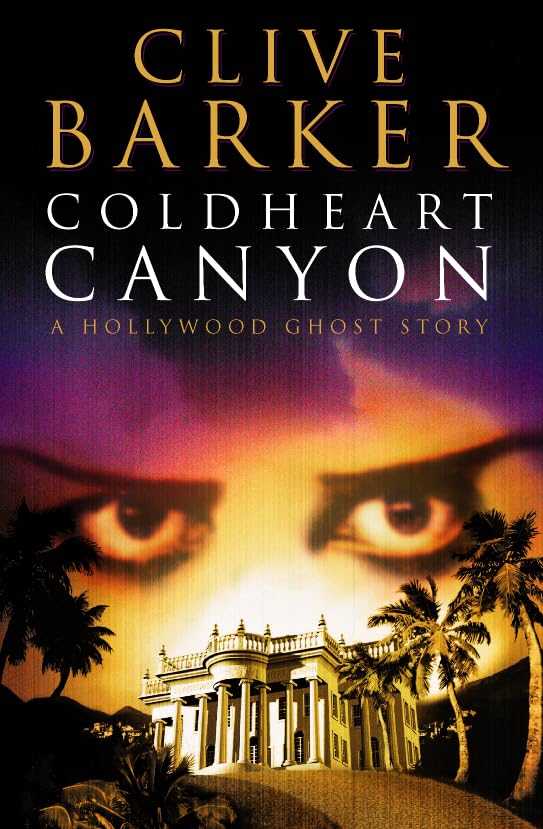 The narrative then jumps forward to the present day, where heart-throb actor Todd Pickett (at one time dubbed “one of the three biggest male action-movie-stars in the history of cinema”) attends the opening night of his latest film—and it’s a stinker. Seeking to get one of his own passion projects off the ground in the wake of it, hard-nosed producer Gary Eppstadt tells him the only way anyone will sign up to it is if the thirty-something Todd gets a face-lift. Todd wavers, then gives in, only to find the operation has gone wrong and he needs a place to hide out for a few months while the bruising and swelling heal. His agent, Maxine Frizelle, knows a man (former child-actor Jerry Brahms) who knows a place that would be perfect: a seemingly-abandoned mansion in a remote cleft of the Hollywood hills known as Coldheart Canyon.
But it isn’t abandoned. Katya Lupi is still there, and looking as young as the day she moved in. In addition, there are the ghosts of every Hollywood name who ever partied at her notorious gatherings and followed them up with a visit to the tiled room in the basement, known as the Devil’s Country, where a tired soul or an ageing face could find itself mysteriously rejuvenated. But Katya would only let people in for a short while, turning them away when they came back for more, in case they used up all the room’s magic, which she wanted for herself. Now the ghosts remain in Coldheart Canyon—some of them quite famous names—whiling away the endless years with, frankly, massive orgies in the overgrown grounds (Katya having forbidden them access to the house). Strangely physical ghosts, these lingering things of “less than flesh and more than ether” have even managed, in their boredom-driven perversity, to mate with the local wildlife and produce the occasional child—if the mix of film-star and coyote could be described as a child.
Todd remains unaware of all of this until Katya steps out and introduces herself, invites him to indulge in the nightly goings-on, and then leads him into the Devil’s Country in the basement.
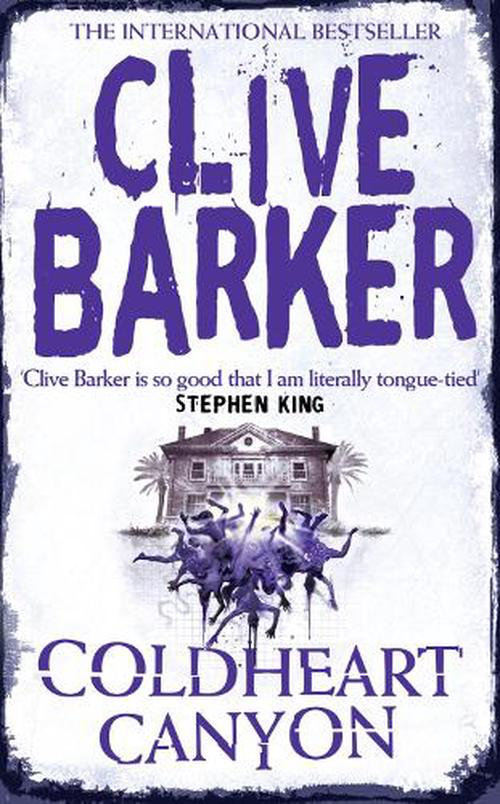 Barker theme-spotter that I am, I couldn’t help likening the wounded (in both face and ego) Todd (whose healing flesh is described as being in a “newborn state”) to that succession of Uncle Frank-like “walking anatomy lessons” holed up in a series of attics and basements in Barker’s fiction. Todd is nowhere near as bad—he hasn’t been ripped apart as Uncle Frank has—but he’s nevertheless of the same type: the wounded anti-hero, recovering from the excesses of a realm of pleasure and pain (the Cenobites’ ministrations for Uncle Frank, Hollywood’s machinations for Todd).
And if you want Faustian pacts—another Barker favourite—Hollywood (which I just mistyped, appropriately, as Hellywood) is shot through with Faustian pacts at every level, where you sell your artistic soul—and sometimes your actual life—for fame and money.
Perhaps it’s that Hollywood is so often satirised, mythologised, exposed and gossiped about, but for me (knowing nothing about Hollywood except the satires, myths, and so on) Barker’s satire doesn’t really present anything new: the people there are egotistic, backbiting, money- or success-driven, and quick to dismiss anyone who smells even faintly of failure. It’s all as expected. Barker of course knows the world of Hollywood firsthand, having made several films there (and attempted to make a few more), and it’s this that sets Coldheart Canyon apart from one of the things I wasn’t too interested by in his previous novel, Galilee, which was also centred on the supposedly glamorous life of the rich and famous. There, it was all about business riches and political influence, but the showbiz equivalent here fits much more into Barker’s already theatrically-tinged oeuvre (he’s even dealt with movie-themed horrors before, in “Son of Celluloid” from The Books of Blood). Coldheart Canyon is peppered with the names of real stars, some of whom (Faye Dunaway) even get speaking parts. (I have to admit I found the intrusion of real names punctured the narrative world a bit, as it always made me think “Is this someone Barker actually knew? Did he get permission?” Jerry Brahms, it turns out, was based on Roddy MacDowell, whom Barker had known and been friends with. Some real names he used had to be changed.)
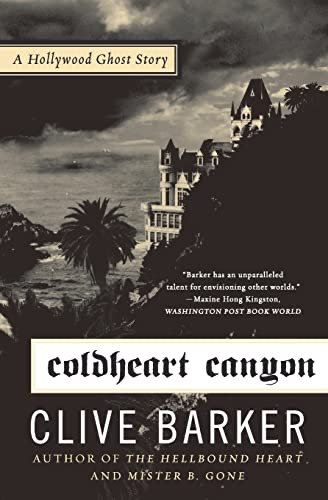 But there’s some relief from the rich and famous in the (mostly) more grounded character of Tammy Lauper, who runs the Todd Pickett Appreciation Society, and comes to Los Angeles when she feels the excuses she’s offered as to why her idol hasn’t been seen in a while (the facelift disaster having been kept a secret) require personal investigation. For a while her story seems like what, in any other horror writer’s hands, would be the set-up for a kill scene, as even the narrative voice seems to be dismissing her as, in Hollywood’s view, a nobody, and perhaps a laughable nobody at that. But with Barker, seemingly minor characters—even those who are apparently or even actually killed off—have a way of returning to the narrative, and Tammy proves to be one of this book’s main characters (and certainly its most interesting).
Presiding over both the ghost orgies and the Boschian “delights” of the Devil’s Country, Katya Lupi is the closest this book has to one of Barker’s eloquently self-justifying-monsters. As she—who doesn’t “believe in Thou Shalt Not”—says of Coldheart Canyon:
“I want my Kingdom to be a place where people could take their pleasures freely, without judgement or punishment.”
The trouble is, she stands as gatekeeper to this Kingdom, and those who find themselves barred from the rejuvenating qualities of its inner sanctum—victims of her judgement—certainly suffer a kind of punishment, in the form of insanity, suicide, or the resort to other addictions.
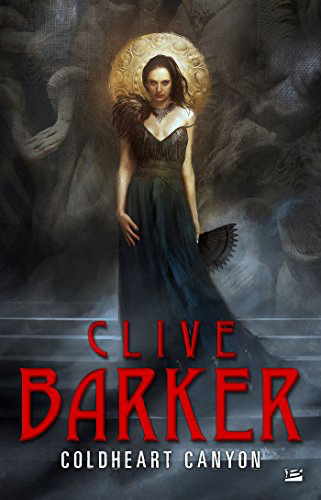
cover art by Bastien Lecouffe Deharme
But Katya is a monster one moment, a vulnerable human being the next, and though this is no doubt a truer portrait of such a person, I never felt the book really got down to the essence of her, to make her gel into one character. (But as I felt the same with Todd, perhaps that’s the point: Hollywood stars both, maybe they’re meant to be shallow and inconsistent.)
Coldheart Canyon could be said to be Barker’s cross between Sunset Boulevard, The Shining and Rider Haggard’s She (in the long-lived Katya latching onto Todd, as Ayesha does Leo)—but with more than a touch of the excesses of 1979’s Caligula. Because Barker, here, has turned his perversity to the max, to the point where I wondered if—hoped he was—just trying to shock. (As the ghosts say: “We had no shame then. We have even less now.”) If he was merely trying to up the ante on his previous novels, well, he succeeded, but I did wonder if he was doing that for its own sake, rather than because the story demanded it. (Apparently around this time he’d tried to interest publishers in a book of erotic short stories, which he was calling The Scarlet Gospels—a title he later repurposed—but they baulked at bringing that out at the same time as the YA Abarat books.)
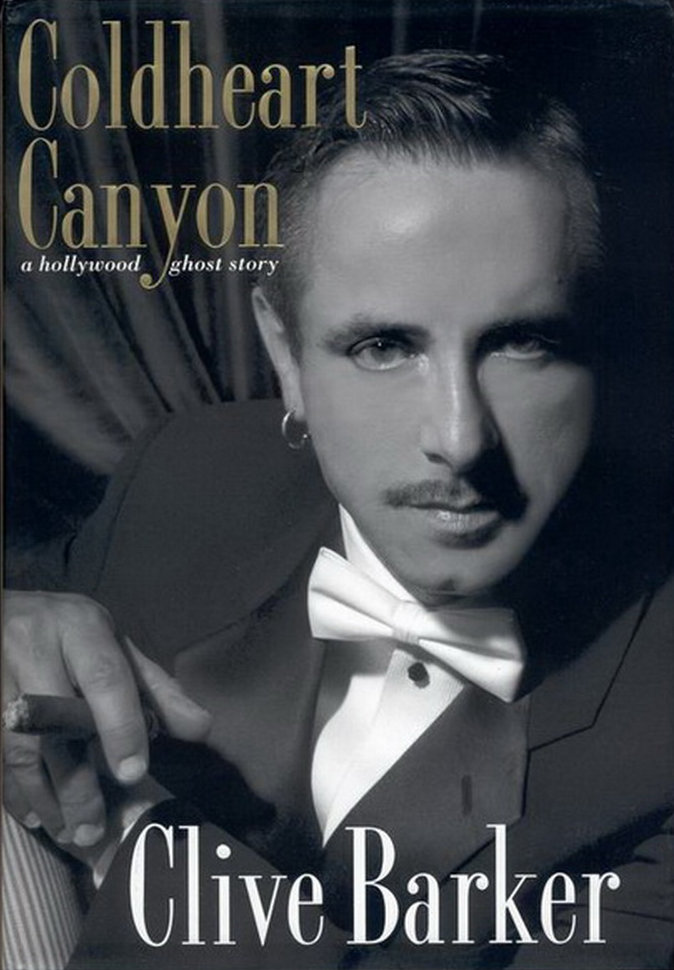 It’s certainly a livelier book than I found Galilee to be, but I wouldn’t say it stands alongside the really classic Barker. For a start, it doesn’t have the same world-shaking revelations at its heart. Coldheart Canyon (along with, I seem to recall, the other adult Barker novels that follow this, Mister B Gone and The Scarlet Gospels) employ the actual realms of Heaven and Hell, rather than the invented cosmologies of Imajica or The Great and Secret Show, or the figurative heavens and hells of The Hellbound Heart. That means there’s no great revelation about the true nature of reality here, no mind-blowing moments in which people encounter the cosmically strange. (People in horror novels don’t question Heaven and Hell, however questionable those realms are.) This throws Coldheart Canyon a little bit into the shade: it can only really be, compared to his more mythopoeic books, a story of characters encountering an extreme situation—a situation of supernatural horror, yes, even contact with the denizens of Hell itself—but a situation that isn’t loaded with revelation. I’m tempted to say Barker is using the pre-made notions of Heaven and Hell as a sort of handy stand-in for the realms he once crafted from scratch. Perhaps that’s unfair: you can’t expect a writer to create a whole new cosmology every time they pick up a pen. On the other hand, this is 750 pages without a similar sense of weight to those earlier, whole-world-creating books.
It’s basically what I’d expect of a Barker novel, if only I didn’t expect more from him. It’s got all the ingredients, except that something really different he has all the way from The Books of Blood to Imajica. And there’s generally a feeling, for me, that the two sides of the usual Barker equation of terror and transcendence is pretty much all on the terror side in this novel. There’s plenty of monsters and horrors, but when, at the end, there’s a hint of something that ought to balance the Hell of the rest of the book, the characters are equally afraid of it, and I couldn’t help wondering if Heaven, in this novel, was just one more horror, of a merely different order to the horrors of Hell.
(Perhaps the sheer excess of perversity in the novel was, in some way, an attempt to make up for the lack of the more spiritual transcendence—the wonders and enlightenments—of some of Barker’s earlier works. If so, it still came across as horror, in the main, because the sexual elements were generally of the most transgressive type, with at least three characters having suffered pre-teen sexual abuse… Though one of them is the half-goat son of the Devil.)
 Perhaps the best way to sum it up, then, is it’s a novel about the price of fame, with the Devil’s Country being a sort of intensification of Hollywood’s heaven-like (glamour, idolisation, beauty) and hell-like (betrayal, rejection, the inevitable loss of beauty) elements. Turned to as the compensation for all that Hollywood demands, the Devil’s Country becomes just one more addiction—and all those ghosts trapped in an endless cycle of upping the perversity (“There are only so many times you can play out the old flesh games without losing interest in them”) are just victims of the system at its most extreme. But when it comes down to it, I just don’t feel there’s as much to say about Coldheart Canyon, as there was about, for instance, Imajica.*
I had a few plot quibbles (Todd begins one section of the book cancelling his visit to plastic surgeon Dr Burrows because his dog his sick, and ends that section contacting producer Gary Eppstadt to ask for Dr Burrows’ number so he can make a first appointment; elsewhere, Todd knows about another character’s death that he surely can’t have had time to learn of), which made me wonder if Barker’s editors weren’t paying the attention they should have been. (I also have to say the pedant in me hated his using “Drs” instead of “doctors” throughout.)
One interesting point, though, was how much the book continued after its main climax. (Which is one of Barker’s grand coming-together-of-multiple-characters climaxes, though some of the characters—producer Eppstadt, for instance—really didn’t have convincing reasons for being there, another thing an editor should have called Barker out on.) Whereas usually you might have a chapter per character on their lives after the big event, here there were about a hundred pages of the main (surviving) characters readjusting to normal life, which did feel a bit new and interesting.
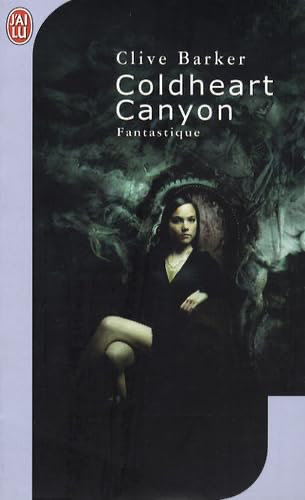
cover art by Eikasia
Ultimately it was an okay read on the Barker scale—not as great as the great works (Weaveworld and Imajica)—just as graphic as The Books of Blood but somehow not feeling as powerful, perhaps because the shocks were expected—but better than Galilee (which for me suffers from something I’d never expect of a Barker novel: dullness).
With Coldheart Canyon, what started out for me as a Barker re-read has become a first-time read, and the same goes for the next couple of works, his Abarat books. I’m not sure if I’m going to revisit Mister B Gone or The Scarlet Gospels (which I already reviewed on this blog when they first came out). But, soon enough, there’s going to be new Barker works, with the three volumes of stories coming out thanks to his recent Kickstarter. It seems that Barker, like Uncle Frank re-coalescing in his attic, has come back to life, with new revelations from the realms beyond worldly pain and pleasure. Needless to say, I’ve signed up…
[* Having said that, this blog post is longer than the one for Imajica! But when I said, in that post, “Imajica is too vast a novel for me to even list its many themes”, I meant it, and felt I could have written a lot more. I can’t think of much more to say about Coldheart Canyon.]
