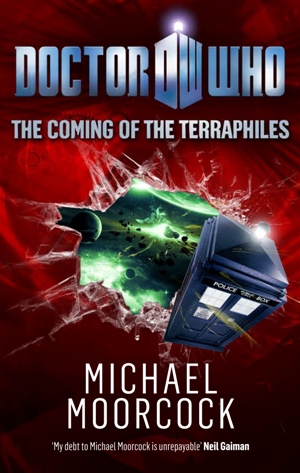
 The Balance has been pulled apart. The Multiverse has gone out of kilter. Matter is corrupting antimatter, Law is infecting Chaos, Chaos is infecting Law. The Doctor receives a garbled message alerting him to the dire state of the Multiverse, and in characteristically quirky style, immediately makes for the planet Peers in the year 51,007, to engage in a good ol’ game of whackit (the far-future’s best attempt at reconstructing a certain traditional English sport). After a foreword in classic science-fantasy style, in which we are introduced to the space-pirate Captain Cornelius, Moorcock relaxes into P G Wodehouse mode, as the plot to save the very nature of existence centres around the theft of a very valuable, though horrendously ugly hat.
Moorcock is obviously enjoying himself. The Terraphiles of the title, far from being some evil lizard-like alien, turn out to be a far-future society of historical re-enactment enthusiasts, whose particular interest is early 20th century England (the planet Peers is a terraformed theme-park based on a sort of “never-never England”). The Doctor, of course, is a fully-paid up Terraphile (which perhaps explains why he’s so fond of saving 20th century England from those endless alien invasions…), not to mention a dab hand with a whackit bat. (The sports scenes do tend to sound a bit Quidditchy, at times.)
If the threat to the Multiverse does, after a while, feel more like a maguffin to get Moorcock’s fruity collection of far-future retro-fictional “Decent Chaps, Silly Asses, Pretty Girls, Kindly Uncles and Terrifying Aunts” (not to mention space-pirates and Aetheristic sea-dogs) on a spaceship voyage together, it’s only because his primary goal seems to be having a bit of fun with the Doctor Who universe. So, don’t expect a compelling story, but do expect plenty of imagination, sly references to Moorcock’s own work (as well as a few favourites of his, such as Edgar Rice Burroughs, Hawkwind, and perhaps a subtle Blue Oyster Cult reference in one chapter title), alongside lashings of Wodehousian fun. If nothing else, it’s worth it to read Moorcock’s rendering of the TARDIS dematerialisation sound: like “rusty shopping carts being dragged over sheets of corrugated tin” — the most accurate description yet!

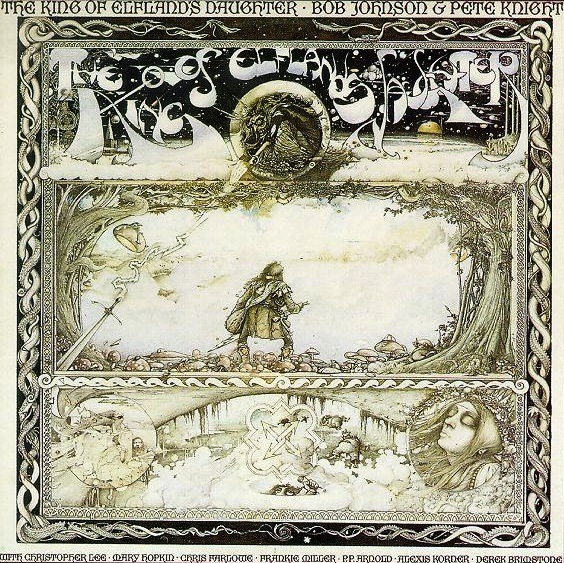
 , apparently dating from 2007, though it must have appeared on Amazon only recently. It’s a no-frills digipack (it would have been nice to have had a lyrics booklet and something about the history of the album), but at least the music is there. And the music is, I’m glad to say, very good.