The Conversation

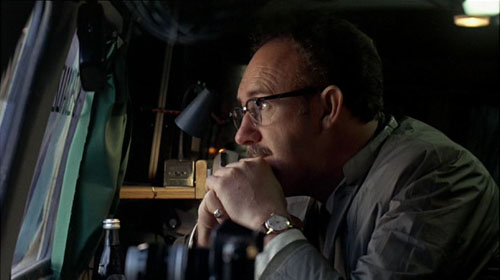
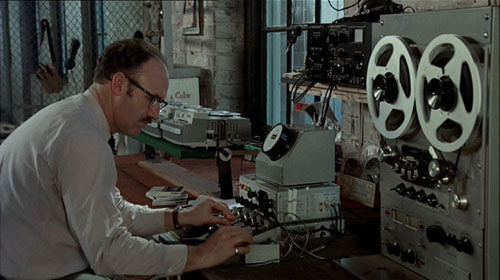
Sometimes the quieter characters are the more interesting ones. Franics Ford Coppola’s The Conversation lets us into the tightly-controlled, paranoid world of Harry Caul (played by one of my favourite actors, Gene Hackman), a lone-wolf surveillance expert renowned for his ability to tape the untapeable. As the film starts we see him working on just such an operation, using a variety of microphones to capture a conversation between a young couple as they wander round a busy city square at lunchtime; then, back in his office (the wire-caged end of an otherwise empty floor), he gets down to what you just know is his favourite part: hidden away from the world, fine-tuning the mix of his audio sources into a single, listenable record of this mysterious, fragmented conversation. Harry Caul is a craftsman.
Conversation_01

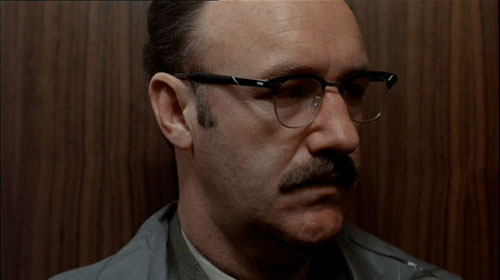
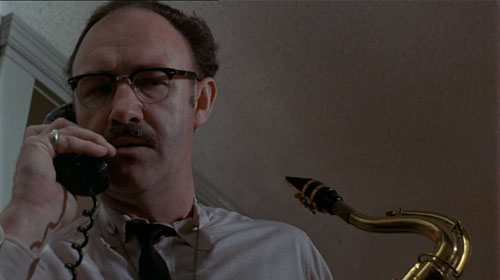
He’s also a deeply vulnerable man. All the control, all the paranoia — a consequence, perhaps, of knowing how much can be listened to, recorded, gleaned — makes the vulnerability that much more plain. Caul wears a finicky but oh-so-practical transparent mac over his work clothes, which could be the symbol of the namesake birth-caul he seems to be keeping himself wrapped in, a barrier against the world. He claims to have no phone in his apartment, but we know he has, we see him using it. He regularly visits a woman (Terri Garr) who doesn’t know what he does for a living, or where he lives, but still knows more about him than Harry would like. The way he enters her apartment, for instance: “You have a certain way of opening the door. You know, first the key goes in all quiet, and then the door comes open real fast, like you think you’ll catch me at something.” Whatever secrets Harry thinks he has, the truth about his vulnerability and fear of opening up is obvious to everyone.
Conversation_03

As much as the first half of The Conversation is a plunge for us into Harry’s strange world, in the second half, he plunges deeper still into vulnerability and paranoia. When he goes to deliver the minutely polished tape of that lunchtime conversation, he’s told he can’t hand it over in person. So, he gives back the money and leaves with the tape. This, oddly, makes the character in my eyes — he may be strange, he may be reserved and secretive, but he has an ethic, not just to his craft, but to his word.
Conversation_05

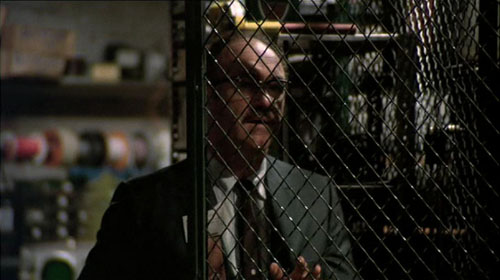
The key scene where everything goes wrong comes soon after. There’s a surveillance industry conference and he and a few fellow professionals go back to Caul’s office with some drinks and a couple of good-time girls. Harry does a quick scan to make sure all the sensitive materials are hidden, locked away in a cage-within-the-cage of his already cage-like office. His fellow experts try to get him to open up about his past triumphs, to no avail. We learn that Harry once taped an impossible-to-tape conversation that got some people killed. They joke, but Harry doesn’t like it. He takes one of the women off into the empty space of his office and finally opens up to someone — only to find his colleagues listening in, playing a trick. But this is nothing compared to the trick the woman’s playing on him.
Conversation_06

The thing with this sort of story is first to make, then break, a character. A difficult-to-like person like Harry has first to be made in our eyes — we have to find him interesting (he’s certainly that, with his highly controlled ways) but also worth liking (and I think this is where his work ethic, and his keeping to his word despite having to turn down money, wins us over to this otherwise cold fish — that’s if his secret saxophone playing hasn’t already). But then, just when we’re starting to get comfortable in his distinctly uncomfortable world, the breaking starts. That precious, worked-over-a-hundred-times tape is taken off him, and he’s desperate to know it’s not going to be used to harm the young couple, not like last time, not again. He uses his surveillance skills to try to find out, but he’s close to breaking point. The need to know won’t help a jot if the deed’s already done. But, it turns out, Harry’s being tricked again. All that carefulness, control and paranoia only makes him that much more vulnerable. He’s not just been tricked, he’s being played.
Conversation_10

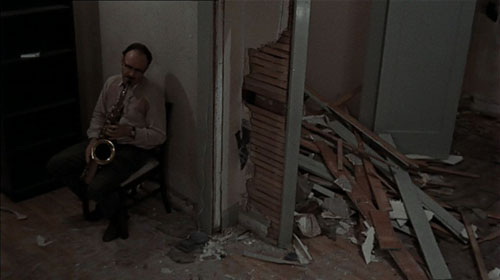
At the end, a single phone call — to that phone he claims he doesn’t have — is enough to tip him over the edge. They’ve bugged the world-proof enclosure of his apartment. And Harry, being the surveillance expert he is, can think of a thousand places they might have planted a bug, and a thousand types of bug they might have planted. He proceeds to tear his little sanctum apart, till he’s left with nothing, a ruin — the end result of all his attempts to control the uncontrollable. Even though, we know, from watching him, that the few secrets he has aren’t worth anyone’s while trying to discover. They’re the simple human secrets and vulnerabilities we all have, only Harry has them all the more because he pretends he doesn’t.
Conversation_11

^TOP

Mr Mercedes by Stephen King

Ex-detective Bill Hodges spends his afternoons slouched in front of the TV, watching the sort of trashy daytime show where trashy people get goaded by a trashy studio audience into slanging matches and fist-fights. As he watches, he toys with his father’s service revolver, occasionally pointing it into his mouth. Recently retired, he’s dwelling on the failure he’s made of his life: the failure of his marriage, his failure to sustain a relationship with his daughter, the purposelessness of it all now he’s retired. A part of that failure is that he didn’t get to finish some of his bigger cases; among them, the man who ploughed a stolen Mercedes into a queue of unemployed people outside a job-seekers’ fair. Then, amidst a litter of advertising mail (more trash in his already trash-filled life), there’s a letter. Signed “THE MERCEDES KILLER”, it’s both a confession and a challenge. It’s also the killer’s attempt to add one more to his tally: Mr Mercedes is goading Bill Hodges into killing himself. But instead, it galvanises him. Fed up of wallowing in his own fallibility, Hodges decides to use his retirement to track down this monster.

Meanwhile, there’s Brady Hartsfield, a man in his mid twenties living at home with his alcoholic mother. He holds down two low-paid jobs, one as a call-out computer-fixer for people whose inability to understand their computers he despises, and the other as an ice-cream man, feeding kids whose greed for sweet things he also despises. In fact, Brady Hartsfield despises everyone. He’s like the walking embodiment of those TV shows Hodges is getting too used to watching: Brady is a free-floating racist, sexist, everything-ist despiser of all that’s not himself. Brady also has a weird, frankly incestuous relationship with his mother. And in the basement — his Control Centre — he has a row of laptops, from which he plans his next move. His first move was stealing a Mercedes and driving it into a crowd of human trash; his next, to goad the owner of the Mercedes — a rich, mentally fragile widow — into ending her life. Now, he’s working on Bill Hodges.

I thought I’d give Stephen King another go because I was in need of a dose of old-fashioned storytelling — the sort that keeps you sticking with it for one more chapter, just one more chapter, and King’s good at that. This time, though, I went with one of his non-supernatural novels, so he couldn’t go over the top with shocks and gloop at the expense of story logic. And, in terms of storytelling momentum, Mr Mercedes certainly delivers. Alternating between the lives of the newly-galvanised Bill Hodges, and the walking sump of resentment that is Brady Hartsfield, King keeps the story ticking along. But as the book approached the end, I realised that, though I do love a really gripping story, I also need a bit more. I need the story to mean something, to add up to more than just x-hours of reading. And add up to what? I think I want some sort of statement about what it means to be human. That, as well as an absorbing read, is what I go to stories for.

The parallel storylines in Mr Mercedes of course invite a comparison between the two main characters (as do those initials, though I’ve only just noticed it — BH and BH — though Hodges’ actual first name is Kermit). Bill Hodges is very human, in both his failures, and the way he stirs himself from that post-retirement apathy to find some meaning in his life again. Human beings, however low they go, can always find a way up again. Brady Hartsfield, on the other hand, is simply evil, a monster, something other — he’s crossed the line. King does give us one passage, a sort of sub-Nietzschean amalgam of second-hand nihilisms that attempt to get us into his way of thinking:

“Every religion lies. Every moral precept is a delusion. Even the stars are a mirage. The truth is darkness, and the only thing that matters is making a statement before one enters it. Cutting the skin of the world and leaving a scar. That’s all history is, after all: scar tissue.”

But really what it comes down to is this:

‘He’s broken,’ Hodges says simply. ‘And evil. Like an apple that looks okay on the outside, but when you cut it open, it’s black and full of worms.’

‘Evil,’ she says, almost sighing the word. Then, to herself rather than him: ‘Of course he is. He battened on my sister like a vampire.’

Now I’ve finished the book, and had a chance to stand back and think about it, I think what Mr Mercedes is about is the baser parts of human nature, and how we deal with them. Those trashy tabloid-style afternoon TV shows that wallow in depravity, prurience, and the mess other people make of their lives is at the heart of it. As the book starts, Hodges is teetering on the brink of falling into that particular abyss, and of viewing his own life in those terms. Brady Hartsfield, on the other hand, is already in so deep he can’t see anything but — and it’s not just the worthless unemployed he kills and maims at the start of the book, but the kids hungry for the worthless sweetness of ice-creams he serves from his ice-cream van (“Everybody likes the ice cream man.” — King’s good at a catch-phrase), and in the mess people make of their computers, leaving icons and half-downloaded trash everywhere. Everything that makes people human is what he despises. And for him, the only logical response is to make some grand statement about how worthless all human life is: by killing himself and taking as many of them with him as possible. But something bugs him:

“The fat ex-cop bugs Brady Hartsfield. Bugs him bad. Hodges retired with full honors, they even threw him a party, and how was that right when he had failed to catch the most notorious criminal this city had ever seen?”

What bugs him is that other people can see beyond the failure, the worthlessness, and still find something to celebrate and reward in their fellow humans.

Hartsfield decides to make one final big statement. There’s an upcoming concert of the sort of trashy boy-band that pre-teen girls go mad for. For Hartsfield, this is the perfect expression of the worthlessness of human lives and ambitions. But to the girls at the show, however trashy the rest of us might think this boy-band is, it’s the most meaningful day of their lives — genuinely meaningful, in a way Hartsfield could never comprehend. The most meaningful day of his life was the day he ploughed into that queue in a stolen Mercedes.

King has spent a career dwelling on the trash-line — his own novels are thought by some to be trash, by others to be “proper literature”, but perhaps this is the point, that he’s writing both at once, because being human isn’t about one or the other; it’s about both.

Mr Mercedes was as good a read as I was hoping for, but not a great read. Still, not to be able to appreciate it for this reason would seem a little, I don’t know… Hartsfield-esque…

^TOP

Marianne Dreams and Paperhouse

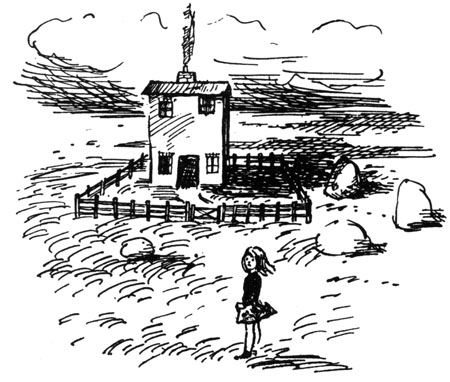
Marianne Dreams, from Faber & FaberCatherine Storr’s 1958 novel Marianne Dreams contains a perfect example of what Humphrey Carpenter calls the “Secret Garden”, found in so many classic kids’ books from Alice in Wonderland onwards — those Arcadian pocket-worlds that encapsulate an idealised childhood, part fantastic imagination, part golden-tinged nostalgia. In Storr’s book, the “Secret Garden” is a dream world 10-year-old Marianne creates through drawings made in her waking life. Bed-bound for weeks after an unspecified illness, she finds a special pencil (“one of those pencils that are simply asking to be written or drawn with”), thereafter referred to as The Pencil, in her grandmother’s button box. With it, she draws a standard child-style house, and when she sleeps, dreams of walking up to this very house, but being unable to get in. When she wakes, she adds a knocker to the door, and, for someone to answer it, a face at an upper window. Both details have been added to the house when she next dreams, but the boy at the window can’t answer her knock because the house has no stairs inside and (something he doesn’t admit immediately) he can’t walk. So Marianne starts working on interior drawings, too. In her waking life, because she can’t attend school till she’s well again, she’s being taught by a governess, who mentions another home-visit pupil, a boy called Mark whose illness has left him too weak to walk. When Marianne learns the boy in the dream-house is also called Mark, she realises her dream world isn’t entirely her own.

Marianne in the dream-world. Illustration by Marjorie-Ann Watts

Marianne in the dream world. Illustration by Marjorie-Ann Watts

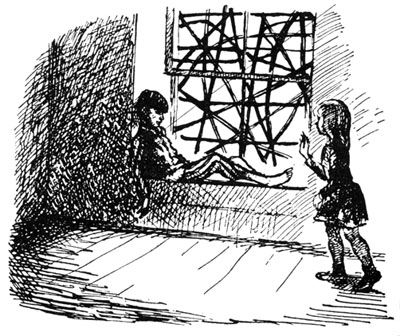
In the dream world, though, the two children don’t exactly hit it off. Both are tetchy from being bed-bound for so long, and Mark is resentful of the idea he might be living in a world Marianne has created. After a particularly heated spat, she punishes the dream-Mark by scribbling him out (though this only puts bars over his window) and, worse, by adding a single, watching eye to each of the boulders she drew outside the house. When she next dreams, she finds Mark terrified of “THEM”, the watching rock-creatures crowding the house. Regretting her anger, but unable to undo it (what she draws with The Pencil can’t be erased), the story comes to be about Marianne encouraging Mark to regain the physical strength and will to walk so they can escape the house and the watching, threatening presences.

Marianne and Mark. Illustration by Marjorie-Ann Watts

Marianne and Mark. Illustration by Marjorie-Ann Watts

Aside from its dream world fitting neatly into Humphrey Carpenter’s idea of the “Secret Garden”, Marianne Dreams has other similarities to Frances Hodgson Burnett’s 1911 novel from which Carpenter got the name. In Burnett’s book, the slightly spoiled 10-year-old Mary Lennox, orphaned and sent to live with a reclusive uncle, discovers an abandoned, walled rose garden and in it comes to not only befriend her withdrawn and seemingly crippled cousin Colin (who, like Mark, can’t, or won’t, walk), but to engage in a wholesale healing of the family: Colin of belief in his physical frailty, herself of her spoiled nature, and her uncle of both his extreme grief over the death of his wife and his estrangement from his son. The main difference between the two novels is that, while Mary Lennox of The Secret Garden is basically working at healing the adult world (where Uncle Archibald’s mourning for his wife is the cause of all the other problems) in Marianne Dreams the focus is entirely on the children, not just in recovering from their illnesses, but in their working together to overcome the self-centredness which their long periods of convalescence have led to. There’s a feeling that they’re taking a step away from the dependence of childhood towards taking a fuller responsibility for their own lives.

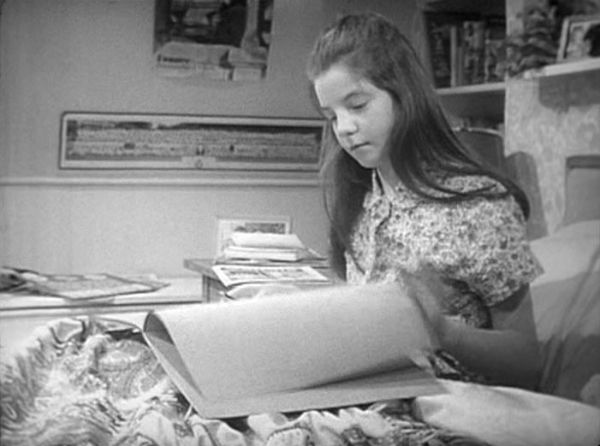
Vikki Chambers as Marianne in Escape into Night

Storr’s book has been adapted a few times. The author turned it into an opera libretto in 1999. In 1972 it was adapted for television as Escape into Night (made in colour, but only surviving in black & white). This six-part series stuck faithfully to the book — perhaps too faithfully, as the story of Marianne’s coming to understand the relationship between her drawings and the dream world inevitably leads to a lot of similar-seeming scenes, though perhaps I only feel this because I watched them back-to-back — but it also comes across as slightly darker, as, somehow, showing the bizarre one-eyed stones surrounding the house makes them that much creepier. My first encounter with the story, though, was in a very different form, the 1988 film Paperhouse.

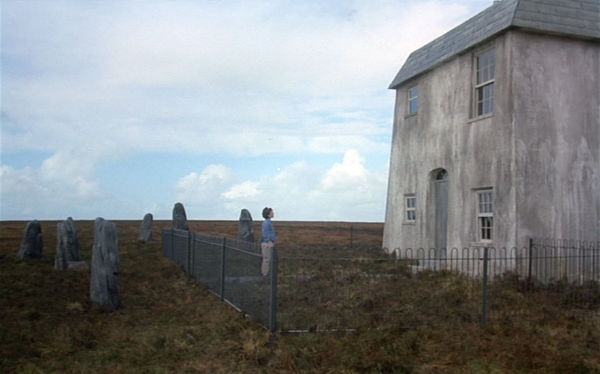
Charlotte Burke as Anna in Paperhouse

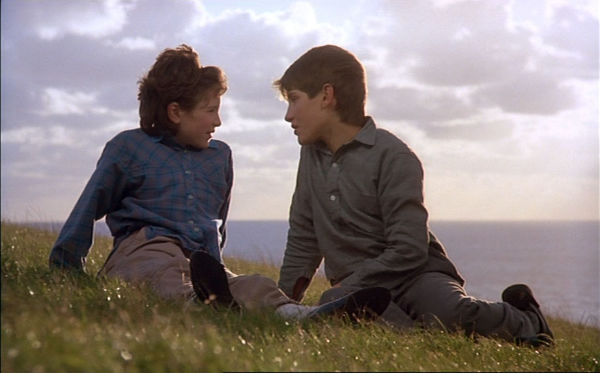
I can’t think of many children’s books which, when adapted, turn into films for adults — and I wonder if that was always the intent for Paperhouse (rated 15 in the UK), because, though it ups the scares of Catherine Storr’s novel, it doesn’t do the usual horror cliché of turning childhood itself into a scary world — there’s no tinkly toy piano music, or ghostly nursery rhymes echoing down empty corridors — so it’s still a story that’s for children rather than being about them. In fact, apart from the level of scares (always a difficult thing to judge), I think it would actually be a good film for young adolescents, as it’s very much about their experience — about the first tentative moves towards forging deeper emotional attachments away from mum & dad, and about the tug-of-war between growing up and remaining a child. (Now I come to think of it, the two main characters’ lingering in bed after their illnesses could well be a metaphor for lingering in a state of dependent childhood, putting off the first steps into independence and adulthood.)

Anna and Marc (Elliott Spiers)

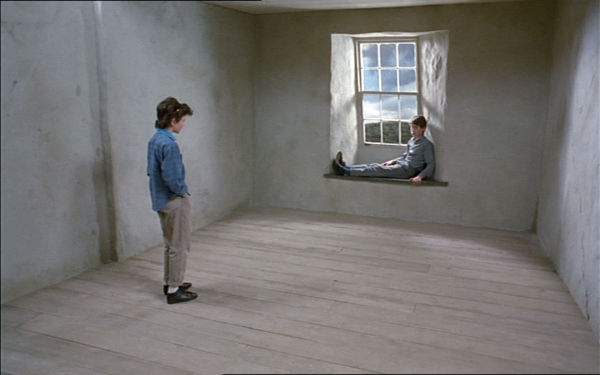
Marianne from Storr’s novel is now Anna, a girl very much on the verge of adolescence. One moment she’s bunking off school to try on makeup and ask her friend about snogging (“Like kissing a vacuum cleaner”), the next she’s playing hide-and-seek. In contrast to the book (where the mother is pretty much a cipher), in the film, Anna’s relationship with her mother is strained by some very teenage tantrums. The real transformation from novel to film, though, is the father. In the novel, though he’s living at home, the father is all but absent — he pops into the story only briefly, to do those things a standard father of the 1950s was expected to do, i.e., authorise a few key decisions and knock in a nail. In Escape into Night, his irrelevance to the plot is smoothed over by having him working abroad. In Paperhouse, not only is he working abroad, but Anna is torn between feeling abandoned by him and being grateful he’s not there because of how he scares her sometimes when he drinks. In the film’s dream world, the stones-with-eyes (“THEM”) central to the novel’s sense of threat are replaced by a blinded father figure wielding a hammer. (This, more than anything, must be what makes it a 15 certificate, the way it turns the threat into a very real, domestic one, rather than a generalised, fantasy version of anxiety.)

All this brings a muted aspect of the novel to the fore. Anna’s ambivalence about her father is an ambivalence about males in general. Sitting up in bed after a checkup from the doctor (here, a woman — Anna’s world, including teachers and friends, is almost entirely female), she says, “I don’t like boys,” then immediately adds one at the window of the house she’s drawing, as though her unconscious has other things to say on the matter. Far more powerful than the horror element of the film is the sense that Anna is learning to transfer the complex feelings she has for her father to a more fitting male figure of her own age. Paperhouse’s scares and dream world shocks can seem a bit over the top — as can Anna’s teenage histrionics, though “OTT” may well be the definition of teenage histrionics — but the film ends with a real sense of combined loss and gain, all because of how Anna has matured from a self-centred child to someone who can start to have fuller, more mature relationships.

Catherine Storr was, at the time she wrote Marianne Dreams, married to Anthony Storr, author of some of my favourite books about psychology — his The Dynamics of Creation (1972) and Solitude (1988) are both very readable and interesting delves into the complexities of two subjects Marianne Dreams also touches on: creativity (Marianne, in the novel, is not great at drawing, and her frustrations at how her lack of skill has a real effect on the dream world make up one of the novel’s strands), and the pleasures and pains of being alone.

^TOP