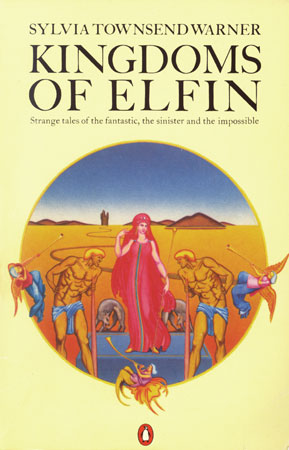
 The Little People, it seems, have no middle class. They are either the earthy, woodland-living folk of Alan Lee and Brian Froud’s Faeries, or the distant, beautiful, highly-cultured nobles of Tolkien. Sylvia Townsend Warner’s elves are firmly in the Beautiful People category, with something of a Bohemian, perhaps Bloomsbury tinge to them. The Bloomsbury tint is understandable — Warner began writing fiction in the 1920s, having been encouraged to do so by Bloomsbury-ite David Garnett. Cultured, with nevertheless a humanising irony, a slightly disapproving-but-forgiving distance of tone, these stories of the Kingdoms of Elfin were in fact published in the 1970s, in The New Yorker (though two are original to this collection), but you can feel their roots in those earlier days of advanced thinking, self-improvement, and the intellectual rebellion against the remnants of an aristocratic, paternalistic Victorian culture. Not too much of a rebellion, though — Warner’s fairies play golf and cards, they obey the dictates of courtly fashions, they gossip and have that aristocratic mix of disapproval of, and tolerance for, those who are different. Warner’s stories focus on those who are different, but her rebels are rarely different enough to leave off being aristocratic. They dip their toes in rebellion with the air of assuming a new fashion:
“It is widely known that a group of dissident fairies seceded from the Court of Elfhame in order to have more time for self-improvement. The Elfhame Dissidents had sickened of the frivolity of court life: pleasure was a burden to them; so was politeness. Beset with banquetings, love affairs, sonnets, whist drives, masquerades, and lotteries, they had no time to take themselves seriously.”
Leaving the Court of Elfhame, these dissident fairies of “The Occupation” nevertheless fail to truly take themselves seriously: “Conversation persisted, since in the main they talked about themselves, but was repetitive.” They puzzle over the mortals they encounter, taking a quaint interest in church worship and the birth of a mortal baby, before passing on, hardly noticing the tragedy they leave in their wake.
Some of the stories make brief, passing reference to folklore: “The Five Black Swans” contains a glimpse of the story of Thomas the Rhymer from the fairy lady’s point of view, and “Elphenor and Weasel” ends with an allusion to the Green Children of Woolpit. There are references to fairy literature, too: James Hogg appears, as a shepherd (which he was, prior to writing The Memoirs and Confessions of a Justified Sinner) in “The Occupation”, which also has a minister refer to Robert Kirk’s The Secret Commonwealth in an effort to learn about the fairy visitors he suspects are living in his house.
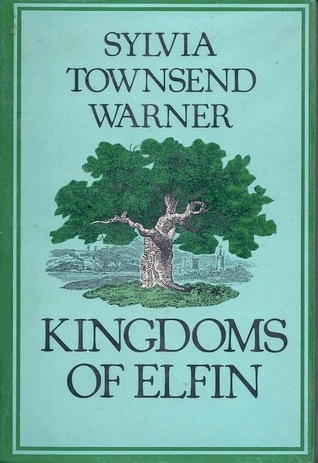 The last story in the book, “Foxcastle”, tells of a mortal scholar who, trying to find evidence that fairies exist, is taken in and studied by them. Here at last we get to see the fairies from a mortal’s point of view rather than, as in the rest of the book, from their own. Which perhaps goes best towards describing the overall tone of the stories in Kingdoms of Elfin: Warner’s fairies, although they have wings and can fly (though the aristocratic ones scorn flight, thinking it only suitable for servants), and although they are long-lived and capable of invisibility, don’t come across as magical in the way of Tolkien’s elves, nor dangerously unpredictable in the way of Froud and Lee’s, because we’re seeing them as they would see themselves: as objects of a wit and irony so light in touch it can seem to fade like fairy gold in mortal hands. But nevertheless these stories are told with a bite, the classic storyteller’s indifference of true fairy tales, that makes these little comic tragedies, and tragic comedies, both subtly knowing and subtly forgiving, but never merely delicate or fey.