
I remember being terrified by this when I was a kid. Not the mini-series itself — I never saw it at the time — but the trailer. The trailer was all I needed. The thing that scared me most was a very brief glimpse of this ugly chap, Nosferatu in a blue mood:

He continued to scare me whenever I was home alone. I’d be about to move from one room to another when I’d suddenly think, “What if I opened the door and saw that standing there?” and instantly found myself making excuses to stay where I was till someone else came home. As a result, the first horror novel I read was King’s Salem’s Lot, perhaps in a (forlorn) attempt to quell the fear — forlorn because it immediately proceeded to scare me even more with its opening tale of Ben Mears’ childhood visit to the Marsten House, and what he saw there.

So, recently I decided to try and lay this particular ghost by getting the Salem’s Lot mini-series out on rental from LoveFILM. I expected to be disappointed, but wasn’t. The basic story (Dracula in small-town America) was handled well, the acting was good (a lot of competent character actors, including Kenneth McMillan as the town constable — who I mostly know as the pustulant Vladimir Harkonnen from David Lynch’s Dune — and of course David Soul and James Mason in the lead roles), but best of all it managed some nicely suspenseful, even spooky, moments. Perhaps because of the limitations of what was then allowed on TV, the gore count is low (to be measured in drops rather than modern-day bucketfuls), and there are very few of those tiresome false jumps every horror film or TV series feels duty bound to serve up at regular intervals (something which lost its appeal for me after a totally silly and irrelevant jump from an aggravated squirrel in Species, back in 1995). The Marsten House interior is an effective set (though it has its silly/surreal moment, when young Mark Petrie opens a drawer to find it full of glass eyes and a couple of live rats — why does he open the drawer in the first place? he’s looking for a vampire, not a pair of socks), and the ending has enough references to Psycho to assure you there’s someone who knows his horror films at the helm (Tobe Hooper, of The Texas Chainsaw Massacre and Poltergeist). A particularly good moment of the subtler sort of scare is when old schoolteacher Jason Burke hears an odd sound from upstairs, goes to investigate, and finds the corpse of recently-deceased Mike Ryerson gently rocking in a rocking chair. He stays like that for what seems an age before finally looking up with his scarily gleaming vampires eyes.

I wrote in an earlier post (“What’s the point of Renfield?”) that Renfield, in Dracula, is perhaps a necessary counterpart to the suave count. Where Count Dracula is cool, elegant, eloquent and scary, Renfield is disgusting, mad, pathetic and drivelling, and together the pair complete a portrait of a real vampire as both coldly reasoning and psychotic, cool on the exterior but wallowing in blood and filth in his mad moments. The TV mini-series of Salem’s Lot reverses the relationship. The mortal half of its villainous duo, Mr Straker (James Mason), is ultra-calm, drily witty, cultured, neatly dressed and surrounded by beautiful antiques; the vampire, Kurt Barlow, looks like a dead rat gone blue-skinned and hairless with rot, can’t speak, and is 100% monster.

But there are, as in Dracula, other vampires. In Stoker’s novel, these are women; in the mini-series of King’s novel, (at first, anyway, till the whole town goes vampirous) these are children. And this was the second most scary thing about the mini-series: those kids floating up to your bedroom window at night to scratch at the pane and ask to be let in, surrounded by reverse-motion smoke. Which is another way I used to spook myself when I was younger. If I woke up late at night, I’d find myself wondering what I’d do if I heard someone scratching at the window. Well, obviously not open it like these kids do. But simply seeing such a thing would have been bad enough.

It’s been a long time since I read King’s novel, so I can’t say how faithful to the book the mini-series is, but it was certainly faithful enough to remind me of reading the book a good 25-or-so years ago. Granted, it looks like a 70s TV mini-series, but I think that adds to its charm when seen nowadays — just like the HPLHS‘s old-style renderings of H P Lovecraft in their Call of Cthulhu and Whisperer in Darkness films, this is an authentically 70s-styled rendering of a 70s novel, and I’m glad I finally got to see it.

And, I have to admit, that though I started watching the first part (it’s in two hour-and-a-half parts) just before 9 o’clock at night, I had to watch an hour of normal TV afterwards before I felt unspooked enough for bed. And I watched the second part at 11 o’clock the next morning.

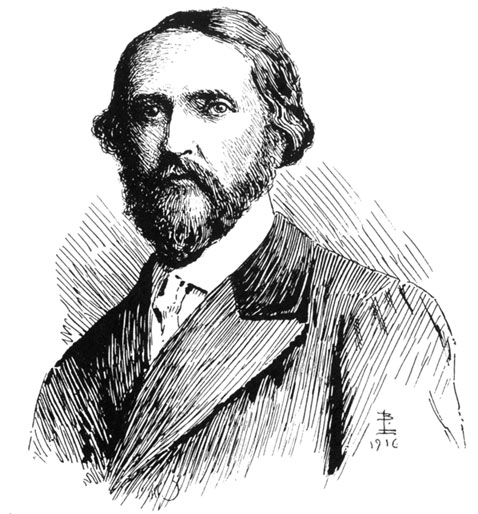


 ). But whether Peake had named him or not, the world he depicts — in its scenery and its concerns — is Gormenghast, and the young Boy is as much Titus as he can be.

 , calls the Lamb “the most blasphemous of Peake’s ideas”, saying it is clearly a “Christ in reverse”, but I think its power is simpler than that. The Lamb is a thing that is as evil within as it is seemingly innocent without. Batchelor goes on to say: “The story is too dark and pessimistic to have fitted the imaginative world even of Titus Alone.” And Malcolm Yorke, in his 2000 biography of Peake,
  , says that “elements of fantasy are introduced that would have been intolerable in the world of Gormenghast”. He finds the style “irritating”, but most of all thinks the whole “a puzzling, unbalanced and very disquieting story and one wonders about the mental health of a person who could engender such a bleak world.”