Two Faerie Novels

coverIn Graham Joyce’s Some Kind of Fairy Tale (published earlier this year), a teenage girl disappears into the woods only to return, two decades later, having aged a mere six months. In that time her parents have become OAPs, her brother has married and had children, and her ex-boyfriend, a once-promising musician (who was at one point accused of her murder) has seriously failed to live up to his promise. Joyce’s novel explores the impact of her return, and the sudden perspective it puts upon the passage of twenty years in each character’s life.
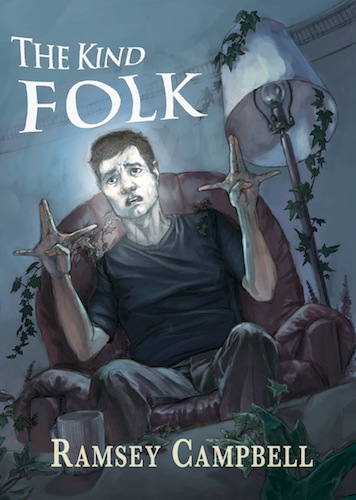
coverRamsey Campbell’s The Kind Folk (published last month) opens with one of those “real people’s problems” tabloid-style talk shows, where the host, Jack Brittain, is poised to reveal the results of a DNA test that will prove if, as Maurice Arnold suspects, his grown-up son Luke isn’t really his son at all. Maurice suspects his brother, Terence, who has always been overly proud of the boy, taking him on trips to remote parts of the country and telling him odd little fairy tales. But despite a family resemblance, it turns out Luke isn’t related to either. Nor, even, to the woman he calls his mother. A stand-up comedian with an uncanny knack for imitation, Luke comes to suspect the truth about his origins by retracing, through his uncle’s tersely-worded journal, the odd places they visited, where they always seemed to meet with “kind folk”. Nice people? By no means.

Joyce’s novel uses a multiple viewpoint approach to work at two questions. One, the rational, is just what happened — is the returned Tara really Tara? And can she really still be a teenager, twenty years on? Or is it all self-delusion and an extreme case of arrested development? The other (and far more interesting) question, is how her disappearance and reappearance have affected the people who knew her (among which the most compelling stories are those of her ex-boyfriend Richie, to whom she was a sort of muse, and who, as a result, was left like the traditional fairy-thralled knight, bereft of his inspiration and life-drive; and of course Tara’s own, having lost twenty years’ worth of family life, and finding herself in a world with which she’s now two decades out of step). My one criticism of the book is that I didn’t think the two questions quite gelled. It’s interesting to compare it to Alan Garner’s Boneland, another Faerie-tinged book published this year which also dealt with the devastating, lifelong impact of loss, though in an even more intense way (perhaps because entirely focused on one character). Garner combines the psychoanalytic and fantastic threads of his novel into one meaningful narrative, whereas Joyce spends a chapter psychoanalysing Tara only to disprove it later, which left me feeling a bit cheated. But in Boneland, psychoanalysis, even if it has a dangerous air, is ultimately seen as an aid to self-understanding and self-healing, while Some Kind of Fairy Tale‘s take is more about the abuse suffered at the hands of the profession by people whose experiences have taken them beyond the norm.

For most of The Kind Folk, Ramsey Campbell takes a more traditional horrific approach to the presence of a race of half-seen non-human beings at loose in the world. As usual with Campbell, his novel is mostly about the isolating, destabilising effect of the supernatural on one man’s family relationships, identity, and sanity. But the end managed to step clear of the simply horrific to a glimpse of something a little more magical. A far more claustrophobic but focused novel, Campbell’s worked that little bit better, of the two, for me.

Both The Kind Folk and Some Kind of Fairy Tale are well-written, interesting modern takes on the traditional matter of fairyland. Cornered as it is by hordes of zombies, vampires and teen wizards, I’m wondering if Faerie isn’t becoming one of the last refuges of the fantasy novelist who wants to do something genuinely different. There’s something about these outward blasts of the irrational & incomprehensible, and how they impact on real-seeming human characters, that smacks of those areas of life that fantasy, perhaps, is the best way to write about. The loss of a loved one may have a rational explanation, but that goes no way to explaining or expressing the impact it has on the people who feel the loss. The fantastic can. Besides, there’s something about the Perilous Realm and its inhabitants that, however much they may be commercialised into butterfly-winged, tutu-wearing Tinkerbells, there’s always a dark underside that resists commodification, a marshy creature lurking in the weeds, a too-wild dance echoing from over the next mist-wrapped hill. All too often, vampires and zombies are more and more restricted by rules and behaviours as their literature grows, but Faerie only seems to increase in its ability, the more it’s written about, to be what you don’t expect it to be. (Which may be its defining feature.) Besides, I don’t believe in vampires or zombies, but can’t help being a little bit afraid that if I say I don’t believe in fairies, they’ll get me.
^TOP

Weaveworld by Clive Barker

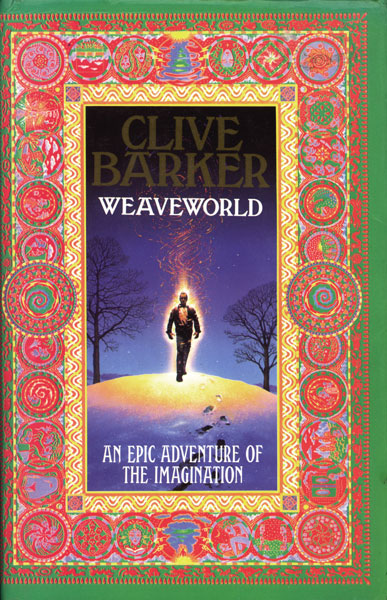
Tim White cover for Clive Barker’s Weaveworld

Weaveworld, published in 1987, was Clive Barker’s breakthrough novel. It was also his breakout novel, as it saw him transform himself from being the hottest new horror writer in town (with The Books of Blood and The Damnation Game), to being a hot new fantasy writer, or perhaps just a hot new writer full-stop. And of course, with the movie Hellraiser out the same year, Barker seemed to be announcing himself as an impressive creative force whatever the medium. He painted and illustrated, he wrote and produced plays; what was more, he was eloquent and outspoken in his views on the importance of imagination and the fantastic in art. I’d read some of his Books of Blood stories, but Weaveworld was much more my thing. After it, I read pretty much every novel he wrote as they came out (in paperback, anyway), faltering briefly at The Thief of Always, perhaps out of post-Imajica exhaustion (825 pages!). That ended with 2001’s Coldheart Canyon. I bought Coldheart Canyon, and it sat on my to-read shelf for about a year before I admitted to myself I wasn’t going to read it. I’ve never even looked at his Abarat books (perhaps feeling a bit cheated that he never got round to finishing his Books of the Art series). I read (and reviewed) Mister B Gone when it came out, as a toe-dip back in Barker’s world, but aside from the angels at the end, I mostly wished I hadn’t. I’m not sure, really, what happened. Perhaps it was simply Barker exhaustion (he does write long novels, and perhaps even marvels and wonders can wear you out). Whatever it was, I recently re-read Weaveworld, to see if I could sample a little of what it was that made him so exciting back then. Would it still be there?

It was. It is.

Weaveworld is about a magical land hidden in a carpet. But really, this magical land is made up of fragments of our world — nooks of wonder and beauty we came to ignore, or never discovered, and which the Seerkind (the people of the Weaveworld — or the Fugue as they call it when not in its woven state) took as their own. The Seerkind are mostly human in appearance, but have “raptures” — crafts such as weaving, singing & dancing, that work like magic spells. To the Seerkind, we ordinary humans are Cuckoos, and our non-magical world is the Kingdom of the Cuckoo. And although we Cuckoos have, in the past, pursued and persecuted the Seerkind, it was a far worse enemy that forced them into hiding, an awful power known as the Scourge, which of course threatens them again as soon as they wake. The novel follows two ordinary-ish people from our world, Cal Mooney and Suzanna Parish, who come into contact with the Weaveworld, only to find themselves inextricable parts of the struggle of the Seerkind to wake, find a safe place to unpack the wonders of the Fugue, and survive the onslaughts of their many enemies.

Two things make Barker an outstanding writer of the fantastic. The first is the wildness and freedom of his imagination. Before him, the defining style of supernatural horror was that of Stephen King, who made his horrors all the more believable by placing them in settings designed to feel as familiar as possible, and written in a voice that assured you the writer was an average Joe like you, speaking down-to-earth, yeah, you-know-the-kind-of-thing speak. Barker blew that approach away by writing horror and fantasy like an Old Testament prophet. Where, with King, one subtly-built up supernatural element was enough to fuel a blockbuster novel, Barker has monsters and magical beings by the dozen before we’re a quarter of the way through. If King is the fireside storyteller, making you gather round while he whispers his tales towards their slow climax, Barker takes the Barnum and Bailey approach, full of fireworks, cymbal crashes, dancing girls and lion tamers. (And there’s a lot of the performer in his works — his Seerkind are, mostly, performers, Bohemians; perhaps naturally, considering Barker’s first career as a playwright & actor.)

That comparison to the Bible links to the other thing that made Barker such a notable new voice — the conviction with which he wrote, his belief in the transforming power of the imagination. In Weaveworld, when humans encounter the magic of the Fugue, it often has a near-religious effect on them. It changes their world, it opens them up to new possibilities, new beliefs. (Of Suzanna: “All she knew was that she was suddenly alive to a space inside herself where the haste and habit of her adult life had no dominion.”) Because, ultimately, Weaveworld isn’t about a magical world and a real one, it’s about one world which is both magical and real, it’s about the healing, the weaving together, of what can be imagined and what is accepted as real, between the mundane and the magical. The Seerkind aren’t ethereal beings, they’re “flesh and blood like you”; the Fugue is a place in which you can meet with wondrous experiences, but that is true of the real world, too, because the true place those wondrous experiences occur is in the mind:

“Magic might be bestowed upon the physical, but it didn’t reside there. It resided in the word, which was mind spoken, and in motion, which was mind made manifest;… all mind.”

“Imagination,” Barker writes, “was true power: it worked transformations wealth and influence never could.”

Two of the most interesting characters in Weaveworld are the villains, Shadwell the Salesman (whose name unfortunately reminded me of Siadwell, the comic Welsh poet from Naked Video in the 80s) and Immacolata the Incantatrix, who has a cold hatred for her fellow Seerkind. These, like so many Barker villains, aren’t merely evil; they are led to evil ends by understandable (if unordinary) motivations. Something to note about Barker’s monsters — they’re not just killers and beasts, they’re philosophers. They like to explain themselves. They have an aesthetic. (Just not the sort you’d expect to be expounded by the local art society.) In a sense, like the Seerkind, they’re performers, too, artists of a brutal kind, Bohemians gone bad. One of the things Barker seems to be saying is that all experience, potentially, can be transcendent experience, and that includes the painful experiences, the dark experiences, and the dark drives and motivations, too. At the end, the Scourge is not defeated, it is healed. The “Old Science” of the Seerkind (which perhaps could better be called Art) is used to “seduce it into confessing its profoundest desire: simply to see its own true face, and seeing it know how it had been before loneliness had corrupted it.”

Which reminds me of Barker’s own words about himself in the 1994 South Bank Show episode about him:

“My life has absolutely been transformed by the imaginative possibilities offered to me by artists. Isn’t that one of the reasons we go to books and paintings and theatre and movies? We go because we want our lives enriched. And that enrichment is a kind of change. We want our pain illuminated, and if it’s illuminated, maybe it isn’t quite so terrible… I think my kind of fiction, and I get this in conversations with people and in letters, is to some extent about saying these journeys are journeys which we’re all taking. And it’s okay to take them. And it doesn’t mean you’re crazy. It doesn’t mean you’re marginalised. Just because you’re bringing your dreamscape into your daily life, into your conscious life, doesn’t make you fit for the madhouse. It makes you very healthy.”

Barker’s art is working the Seerkind’s sort of magic. He’s not merely peddling wonders to make a sale, to get a wow and a round of applause. He very much has a belief in what he’s doing, in its power to affect people, and for their ultimate good. Even if it takes them into some pretty dark places on the way.

^TOP

Prometheus

I will, usually, watch sequels & prequels to my favourite films, but never with any raised hopes. Ridley Scott’s Alien is one of my top three favourites (I can’t name a top one — the other two are Amelie and Hitchcock’s Shadow of a Doubt), so of course I had to see Prometheus, Scott’s prequel-of-sorts to his breakthrough film. I don’t think it’s the sort of film to be ruined by discussing its plot — I heard one review beforehand and gleaned a good enough idea of what it was about to be in no way surprised — but this is a reaction to the film, not a review, so I’ll say it now: spoilers ahead.

My main feeling was Prometheus was pretty nihilistic. This may sound like an odd criticism for a horror film, but it was only after watching it that I realised how much Alien (and Aliens), being about survival in the face of terrible odds, are so life-affirming. They use their horror elements to increase the sense of the preciousness of life. Prometheus, though it does have many similar situations, doesn’t have the same feel at all. Perhaps because it’s more preoccupied with philosophical questions, its survival/action elements are tainted with a dour fatality, a feeling of “Yeah, but survive for what?” In a sense, the horror elements — one coming from the threat to individual survival, the other dealing with the ultimate source of human life — come from both sides at once, trapping the viewer in a pincer movement, and leaving no room for a sense of hope. I’ve come across criticisms of the film saying it doesn’t answer the philosophical questions it raises, but I don’t think that’s a weak point — the raising of philosophical questions (“Where do we come from? Where are we going?”) without answers is entirely valid, as it acknowledges very real areas of doubt. And doubt is okay. There’s a lot of it about. Besides, what possible answers could the film provide that would be in any way satisfying?

So, why does the film feel so nihilistic? It could be because a core trio of the main characters are so cold to each other (one, David, being a robot, another, Charlize Theron’s Meredith Vickers, whose utter coldness at the beginning — she changes midway, with no real reason — prompted what I thought was the best line in the script, when Captain Janek asks her “Are you a robot?”). But the closest I can come to identifying it lies in the imagery of the film. Alien was famous for having a lot of H R Giger’s warped images centring on the idea of impregnation and gestation (the way the alien enters & gestates in its human prey, for instance, or the way the main action takes place in the confines of a spaceship addressed as “Mother”); while Aliens was much more about motherhood (Ripley’s adoption of the traumatised Newt, plus of course the vast alien mother she fights at the end). Prometheus‘s main image, though, is of abortion, both actually (Doctor Elizabeth Shaw’s rather tacked-on super-fast pregnancy, and its termination) and metaphorically (what the alien Engineers are planning to do to their creations). The film also brings in what could be called a paternal strand, with the selfish, unfeeling presence of trillionaire Peter Weyland, and his quest to meet his makers (expecting, for some reason, paternalistic Gods, but not, of course, getting them). And this brings up a sort of flipside to the abortion imagery, voiced by the android David, who at one point asks, “Doesn’t everyone want to kill their parents?” An idea the film seems to accept without argument. So, Prometheus seemed to be mostly about parents wanting to kill their children, and children wanting to kill their parents — actually, metaphorically, and theologically. The result is a picture of a totally bleak, uncaring, in fact actively hostile, universe, with none of the contrasting, messy, crew camaraderie of Alien, or Aliens‘ feel of an impromptu family developing in the face of danger. In Prometheus, human survival has no point, because humanity isn’t human enough.

After Alien, Aliens worked so well because it took the basic idea of the first film (the perfect killer alien let loose on a bunch of humans) and put it in a slightly different genre. Alien was survival horror, and was about the individual; Aliens was a military film, and was about the survival of the group, the protection and raising of children (and, on the flipside, a new generation of alien creatures). After Aliens, I thought there was only one way to make a third film, and that was to bring the creatures to Earth (and so be about the survival of the race). I was disappointed, then, when the third Alien film settled for a sort of half-and-half Alien/Aliens hybrid, which worked on neither score, while the fourth (made by one of my otherwise favourite directors, Jean-Pierre Jeunet, who was totally wrong for the series) might have worked as a dark comedy, had he been allowed to go really OTT, but was never going to be anything more than a footnote in the series. Prometheus, though it abandons the Alien creature, and though it is about the survival of the race, doesn’t do anything sufficiently different from Alien or Aliens to be judged on its own merits. (Considering the difference in plots, the film has an awful lot of similar scenes and situations, some of which feel they’ve been inserted merely for similarity’s sake.)

Guillermo del Toro saying he can’t make Mountains of Madness because Prometheus covers too similar ground is a great pity; Mountains of Madness would at least take the threat to Earth, and would make it that much more immediate and visceral. It also wouldn’t have had the baggage of previous films to feel it had to conform to. Not that Prometheus is bad, just that it isn’t as good as Alien or Aliens.

^TOP